Skip to content

Warehouse Risk Assessment: The Step-by-Step Guide to Finding Forklift Hazards Before They Find You
A practical framework for identifying, scoring, and controlling forklift-related risks in your warehouse — the same process safety teams use before an incident happens, not after.
Most warehouse injuries don't happen because nobody cared about safety. They happen because a hazard was known, ranked as "probably fine," and never got fixed before the wrong moment lined up — a loaded forklift, a blind corner, a worker in a hurry. A structured warehouse risk assessment is how you catch that hazard on paper, months before it happens on the floor.
This guide walks through a complete, repeatable risk assessment process built around the forklift — the single piece of equipment responsible for more serious warehouse injuries than any other machine on the floor. You'll get the exact steps to identify hazards, a scoring matrix to prioritize them, a checklist you can hand to a supervisor today, and a clear look at which controls actually reduce risk versus which ones just look good on paper.
📑 What's Covered in This Guide
- 1. What a Warehouse Risk Assessment Actually Is
- 2. Why Forklifts Dominate Warehouse Risk Assessments
- 3. The 5-Step Risk Assessment Process
- 4. Common Forklift Hazards Found on the Floor
- 5. The Risk Matrix: Scoring Severity vs. Likelihood
- 6. Daily Checks vs. Formal Periodic Assessments
- 7. The Hierarchy of Controls (What Actually Reduces Risk)
- 8. Running a Physical Walkthrough Assessment
- 9. Documentation, Records & Compliance
- 10. Common Mistakes That Undermine an Assessment
- 11. FAQs
1. What a Warehouse Risk Assessment Actually Is
A warehouse risk assessment is a documented process of walking through your facility, identifying anything that could reasonably cause harm, judging how serious and how likely each hazard is, and deciding what to do about it — in that order. It is not a one-time audit that gets filed away, and it isn't a generic checklist copied from another site. Done properly, it's a living record that reflects your specific layout, your specific traffic patterns, and your specific equipment mix.
The output of a good assessment isn't a report. It's a prioritized action list: which hazards get fixed this week, which get scheduled for next quarter, and which are accepted as low-risk with a monitoring plan. If your last risk assessment produced a binder nobody opened again, it wasn't a risk assessment — it was paperwork.
A risk assessment isn't about proving your warehouse is safe — it's about finding the specific spots where it isn't, before someone gets hurt finding them for you.
2. Why Forklifts Dominate Warehouse Risk Assessments
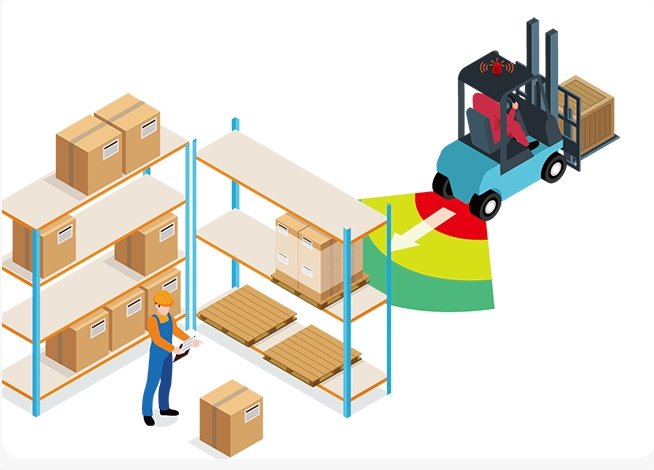
Walk into almost any serious warehouse incident investigation and a forklift is somewhere in the chain of events — either directly involved or creating the conditions that led to it. Forklifts combine several risk factors that most other warehouse equipment doesn't: they move, they carry heavy loads at height, they share aisles with pedestrians on foot, and their operators have significant blind spots created by the mast, the load itself, and the truck's own structure.
That combination is exactly why forklift-related hazards tend to sit at the top of a warehouse risk register once severity and likelihood are properly scored. A dropped hand tool is a hazard. A three-ton forklift reversing around a blind rack corner into a pedestrian aisle is a hazard that belongs at the top of the list — and it's the category this guide focuses on most closely.
If you're comparing how different truck classes affect this risk profile, our breakdown of counterbalance vs. reach truck layouts is a useful companion read, since aisle width and turning radius directly shape which hazards show up in your assessment.

A documented daily check is the fastest, cheapest layer of your entire risk assessment program — and the one most often skipped under time pressure.
3. The 5-Step Risk Assessment Process
Whether you're following OSHA guidance, ISO 45001, or your own internal EHS framework, nearly every credible risk assessment methodology reduces to the same five steps. Skipping any one of them is usually where assessments quietly fall apart.
Step 1 — Identify the Hazards
Walk the actual floor rather than relying on memory or old records. Look at forklift travel paths, pedestrian crossing points, loading docks, racking, charging stations, and anywhere forklifts and people share space. Talk to operators and pedestrian staff directly — the people doing the work daily notice near-misses that never get formally reported.
Step 2 — Decide Who Could Be Harmed and How
A hazard affects different people differently. A blind intersection is a moderate risk for an experienced operator who knows to sound the horn and slow down, and a severe risk for a new picker who doesn't yet know that corner exists. Assessments that only consider the operator's perspective consistently miss pedestrian-side risk.
Step 3 — Evaluate the Risk and Prioritize
Score each hazard by severity and likelihood using a consistent matrix (see Section 5). This step is what turns a long list of hazards into a short, actionable list of what to fix first.
Step 4 — Record the Findings and Implement Controls
Document what was found, who is responsible for the fix, and by when. Apply controls starting from the top of the hierarchy of controls (Section 7) rather than defaulting straight to "retrain everyone," which is the weakest and least reliable control available.
Step 5 — Review and Update Regularly
A risk assessment goes stale the moment your layout, staffing, or equipment changes. New racking, a new product line, a seasonal headcount spike, or a new forklift model all warrant a review — not just the calendar-based annual refresh.
4. Common Forklift Hazards Found on the Floor
These are the hazards that show up repeatedly across warehouse risk assessments, regardless of industry:
- Blind corners and rack-end intersections — where a loaded forklift and a pedestrian can arrive at the same point with no warning.
- Shared travel lanes — aisles where forklifts and foot traffic use the same path without physical separation or clear signage.
- Reversing without a clear rear view — especially on counterbalance trucks with a tall mast or bulky load blocking sightlines.
- Congestion at dock doors and staging areas — where multiple trucks, trailers, and pickers converge during peak loading windows.
- Excessive travel speed for the environment — a speed that's fine in a wide-open yard but unsafe in a tight, high-traffic aisle.
- Poor lighting in racking canyons and yard areas — reducing both operator and pedestrian reaction time.
- Unauthorized or under-trained operators — driving trucks outside their certification or without a current refresher.
- Uneven or damaged floor surfaces — that affect stability, especially at higher lift heights.
Several of these — blind corners, shared lanes, and reversing visibility in particular — are the exact conditions that forklift pedestrian safety systems and camera-based blind-spot detection are designed to address, because they're structural to the environment and don't fully go away with training alone.
5. The Risk Matrix: Scoring Severity vs. Likelihood
A risk matrix turns subjective concern ("that corner feels dangerous") into a comparable score you can rank against every other hazard on your list. Rate each hazard on severity (how bad the outcome could be) and likelihood (how often it's likely to occur), then multiply or cross-reference the two.
| Likelihood ↓ / Severity → | Minor (first aid) | Serious (lost time injury) | Severe (fatality / permanent harm) |
|---|---|---|---|
| Frequent (daily/weekly) | Medium | High | Critical |
| Occasional (monthly) | Low | Medium | High |
| Rare (yearly or less) | Low | Low | Medium |
A blind intersection where forklifts and pedestrians cross paths several times a shift, with a realistic worst-case outcome of a serious or fatal injury, scores as High or Critical — and belongs at the top of your action list, ahead of lower-severity items even if they feel more visible day to day.
Teams often rate likelihood based on how often an incident has actually happened rather than how often the hazardous *situation* occurs. A blind corner that forklifts pass 40 times a shift is a frequent-exposure hazard even if it hasn't caused an injury yet — treat exposure frequency as the likelihood driver, not incident history alone.
6. Daily Checks vs. Formal Periodic Assessments
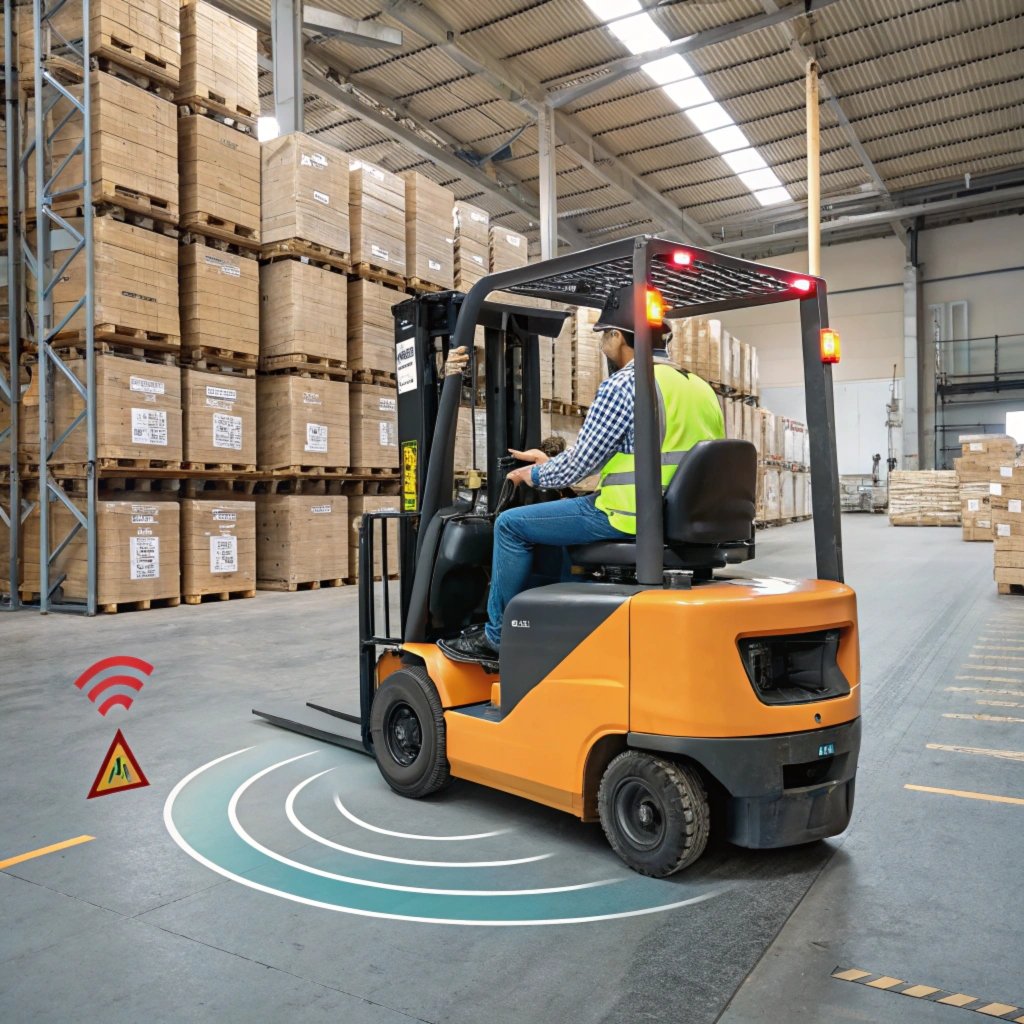
A full warehouse risk assessment and a daily pre-shift forklift check are not the same thing, but they work together. The formal assessment identifies structural and layout-level risks — the ones that need a physical or procedural fix. Daily checks catch equipment-level and situational risks that can change shift to shift: a brake that's starting to feel soft, a horn that's stopped working, a new obstruction left in an aisle overnight.
- Brakes, steering, and horn function tested before the shift starts
- Forks, chains, and mast inspected for visible damage or wear
- Tires checked for cuts, wear, or low pressure
- Warning lights, backup alarm, and any collision-avoidance system confirmed active
- Seatbelt and operator restraint functioning correctly
- Fluid levels and battery charge/fuel checked
- Load capacity plate visible and legible
- Any defect logged and the truck tagged out of service until resolved
The daily check is also the fastest way to surface a new hazard between formal assessments — a worn tire noticed today doesn't need to wait for next quarter's audit to get fixed.
7. The Hierarchy of Controls (What Actually Reduces Risk)
Once a hazard is identified and scored, the fix matters as much as the finding. Safety professionals rank controls from most to least effective — and most warehouses default straight to the weakest option because it's the cheapest to implement.
- Elimination — Remove the hazard entirely. Reroute a travel path so forklifts and pedestrians never cross at all.
- Substitution — Replace a higher-risk activity with a lower-risk one, such as switching a manual pedestrian crossing for a barrier-controlled one.
- Engineering controls — Physical or technical measures that reduce risk without relying on human behavior: mirrors at blind corners, physical guarding, and AI-based forklift anti-collision systems that automatically detect pedestrians and objects in blind zones and alert the operator before an incident, regardless of how attentive that operator is at that exact moment.
- Administrative controls — Procedures, signage, speed zones, and scheduling changes that reduce exposure without physically changing the environment.
- PPE and training — High-visibility vests, refresher certification, and toolbox talks. Necessary, but the least reliable layer on its own, since it depends entirely on consistent human compliance under time pressure.
The reason engineering controls rank above training in every recognized framework is simple: training can lapse, fatigue sets in, and even the most experienced operator has a physical blind spot the mast and load create. A speed limiter or automatic braking system keeps working at 4pm on a Friday exactly as well as it did at 8am on Monday — a training-only program doesn't have that consistency built in.
Already identified blind corners or pedestrian mixing zones in your assessment? That's exactly the class of hazard AI-based anti-collision and pedestrian detection systems are built to close — without waiting on a layout redesign.
8. Running a Physical Walkthrough Assessment
Desk-based reviews of floor plans and incident logs are useful preparation, but they can't replace a physical walkthrough with someone who understands forklift operations and hazard recognition. A structured walkthrough typically covers:
- Every point where forklift travel paths cross pedestrian paths, ranked by traffic volume at each point
- Racking condition, aisle widths relative to the trucks actually in use, and load storage height
- Dock door activity during peak loading and unloading windows, not just during a quiet mid-morning walk
- Lighting levels in racking canyons, yard areas, and dock approaches
- Signage, floor markings, and whether they're actually followed in practice — not just present
- Operator interviews about near-misses, awkward corners, and workarounds they've developed informally
Walking the floor at different times — start of shift, peak picking hours, and shift change — often reveals hazards a single mid-shift walkthrough misses entirely, since traffic density and fatigue levels shift throughout the day.

A physical walkthrough with a trained assessor catches layout-level hazards that a desk review of floor plans alone will miss.
9. Documentation, Records & Compliance
A risk assessment that exists only as a conversation isn't defensible if an incident occurs and isn't useful for tracking whether hazards actually got fixed. At minimum, keep a record of: the hazard identified, who could be harmed, the risk score, the control selected, who is responsible, the target date, and the sign-off once complete.
In the US, OSHA doesn't mandate a single risk assessment format, but general duty clause obligations and forklift-specific standards under 29 CFR 1910.178 mean documented hazard identification and control is expected practice, especially following any incident investigation. Facilities working toward ISO 45001 certification will find the five-step process above maps directly onto that standard's risk assessment requirements.
Keep records for at least as long as your regulatory retention requirement dictates, and treat the "review date" field as seriously as the original finding — an assessment with no review date tends to never get reviewed.
10. Common Mistakes That Undermine an Assessment
- ✕ Copying a generic template without walking your specific floor and traffic patterns.
- ✕ Scoring risk based on incident history alone, rather than exposure frequency to the hazardous situation.
- ✕ Jumping straight to training as the control, skipping elimination and engineering options that would work better and last longer.
- ✕ Treating it as an annual event instead of updating it when layout, staffing, or equipment changes.
- ✕ Leaving findings undocumented or without a clearly assigned owner and deadline.
- ✕ Assessing forklifts and pedestrian activity separately, instead of looking at where the two actually interact.
Turn Your Risk Assessment Into Real Protection
We don't run your warehouse — we build the AI camera, radar, and UWB-based anti-collision systems that close the exact blind-corner and pedestrian-crossing hazards a good risk assessment surfaces.
11. Frequently Asked Questions
Tap a question to expand the answer — tap again to collapse it.
Most facilities run a full formal assessment at least annually, but it should also be repeated whenever the layout, staffing levels, product mix, or equipment change — a new racking configuration or seasonal headcount increase can introduce hazards an old assessment never accounted for.
It's typically led by a safety officer, EHS manager, or trained supervisor, ideally with input from operators and pedestrian staff who work the floor daily. Larger or higher-risk facilities sometimes bring in a third-party safety consultant for an independent walkthrough.
A risk assessment looks at layout, traffic patterns, and systemic hazards across the whole facility. A daily inspection checks the condition of one specific truck before a shift starts — brakes, horn, tires, and visible damage. Both are necessary, and neither replaces the other.
Pedestrian and forklift interaction at blind corners and shared travel lanes consistently scores highest, because it combines high exposure frequency with a severe potential outcome — exactly the combination that pushes a hazard to the top of a properly scored risk matrix.
No. Anti-collision systems, cameras, and speed limiters are engineering controls that reduce risk once a hazard is identified — they don't replace the process of identifying which hazards exist in your specific facility in the first place. The assessment comes first; the technology is one of the controls that comes out of it.
Requirements vary by country, but most occupational safety frameworks — including OSHA's general duty clause in the US and ISO 45001 internationally — expect employers to identify and control foreseeable hazards, and a documented forklift risk assessment is the standard way facilities demonstrate that obligation.