Skip to content

Forklift Risk vs. Hazard vs. Safety Deficiency: A Warehouse Manager's Guide (2026)
Can you ever remove every safety risk from a warehouse? And is a major risk the same as a major safety deficiency? Most teams answer these loosely, and that is where forklift safety programs quietly go wrong. This guide explains the logic behind forklift safety and warehouse safety management, so you can decide where to invest time, money and technology.
1. A Hazard Source Is Not the Same as Risk
A hazard source is anything with the potential to cause harm. Risk is how likely that harm is, and how severe it would be, under specific conditions.
A forklift in a busy warehouse is a hazard source. Its risk depends on travel speed, how close pedestrians are, visibility at corners, floor conditions and how well existing controls work. You cannot run most warehouses without forklifts, but you can change the risk they create.
Key lesson: Don't stop at listing hazards. Assess the risk each one creates under your real operating conditions, then manage it systematically.
2. Hazards May Remain, but Safety Deficiencies Can Often Be Eliminated
Moving vehicles, heavy loads and powered equipment are part of warehouse life. Unsafe conditions around them, however, are usually fixable:
- A blocked forklift aisle can be cleared.
- A damaged guard can be repaired or replaced.
- A failed warning light or horn can be restored.
- Missing pedestrian barriers can be installed.
Fixing these reduces exposure, but it does not remove every risk of the underlying operation. Correcting a deficiency is not the same as eliminating risk.
3. A Major Risk Is Not Necessarily a Major Safety Deficiency
A major safety deficiency is a serious problem that demands corrective action. A major risk describes a situation with potentially severe consequences and/or a high likelihood of harm, depending on your assessment criteria.
| Scenario | What's happening | Result |
|---|---|---|
| A | Forklift crosses a pedestrian zone too fast, warning system faulty | Major deficiency driving major risk. Act urgently. |
| B | Forklift works near pedestrians with traffic separation, speed control, good visibility and working alarms | Hazard remains, but controls hold residual risk at an acceptable level. |
A major deficiency can create major risk, but a major risk does not always mean there is an obvious deficiency. That is why inspections alone are not enough; you also need a risk assessment based on actual operating conditions and the effectiveness of your controls.
4. Risk Cannot Always Be Reduced to Zero
Even with procedures followed and equipment installed, residual risk remains. The goal of safety management is to eliminate hazards where reasonably practicable and reduce what is left to an acceptable level under applicable requirements. For forklift operations that typically means:
- Separating pedestrians from vehicle routes.
- Setting and enforcing speed limits.
- Improving visibility at blind corners and intersections.
- Using pedestrian detection and collision warning where appropriate.
- Maintaining equipment and reviewing incidents and near misses.
Remember: No single device or written procedure makes a warehouse safe. Protection comes from several layers working together.
5. Risk Depends on Both Likelihood and Consequences
Likelihood is the chance an incident happens. Severity is how serious the harm would be. Good risk management works on both:
Approach 1: Reduce the likelihood
Improve procedures, train operators and pedestrians, separate traffic, enforce speed limits and prevent unsafe behavior.
Approach 2: Reduce the consequences
Add protective systems, improve emergency response, use suitable PPE and limit how bad an incident can get.
Approach 3: Do both
The strongest strategies lower the probability of an incident and limit the harm if prevention fails.
Not sure where your forklift risks sit?
Tell us about your layout and traffic flow, and our team will suggest practical detection and warning options.
Talk to a Forklift Safety SpecialistWhy Add a Forklift Anti-Collision System?
Look at the logic above. Traffic separation, speed limits and training all reduce likelihood, but they depend on layout discipline and human behavior every single shift. Blind corners, busy shifts and distracted moments are where those controls can fail, and this is exactly where a technical layer helps.
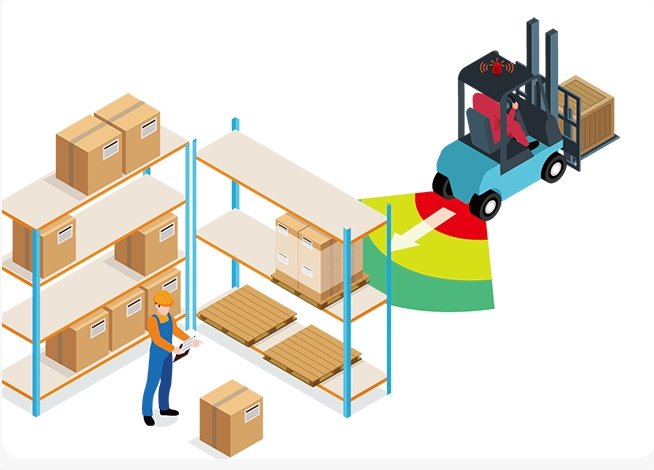
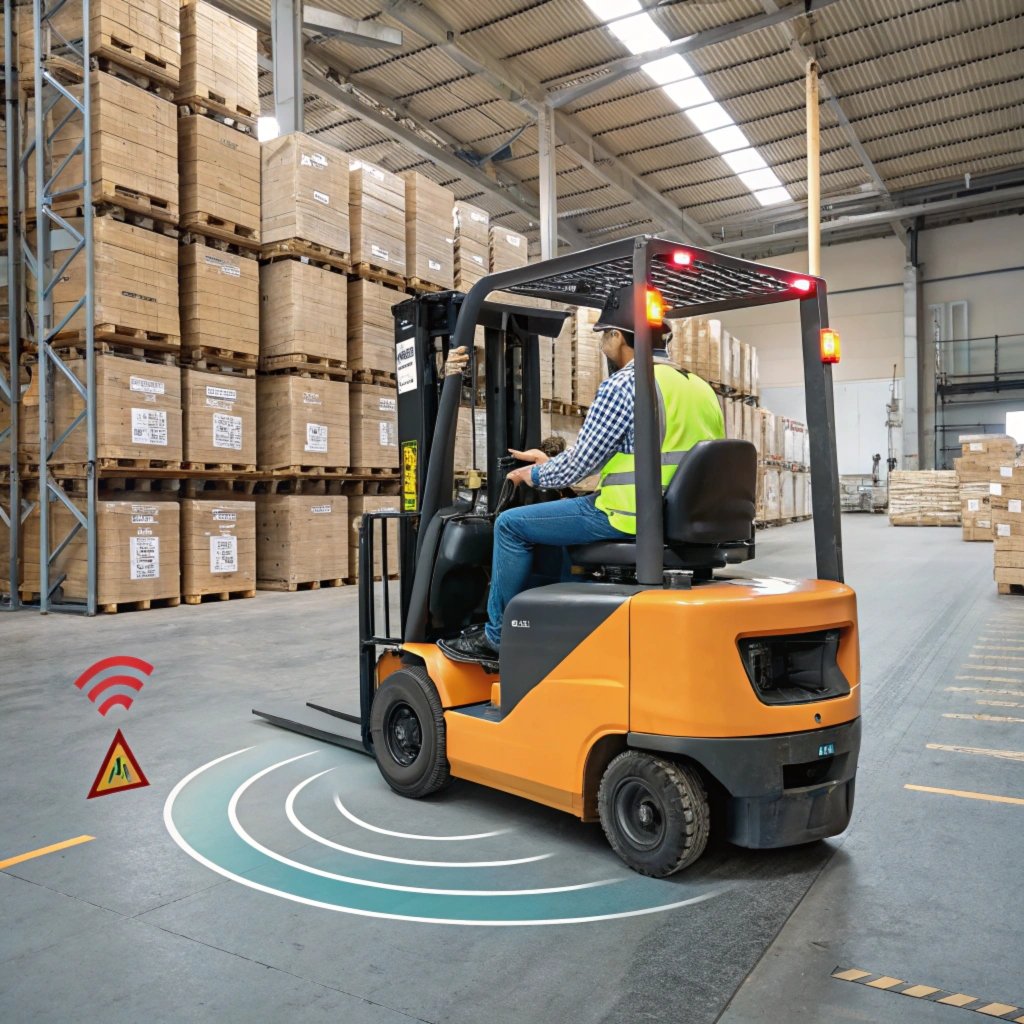
A forklift anti-collision system adds a warning layer that works even when someone is not paying attention. It detects people and other vehicles entering a forklift's danger zone and alerts the driver and the pedestrian. In risk terms, it:
- Lowers likelihood by giving earlier warning at intersections, aisle ends and blind spots.
- Lowers consequences by prompting earlier reaction, giving the driver more time to slow or stop.
- Covers residual risk that procedures and layout changes cannot fully remove.
- Supports continuous improvement by giving you a clearer picture of where close calls happen.
An anti-collision system does not replace training, pedestrian separation or speed control. It is the extra layer that makes the whole set of controls more robust. See our forklift safety solutions for options by site type.
Warehouse Manager Checklist: Managing Risk, Not Just Fixing Problems
- List your hazard sources: vehicle routes, loading docks, blind corners, racking aisles.
- Assess risk for each using likelihood and severity under real conditions.
- Fix deficiencies fast: blocked routes, broken alarms, missing barriers.
- Build layers: layout, speed control, training, technology.
- Review near misses regularly and update your controls.
- Ask honestly whether remaining risk is acceptable, and document why.
The real question is not whether your workplace has hazards. It is whether those hazards are properly assessed, the risks controlled and the remaining risk acceptable.
Add a Proven Layer to Your Forklift Safety Plan
Get a tailored forklift anti-collision and pedestrian detection recommendation for your warehouse.
Get a Free ConsultationFrequently Asked Questions
A hazard is something with the potential to cause harm, such as a moving forklift. Risk is the likelihood of that harm occurring combined with how severe it would be under actual operating conditions.
No. A major deficiency is a serious problem that needs correction and can raise risk sharply. A major risk can exist even in a well-run site because the hazard itself is severe; the question is whether controls keep it acceptable.
Rarely. The goal is to eliminate hazards where reasonably practicable and reduce residual risk to an acceptable level using multiple layers of protection.
A common model is Risk = Likelihood × Severity. You lower risk by reducing the chance of an incident, limiting its consequences, or both.
Procedures, speed limits and traffic separation reduce likelihood but depend on people and layout. An anti-collision system adds a technical warning layer that alerts drivers and pedestrians when someone enters a vehicle's danger zone.
No. It works alongside training, pedestrian separation, speed control and maintenance as one layer in a multi-layer safety strategy.