Skip to content
Forklift Driver Authorization Requirements in the USA: What OSHA Actually Requires
Who is legally allowed to authorize a forklift driver, what OSHA 29 CFR 1910.178(l) demands before someone touches the controls, and how employers keep unauthorized operators off the truck entirely.

"Certified" is not the word OSHA actually uses. The regulation that governs who may legally get behind the wheel of a forklift in the United States is built around a narrower, stricter word: authorized. An operator can complete a training course, hold a wallet card, and still not be authorized to run a specific truck in a specific facility. That distinction is where most compliance gaps — and most preventable pedestrian accidents — actually live. This guide breaks down exactly what federal law requires before a worker is legally allowed to authorize themselves, or be authorized, to operate a powered industrial truck.
- 1. What "Authorized Operator" Actually Means
- 2. The Legal Basis: 29 CFR 1910.178(l) & ANSI/ITSDF B56.1
- 3. Who Has the Authority to Authorize a Driver
- 4. Minimum Age Requirement
- 5. The Three-Part Authorization Process
- 6. Authorization Is Truck-Specific and Site-Specific
- 7. When Authorization Must Be Renewed
- 8. Documentation Every Employer Must Keep
- 9. Authorization Mistakes That Trigger OSHA Citations
- 10. Enforcing Authorization With Access Control Technology
- 11. Employer Compliance Checklist
- 12. FAQs
1. What "Authorized Operator" Actually Means
In OSHA's language, an authorized operator is a worker who has completed formal instruction, hands-on practical training, and a documented workplace evaluation, and whom the employer has specifically certified to run a defined type of powered industrial truck. Authorization is not a government-issued license, and it isn't transferable between employers. It's a written record the employer creates and owns — which also means the employer carries the legal liability if an unauthorized person ends up driving.
This matters because "forklift certified" gets used loosely across the industry to describe anything from a two-hour online video to a full in-person evaluation. OSHA doesn't recognize the term "certified" at all in the regulatory text — the standard says trained and authorized, and both halves of that phrase have to be satisfied before an operator is legally permitted to touch the controls.
Training teaches someone how to operate a forklift. Authorization is the employer's formal, documented decision that a specific person may operate a specific truck, in a specific facility, under current conditions — and it can be revoked at any time.
2. The Legal Basis: 29 CFR 1910.178(l) & ANSI/ITSDF B56.1
Federal authority over forklift operator authorization comes from a single OSHA standard, 29 CFR 1910.178(l), Powered Industrial Truck Operator Training. It applies across general industry, construction (via 29 CFR 1926.602(d)), shipyards, marine terminals, and longshoring — everywhere powered industrial trucks are used except agricultural field operations. The rule's core sentence sets the baseline for everything else in this guide: only trained and authorized operators are permitted to operate a powered industrial truck.
The training program itself has to be built around four factors specific to your operation, not a generic course: the operator's existing knowledge and skill, the type of truck they'll actually be assigned, the hazards present in your specific workplace, and their demonstrated ability to operate the truck safely once evaluated. A national training provider can deliver the classroom portion, but the workplace evaluation piece — the part that actually creates authorization — has to happen on your floor, on your equipment.
Many employers also reference ANSI/ITSDF B56.1, the consensus safety standard for powered industrial trucks, which OSHA's rule was originally built on. It isn't independently enforceable the way the OSHA standard is, but it fills in engineering and design detail — stability triangles, load charts, warning devices — that inspectors expect a compliant training program to cover.
3. Who Has the Authority to Authorize a Driver
Authorization is an employer responsibility — not a third-party certifying body, not a training vendor, and not the operator's previous employer. A few practical points follow directly from this:
- Certificates don't transfer. An operator who was authorized at their last job is not automatically authorized at yours, even for the identical truck model, because your workplace hazards, aisle layout, and traffic patterns are different.
- The evaluator has to be qualified. OSHA requires the trainer and evaluator to have the knowledge, training, and experience to train operators and evaluate their competence — a supervisor with no forklift-specific training background generally doesn't meet that bar on their own.
- A vendor course is a starting point, not the finish line. Outside training providers can deliver the formal-instruction portion, but the employer must still complete practical training and a documented workplace evaluation before that worker is authorized.
- Authorization can be revoked immediately. Because it's an internal employer decision, it can also be pulled the moment unsafe operation is observed — no external appeal process is required.
A driver's license, a forklift dealership's basic walkthrough, or a certificate from a past job are frequently treated as sufficient. None of them satisfy 1910.178(l) on their own. Only your employer-documented training-plus-evaluation process creates legal authorization at your facility.
4. Minimum Age Requirement
Before training even starts, age is an absolute legal floor. The Fair Labor Standards Act classifies powered-industrial-truck operation as Hazardous Occupation Order No. 7, and federal law sets the minimum age at 18 years old for non-agricultural forklift operation — warehouses, manufacturing, retail, distribution, and construction all fall under this rule. There is no employer discretion to authorize a worker younger than 18 in these settings, even with parental consent or a family-owned business. The only narrow exception is bona fide agricultural work, where 16- and 17-year-olds may operate a forklift under strict training and supervision conditions.
5. The Three-Part Authorization Process
OSHA requires every authorization to rest on three components, delivered in this order and documented separately:
1. Formal instruction
Lecture, discussion, video, interactive e-learning, or written material covering truck operation principles, workplace hazards, and the relevant provisions of 1910.178. This is the portion most online and classroom courses cover well.
2. Practical training
Hands-on demonstrations by the trainer followed by supervised practice exercises performed by the trainee on the actual type of truck they'll operate — not a simulator alone, and not a different truck class.
3. Workplace performance evaluation
A documented observation of the operator running the truck under real working conditions in your facility. This step is what legally converts a trained worker into an authorized operator, and it's the step most often skipped or under-documented.
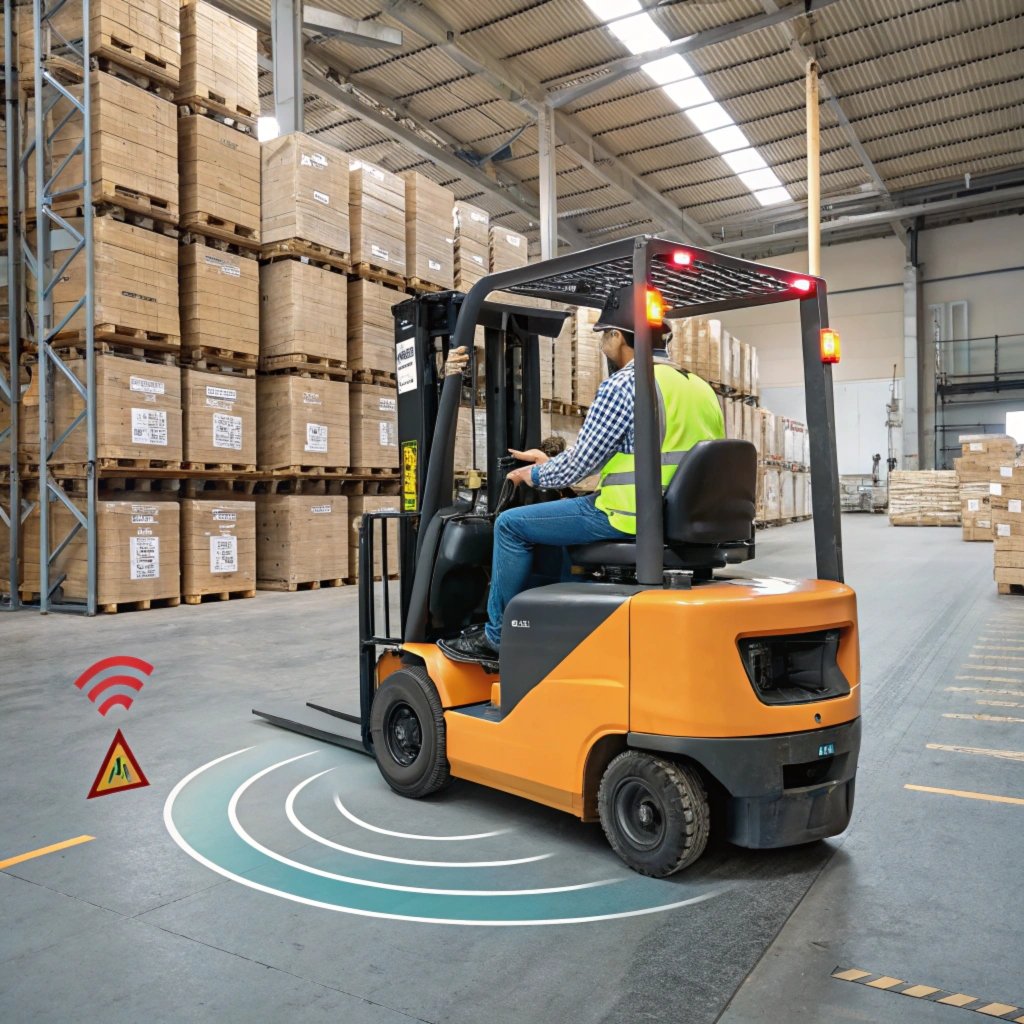
Even a fully authorized operator can still miss a pedestrian in a blind aisle or overrun a rated capacity limit under pressure — training reduces risk, it doesn't eliminate it on its own.
See How Access Control Backs Up Authorization →6. Authorization Is Truck-Specific and Site-Specific
Authorization doesn't cover "forklifts" as a category — it covers a defined truck type in a defined environment. OSHA distinguishes between basic types (sit-down counterbalance, stand-up rider, reach truck, order picker, rough-terrain) rather than requiring separate training for every make and model, but moving an operator from one type to another still requires new equipment-specific training before they're authorized on it.
Site conditions matter just as much as equipment type. An operator authorized at a 20-foot-aisle distribution center isn't automatically authorized to run a narrow-aisle reach truck at a cold-storage facility, and a worker transferred between company locations needs a new workplace evaluation reflecting the new site's layout, racking height, and pedestrian traffic patterns — even on an identical truck model.
7. When Authorization Must Be Renewed
Authorization isn't permanent, and it isn't purely calendar-based either. OSHA sets a maximum three-year interval for a formal re-evaluation of every operator's performance, but five separate events can trigger mandatory refresher training and re-evaluation well before that three-year mark:
- Observed unsafe operation — speeding, improper load handling, ignoring the seatbelt, or similar behavior seen on the floor.
- An accident or near-miss — any incident that caused or could have caused property damage or injury.
- A failed or concerning evaluation — a performance check that reveals the operator is not running the truck safely.
- Assignment to a different truck type — moving from a counterbalance forklift to a reach truck or order picker, for example.
- A change in workplace conditions — new racking, altered traffic patterns, a new type of load, or a layout change that affects safe operation.
The three-year rule only governs the routine re-evaluation cycle. The five event-based triggers apply immediately, regardless of how recently the operator was last authorized. An operator retrained eight months ago who's then involved in a near-miss still needs refresher training and re-evaluation right away — the clock doesn't reset the compliance clock, the event does.
8. Documentation Every Employer Must Keep
OSHA doesn't issue a physical "forklift license" — the employer's own written certification record is the legal proof of authorization, and it has to be specific enough to survive an inspection. A defensible record generally includes:
- Operator's full name and the specific truck type(s) they're authorized on
- Date formal instruction was completed
- Date and outcome of the practical training session
- Date and outcome of the workplace performance evaluation
- Name and signature of the trainer/evaluator
- Workplace-specific hazards that were addressed during training
- A running log of any event-triggered refresher training and the reason it occurred
A generic entry like "forklift training completed" rarely satisfies an inspector — the record needs to tie back to a specific truck type, a specific evaluator, and specific dates.
9. Authorization Mistakes That Trigger OSHA Citations
The same handful of authorization gaps show up across warehouses, distribution centers, and manufacturing plants nationwide:
- Accepting outside certificates at face value without a site-specific evaluation on the actual truck and floor layout.
- Letting temporary or agency workers operate based on a prior employer's paperwork instead of your own authorization process.
- No physical control over who can start the truck — any employee can climb on and turn the key, authorized or not.
- Skipping refresher training after a near-miss because "nothing actually happened."
- Missing or vague documentation that can't show which specific truck type an operator is authorized on.
- No process for revoking authorization when an operator is observed working unsafely.
The financial exposure is real: federal OSHA's current penalty structure allows fines up to roughly $16,550 per serious violation and as much as $165,514 for willful or repeated violations — and an unauthorized-operator finding following an injury investigation is one of the fastest routes to a willful citation, because it points directly to a failure of employer control rather than an accident.
10. Enforcing Authorization With Access Control Technology
The regulation tells you who has to be authorized. It doesn't hand you a way to physically stop an unauthorized worker from starting the truck in the first place — that part is still down to supervision, discipline, and trust, unless the equipment itself enforces it. This is the exact gap a forklift access control system is built to close: it turns "only trained and authorized operators shall be permitted to operate" from a policy statement into a hardware-enforced rule.
| OSHA Authorization Requirement | How Access Control Technology Enforces It |
|---|---|
| Only trained and authorized operators may drive | ID card, PIN, or fingerprint login required before ignition — the truck simply won't start for anyone not on the authorized list. |
| Authorization is truck-specific | Each credential can be scoped to specific truck types or units, so an operator authorized only on a counterbalance can't start a reach truck. |
| Authorization must be revocable immediately | An operator flagged for unsafe behavior can be deactivated instantly in the system — no physical key to collect, no delay. |
| Refresher training triggers on new conditions or trucks | Expiring credentials and scheduled re-authorization reminders keep the three-year evaluation cycle and event triggers from slipping through the cracks. |
| Employer must document who operated which truck, when | Automatic login/logout logs create a timestamped operator record — exactly the paper trail an OSHA inspection or incident review asks for first. |
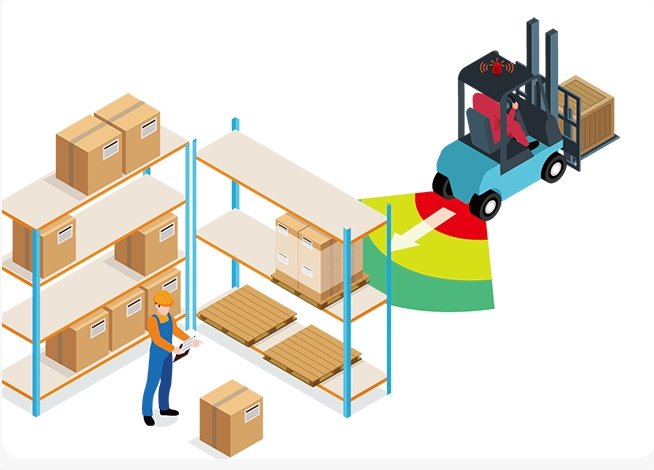
Pairing access control with a broader safety layer closes the loop even further: an AI pedestrian detection system protects the aisles an authorized operator drives through, and a forklift speed limiter keeps posted zone limits enforced automatically rather than relying on driver discipline alone — the same principle that makes access control effective in the first place.
Stop Unauthorized Operation Before It Starts
We design and install forklift access control systems that verify every driver before the truck powers on — built for warehouses, distribution centers, and industrial fleets across the USA.
Talk to a Safety Specialist11. Employer Compliance Checklist
A fast self-audit against everything covered above:
- Every operator is at least 18 years old, with age verified and on file.
- Formal instruction, practical training, and a workplace evaluation are documented separately for each operator.
- Authorization records specify the exact truck type(s) each operator is cleared to run.
- Outside or prior-employer certificates are never accepted without an in-house evaluation.
- A three-year re-evaluation schedule is tracked for every active operator.
- A clear process exists to trigger refresher training after any unsafe act, accident, or near-miss.
- Authorization can be revoked the same day unsafe behavior is observed.
- Physical or electronic controls prevent unauthorized workers from starting a truck.
- Timestamped logs show who operated which truck, and when.
12. Frequently Asked Questions
Tap a question to expand the answer — tap again to collapse it.
Does OSHA issue an official forklift license?+
No. OSHA doesn't issue licenses or certificates to individual operators. "Forklift certified" refers to the employer's own written record showing an operator completed formal instruction, practical training, and a workplace evaluation under 29 CFR 1910.178(l). That record — not a government card — is the legal proof of authorization.
Can a worker use a forklift certificate from a previous employer?+
Not on its own. Prior training can shorten the formal-instruction portion, but the new employer still has to complete practical training and a workplace evaluation specific to its own trucks and site conditions before that worker is legally authorized there.
What is the minimum age to be authorized as a forklift operator?+
18 years old in non-agricultural settings, under the Fair Labor Standards Act's Hazardous Occupation Order No. 7. A narrow exception permits trained 16- and 17-year-olds to operate forklifts in bona fide agricultural work only.
How often does forklift authorization need to be renewed?+
OSHA requires a formal performance re-evaluation at least once every three years. Separately, refresher training and re-evaluation are required immediately after observed unsafe operation, an accident or near-miss, a failed evaluation, assignment to a new truck type, or a change in workplace conditions — whichever comes first.
Who is legally responsible if an unauthorized worker operates a forklift?+
The employer. Authorization is an employer-issued designation, so allowing an untrained or unevaluated worker to operate a powered industrial truck is treated as an employer compliance failure, not an individual worker's fault, when OSHA investigates.
Is authorization the same for every type of forklift?+
No. Authorization is specific to the type of truck — sit-down counterbalance, stand-up rider, reach truck, order picker, and so on. An operator moved to a different truck type needs equipment-specific training and a new evaluation before being authorized on it.
Can access control technology replace forklift operator training?+
No, and it isn't meant to. OSHA still requires the full training-and-evaluation process for every operator. Access control enforces the outcome of that process — only authorized credentials can start the truck — rather than replacing the training itself.
What records should an employer keep to prove authorization during an OSHA inspection?+
At minimum: the operator's name, the specific truck type(s) authorized, dates of formal instruction, practical training, and workplace evaluation, the evaluator's name and signature, and a log of any event-triggered refresher training. Vague entries without dates, truck types, or evaluator names typically don't satisfy an inspector.
Sources: OSHA 29 CFR 1910.178(l) — Powered Industrial Truck Operator Training; OSHA Powered Industrial Trucks eTool; Fair Labor Standards Act Hazardous Occupations Order No. 7 (29 CFR 570.58); OSHA Penalty Adjustment Table. This article is for general safety-compliance information and does not constitute legal advice — verify current requirements with OSHA or qualified counsel before finalizing a workplace program.