Skip to content

Warehouse Safety Management: The Complete Guide to Forklift Safety and Accident Prevention (2026)

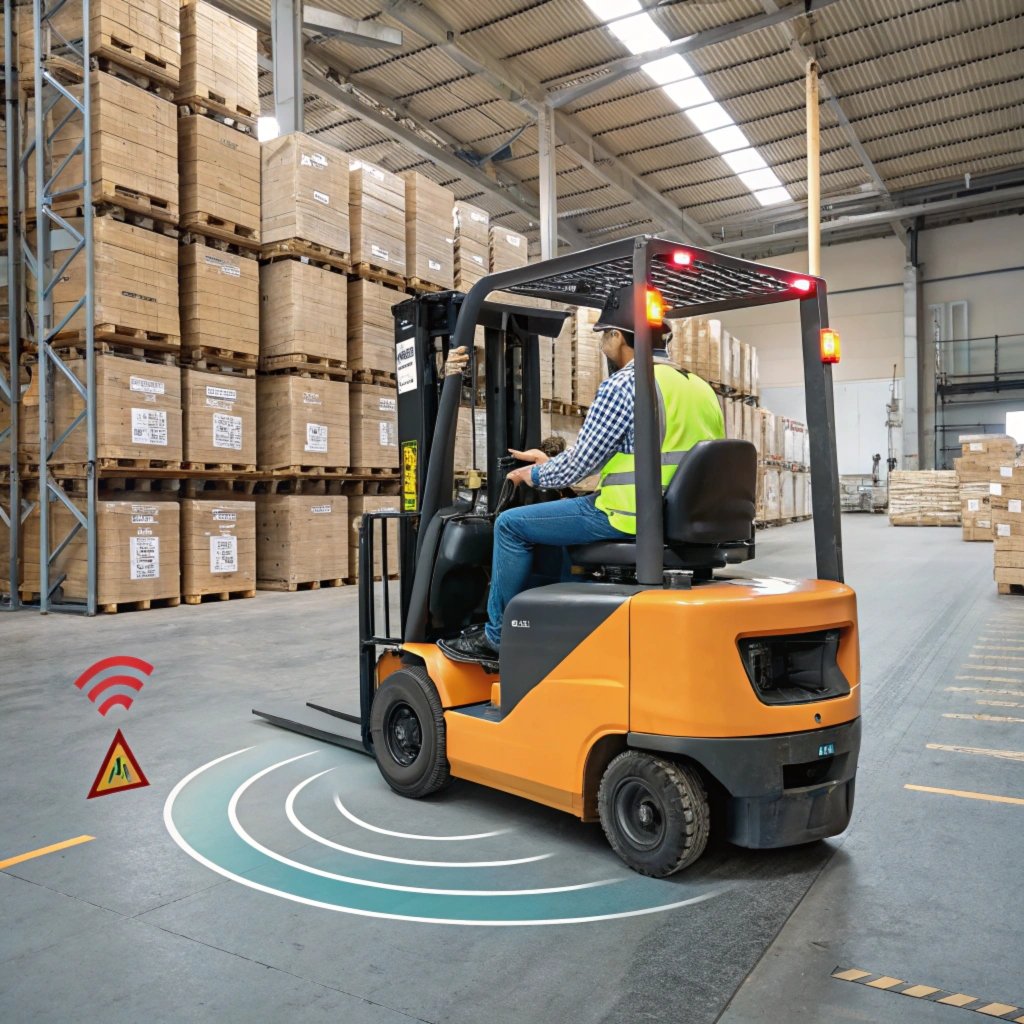
A trained operator following standard U.S. operating practice — seatbelt fastened, clear line of sight, controlled speed through the aisle.
Warehouse safety isn't one policy or one piece of equipment — it's a management system. The warehouses with the fewest incidents aren't the ones with the strictest-sounding rulebook; they're the ones where a manager can answer, in one sentence, exactly who is responsible for inspections, training, layout, and monitoring on any given day. This guide walks through how to build that system from the ground up, with forklift safety at the center of it, since forklifts are involved in the majority of serious warehouse incidents.
1. Why Warehouse Safety Management Starts With Forklift Operations
Ask any warehouse manager what keeps them up at night, and forklift activity is almost always near the top of the list. Forklifts move faster than pedestrians expect, weigh many times more than the loads they carry, and share the same floor space as pickers, packers, and drivers throughout every shift. That combination is why forklift-related incidents make up such a large share of overall warehouse injuries — and why a warehouse safety management program that doesn't put forklift operations at its center is missing the highest-risk activity on the floor.
Good warehouse safety management isn't about adding more signs or reading a policy out loud once a year. It's about building a repeatable system — inspection, training, layout, and monitoring — that keeps working even when the floor is busy, staffing changes, and shifts run back to back. The rest of this guide breaks that system down into pieces a manager can actually implement.
2. The Leading Causes of Warehouse Accidents
Before building a safety program, it helps to know exactly what you're building it against. Across warehouse environments, a short list of causes accounts for most reported incidents:
| Cause | Why It Happens | Typical Outcome |
|---|---|---|
| Struck-by pedestrian incidents | Blind intersections, operators backing without a clear view, workers stepping into an aisle without checking | Serious injury; the leading cause of forklift fatalities |
| Forklift tip-overs | Overloaded or off-center loads, turning too fast, uneven or sloped flooring | Severe injury, extended equipment downtime |
| Racking and load collisions | Misjudged clearance, poor visibility at height, overloaded pallets | Product loss, structural racking damage |
| Forklift-to-forklift collisions | Multiple trucks converging on the same aisle intersection or dock door | Equipment damage, occasional injury |
| Falls from height and manual handling injuries | Improvised access to high shelving, poor lifting technique, fatigue | Sprains, fractures, lost workdays |
Notice that the top two causes — pedestrian strikes and tip-overs — are both forklift-related, and both come down to the same underlying problem: the operator not having enough warning or enough control in the moment it mattered. That's exactly why forklift operations get the most attention in the sections that follow.
3. The Real Cost of a Warehouse Safety Failure
The injury itself is only the first cost. A single warehouse incident typically sets off a chain of secondary costs that are easy to underestimate when you're weighing whether a safety investment is "worth it":
- Operational downtime while the area is cleared, the incident is investigated, and the aisle or dock is taken out of service.
- Damaged inventory and racking, which is often far more expensive to replace than the immediate repair suggests.
- Regulatory exposure — an inspection, citation, or closer scrutiny of the rest of the facility.
- Rising insurance costs that outlast the incident itself, sometimes for years.
- Erosion of trust on the floor — after a visible incident, operators tend to either overcorrect into excessive caution or, paradoxically, become desensitized, and neither outcome is good for safety.
Weighed against the cost of prevention — a documented inspection routine, better aisle marking, or a pedestrian detection system — the safety investment case usually makes itself. If you haven't formally scored these risks yet, our warehouse risk assessment framework walks through a practical 5-step process for doing that.
4. The Five Pillars of a Warehouse Safety Management Program
Every warehouse that manages forklift and floor safety well is leaning on the same five pillars, whether they call it that or not. Remove any one, and the rest of the program carries more weight than it can hold.
Written Safety Program & Risk Assessment
A documented policy that names who is responsible for inspection, training, and reporting — not a generic template sitting unread in a binder.
Operator Training & Certification
Formal initial certification, scheduled refreshers, and immediate retraining after any near-miss or incident.
Pre-Shift Equipment Inspection
A non-negotiable, documented check before every shift, with a clear process for pulling faulty equipment out of service.
Facility & Traffic Design
Aisle marking, blind-corner mitigation, and staging placement that reduce how often a forklift and a pedestrian share the same space unexpectedly.
Active Detection & Monitoring Technology
Systems that catch the split-second risks training and layout alone can't — a pedestrian stepping around a rack, or a truck approaching an intersection too fast.
5. A Daily Warehouse Safety Checklist for Managers
Programs fail quietly when they exist only on paper. A short daily routine keeps the five pillars above actually running on the floor, not just in the policy binder:
- Confirm every forklift in use today has a signed, dated pre-shift inspection on file.
- Spot-check one high-traffic intersection during a shift change and watch how operators and pedestrians actually behave there.
- Review any near-miss reports from the previous 24 hours before the next shift starts, not at the end of the week.
- Verify aisle markings, mirrors, and warning lights at known blind corners are clean, visible, and undamaged.
- Check that any pedestrian detection, camera, or speed-limiting systems in use are powered on and functioning — not just installed.
- Walk the dock area at shift change, when congestion and trailer movement are at their highest.
None of these steps take more than a few minutes individually, but done consistently, they're what separates a warehouse that catches problems early from one that only finds out about them after an incident report.
Want a Second Set of Eyes on Your Warehouse Floor?
We design the AI pedestrian detection, camera, and speed-control systems that give your operators an extra layer of protection your checklist and training alone can't provide.
Get a Free Warehouse Safety Review6. Reducing Forklift-Pedestrian Accidents in the Warehouse
Struck-by incidents carry the most severe outcomes in warehouse safety, and they're almost always a visibility and timing problem rather than a rule-following one. An operator can be certified, alert, and driving within the posted speed limit, and still not see a picker who steps out from behind a rack at exactly the wrong moment. Reducing this risk means working the problem from three directions at once:
- Separate the paths physically wherever you can. Painted lanes, floor markings, and barriers between forklift routes and walkways cut down the number of moments a truck and a pedestrian occupy the same footage.
- Fix the blind corners you can't design away. Convex mirrors help at low speed, but they depend on both parties looking at the right moment — they don't compensate for a distracted pedestrian or an operator focused on a tight turn.
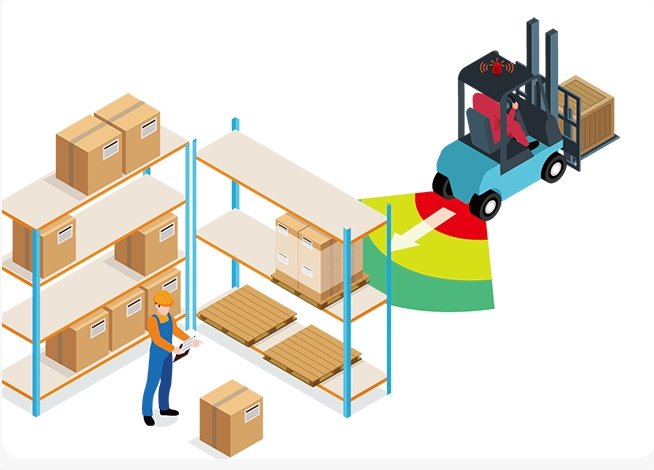
- Give operators an active warning, not just a passive aid. This is usually where warehouses see the single biggest improvement: a system that alerts the operator the instant a pedestrian enters a blind zone, instead of relying on the operator to spot them first.
It's also worth building the habit of logging near-misses, not just accidents. Near-misses are the early warning system your program gets before someone actually gets hurt — see our breakdown of forklift near-miss vs. accident reporting for how to build that into your team's routine.
7. Facility Layout: Aisles, Racking, and Blind Corners
Layout is one of the highest-leverage tools a warehouse manager has, because most incidents happen at a small, predictable set of intersection points — not randomly across the whole floor.
- Mark every crossing point where a forklift route meets a walkway, with floor tape, hatching, or raised markers — not just the main aisles.
- Walk the floor from both perspectives. Physically stand where an operator sits and where a pedestrian walks, and flag every point where sightlines drop below roughly 10–15 feet.
- Keep staged pallets out of turning radii. A truck making a tight turn around staged material has far less room to react to someone appearing unexpectedly.
- Treat dock areas as their own risk zone. Poor lighting, trailer creep, and the transition between dock and open floor account for a disproportionate share of incidents relative to how much space they cover.
8. Building a Warehouse Safety Culture That Lasts
Layout and equipment set the ceiling on how safe a warehouse can be; culture determines whether the floor actually operates near that ceiling day to day. A few habits separate warehouses where safety sticks from ones where it fades after the first busy peak season:
- Make reporting easy and blame-free. If operators fear discipline for reporting a near-miss, you stop hearing about the problems that matter most.
- Put a manager on the floor at shift changes, when fatigue, handoffs, and congestion are all highest at once.
- Retrain after every near-miss, not just after a documented incident — waiting for something to go wrong before retraining keeps the whole program reactive.
- Share data, not just rules. Operators respond better to "this intersection had four near-misses last month" than to a generic reminder to "be careful."
9. Where Safety Technology Closes the Gaps Training Can't
Training and layout changes reduce risk substantially, but neither one fully compensates for the split-second nature of a blind-corner encounter. This is the gap safety technology is built to close — not as a replacement for a trained operator, but as the layer that catches what even an attentive one physically can't see in time.
- Pedestrian detection gives an active alert the moment a person enters a blind zone or intersection, instead of relying on the operator spotting them first.
- Forklift-to-forklift proximity warning reduces collisions at shared intersections and staging points where multiple trucks converge on a predictable schedule — see our proximity warning system overview.
- Camera systems extend the operator's field of view around racking and reversing blind spots that mirrors alone don't fully cover — our forklift camera vs. mirrors comparison breaks down how the two hold up in practice.
- Speed limiting keeps trucks inside a safe travel speed automatically in high-traffic zones, cutting stopping distance exactly where it matters most.
- Recorded-event footage turns every near-miss into usable data, so you can review what actually happened instead of relying on memory.
None of this replaces a trained, alert operator — but a warehouse that pairs solid training with an active forklift anti-collision system is working with two independent layers of protection instead of one, which is exactly what keeps a single missed glance from becoming an injury.
10. Common Mistakes Warehouse Managers Make
- Treating layout as fixed because "that's how the racking has always been laid out" — even small marking and barrier changes at high-traffic intersections meaningfully cut risk.
- Logging near-misses informally, or not at all — without a pattern to look at, the same blind corner keeps almost causing the same incident until it finally does.
- Letting training lapse after initial certification — complacency, not lack of skill, is what tends to creep in on repetitive routes.
- Relying on mirrors alone at high-traffic blind corners — they help, but they depend on both parties looking at the right moment.
- Assuming a "quiet" warehouse is a safe one — the absence of a recent incident isn't the same as the absence of risk; it often just means the near-misses haven't been counted yet.
11. Frequently Asked Questions
Tap a question to expand the answer — tap again to collapse it.
Reducing Forklift Risk on Your Warehouse Floor?
We design the AI pedestrian detection, camera, and speed-control systems that give your operators an extra layer of protection your checklist and training alone can't provide.
Talk to a Forklift Safety Specialist