Skip to content

How High Can a Forklift Lift? Height Charts, Mast Types & What Actually Limits You
The honest answer is "it depends on the mast" — and most buyers never see the number that actually matters until the truck is already on order. This guide breaks down real lift-height ranges by forklift type, explains free lift vs. full lift, and shows how to size the right truck for your racking.
Walk into any warehouse and ask "how high can this forklift lift?" and the answer you get is usually a guess — "about 20 feet," maybe, or whatever the salesperson said two years ago. That guess is a problem the day someone needs to reach the top rack level and the forks stop three feet short.
Lift height isn't a single spec you can read off a brochure the way you'd read a horsepower rating. It's the product of the mast's stage count, the truck's collapsed height limit, its rated capacity at full extension, and sometimes the ceiling above the operator's head. This guide walks through each of those pieces so you can match a forklift's real reach to your actual racking — not to a number that only applies under test conditions.
📋 Table of Contents
- Quick Answer: Typical Forklift Lift Heights
- What Actually Determines Maximum Lift Height
- Mast Stages: 2-Stage vs. 3-Stage vs. 4-Stage
- Lift Height by Forklift Type
- Free Lift vs. Full Lift — Why It Matters
- The Height-vs-Capacity Trade-Off
- Very Narrow Aisle Lifting: A Different Challenge
- How to Calculate the Lift Height You Actually Need
- Common Lift-Height Buying Mistakes
- Safety at Height: What Changes When You Lift Higher
- FAQs
1. Quick Answer: Typical Forklift Lift Heights
If you just need a ballpark before diving into the detail: most standard counterbalance forklifts lift somewhere between 10 and 15 feet with a 2-stage mast, and up to roughly 20–22 feet with a 3-stage mast. Reach trucks built for narrow-aisle racking typically reach 30–36 feet, and dedicated very narrow aisle (VNA) turret trucks can go beyond 40 feet in tall automated storage buildings.
2. What Actually Determines Maximum Lift Height
A forklift's maximum lift height is set by four things working together, not by one spec on its own:
- Mast stage count — how many nested rail sections the mast has, which sets the physical extension range.
- Collapsed (lowered) mast height — how tall the mast is when fully down, which decides whether the truck fits through doorways, into trailers, or under low ceilings.
- Rated capacity at full height — most trucks lift less weight the higher the forks go, so "maximum height" and "maximum capacity" rarely happen at the same time.
- Overhead clearance — building ceiling height, sprinkler lines, and lighting fixtures can all cap usable lift height even when the mast could physically go higher.
Two trucks can share the same maximum lift height on paper and behave completely differently once you factor in how much weight each one can actually carry up there. For the capacity side of that equation, our forklift capacity guide covers how load center and lift height interact to reduce a truck's safe carrying weight.
3. Mast Stages: 2-Stage vs. 3-Stage vs. 4-Stage
The mast is what physically sets a forklift's height ceiling. More stages generally mean more reach, but also a taller collapsed height and, often, a lower capacity rating at full extension.
| Mast Type | Typical Max Lift Height | Collapsed Height | Best Suited For |
|---|---|---|---|
| 2-Stage (Duplex) | 10–15 ft (3–4.6 m) | Low — good for low ceilings, no free lift | Dock work, trailer loading, low-bay storage |
| 3-Stage (Triplex) | 18–22 ft (5.5–6.7 m) | Low — full free lift standard | General warehousing, mid-height racking |
| 4-Stage (Quad) | 22–30+ ft (6.7–9+ m) | Moderate | High-bay racking where a reach truck isn't practical |
A full breakdown of how each mast stage affects visibility, stability, and application fit is in our dedicated forklift mast types guide — worth reading before you lock in a mast configuration.
4. Lift Height by Forklift Type
Mast stage count sets the ceiling, but the type of truck decides which mast options are even available. Here's how maximum lift height typically breaks down across common forklift categories:
| Forklift Type | Typical Max Lift Height | Common Use Case |
|---|---|---|
| Electric Pallet Jack / Walkie | 6–8 ft (1.8–2.4 m) | Dock-to-floor pallet moves, no racking |
| Standard Counterbalance (2-stage) | 10–15 ft (3–4.6 m) | Ground-level and low-rack warehousing |
| Standard Counterbalance (3-stage) | 18–22 ft (5.5–6.7 m) | General multi-level pallet racking |
| Reach Truck | 30–36 ft (9–11 m) | Narrow-aisle, high-bay pallet racking |
| Order Picker | 25–32 ft (7.6–9.8 m) | Case and piece picking at height |
| Very Narrow Aisle (VNA) Turret Truck | up to 40–45 ft (12–14 m) | High-density automated storage buildings |
| Rough Terrain Forklift | 10–20 ft (3–6 m) | Construction sites, uneven outdoor ground |
If you're weighing brand and model options at any of these heights, our Jungheinrich vs. Linde comparison and Toyota vs. Hyster comparison both cover mast and lift-height differences between competing models.

5. Free Lift vs. Full Lift — Why It Matters
These two terms get confused constantly, and the difference matters the moment you're working under a low ceiling, inside a trailer, or under sprinkler pipes.
- Free lift is how high the forks can rise before the mast itself starts to extend upward. This is the height you get without the outer mast rail growing taller.
- Full lift (or maximum lift height) is the total height the forks reach once the mast is fully extended — free lift included.
A truck with generous free lift can pick a load off the top of a stack and lower it inside a trailer without the mast striking the roof — something a full-lift-only figure won't tell you. If you regularly load trailers, box cars, or work under low overhead obstructions, ask specifically for the free lift figure, not just the maximum height.
6. The Height-vs-Capacity Trade-Off
Every forklift's stability triangle narrows as the load rises, because the combined center of gravity of the truck and load shifts upward. That's why nameplate capacity is measured close to ground level, and why the same truck often carries meaningfully less weight once the forks are at their maximum height.
This isn't a flaw — it's physics. But it means a truck advertised as reaching "22 feet" might only be rated to lift a fraction of its ground-level capacity once it actually gets there. Before buying for a specific rack height, always request the capacity chart at that exact height, not the ground-level number from the sales sheet. Our capacity explained guide walks through exactly how that derating works and how to calculate real usable capacity.
Lifting higher means bigger blind spots and a longer stopping distance. Our High-Sight Wireless Forklift Camera gives operators a clear rear and overhead view at every mast height — without adding another cable run to a truck that's already working at its limit.
See the Wireless Camera System7. Very Narrow Aisle Lifting: A Different Challenge
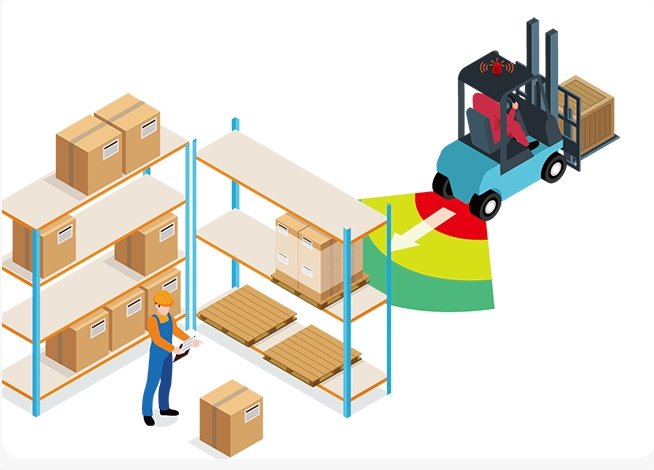
Lifting to 30–40+ feet only works if the truck can also stay perfectly straight inside an aisle that's barely wider than the truck itself. VNA turret trucks and reach trucks solve the height problem, but they introduce a visibility problem: the mast and load block much of the operator's forward view at exactly the height where a misjudged lift is hardest to correct.

Aisle width and lift height are two sides of the same buying decision — a truck that reaches high but can't turn or track straight in your actual aisle isn't a usable upgrade. If you haven't sized your aisle width yet, our forklift turning radius guide shows how to calculate the minimum aisle your truck needs before you commit to a racking layout.
8. How to Calculate the Lift Height You Actually Need
Work backward from your building and racking, not forward from a brochure number:
- Measure your top rack's beam height — the height the forks need to clear the beam and set the pallet down cleanly.
- Add pallet and load height — the fork tips need to clear the beam above the load itself, not just reach the beam level.
- Check your ceiling clearance — sprinkler heads, lighting, and roof trusses can all cap usable height below what the mast could physically reach.
- Confirm the capacity chart at that exact height — not the truck's advertised maximum height, which may assume no load or a different mast.
- Check the collapsed mast height against your lowest doorway, trailer interior, or overhead obstruction the truck needs to pass under during normal operation.
- Build in margin — racking layouts change, pallet heights vary, and a truck sized exactly to today's top rack rarely has room for tomorrow's taller load.
9. Common Lift-Height Buying Mistakes
- Buying off the maximum height figure alone, without checking the capacity chart at that height.
- Ignoring collapsed mast height and later finding the truck won't fit through a low doorway or trailer.
- Confusing free lift with full lift when trailer or box-car loading is part of the job.
- Sizing for today's racking without margin for a future high-bay expansion.
- Overlooking ceiling obstructions — sprinklers, ductwork, lighting — that cap usable height below the mast's physical limit.
- Choosing a taller mast without checking whether the aisle width still allows safe turning at that load.
10. Safety at Height: What Changes When You Lift Higher
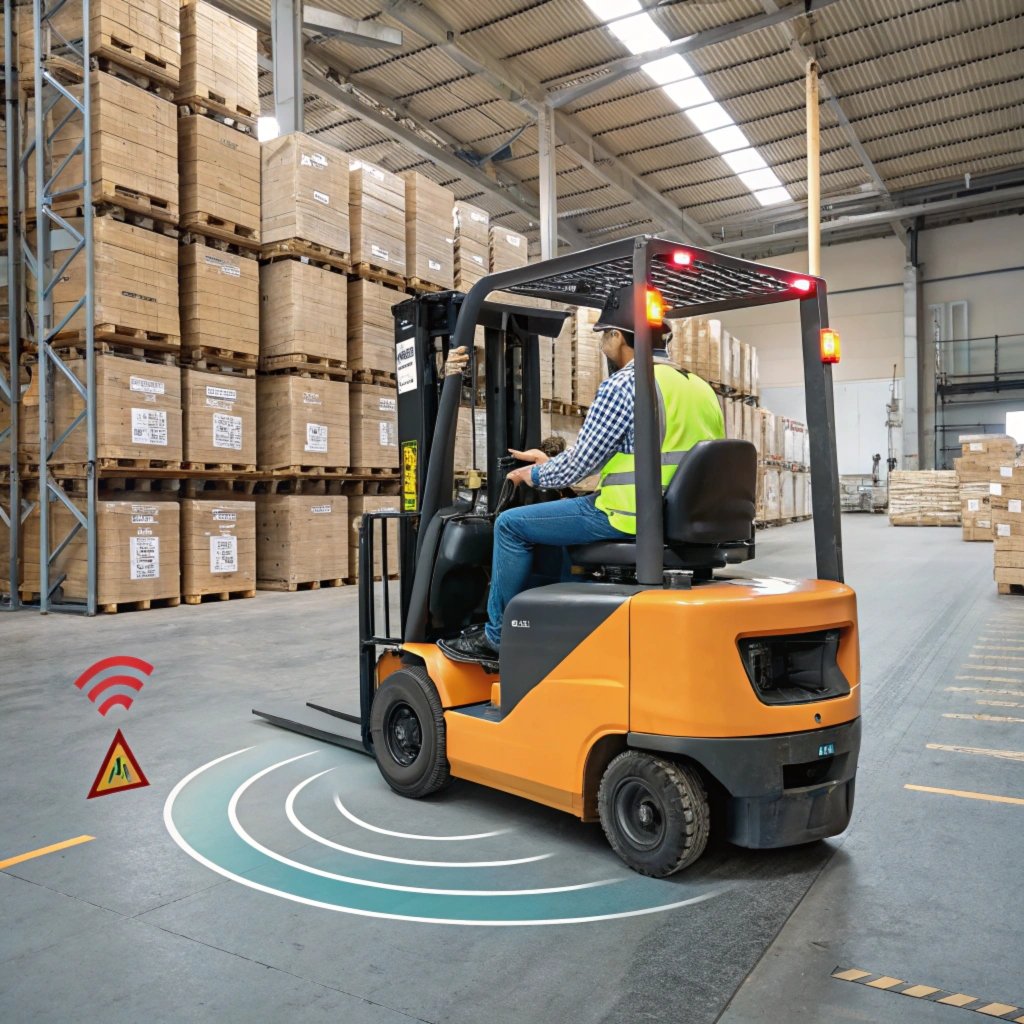
Every foot of extra lift height adds two things: a narrower stability margin and a bigger blind spot for the operator, since the mast, carriage, and load all sit higher in the field of view exactly when precision matters most. Two practical ways operations manage that added risk without relying on judgment alone:
- Keep the load and rack beam visible during the entire lift. A forklift camera system gives the operator a clear view of the fork tips and beam alignment at height, where the mast itself can block the direct sightline.
- Reduce the consequences of a misjudged lift near pedestrians below. Pedestrian safety systems alert operators and nearby workers before a high lift becomes a struck-by incident.
We Don't Sell Forklifts — We Help You Lift Safely at Any Height
Whatever mast height your racking calls for, our AI camera and anti-collision systems are built to keep operators aware of what's around, above, and below the load — every lift, every shift.
Get a Free Safety System Consultation11. Frequently Asked Questions
Tap a question to expand the answer — tap again to collapse it.
Most standard counterbalance forklifts with a 2-stage mast lift between 10 and 15 feet. Adding a 3-stage mast typically extends that to 18–22 feet, and specialized reach trucks or VNA turret trucks can go well beyond 30 feet in high-bay buildings.
No. Rated capacity is usually measured close to ground level. As the mast extends and the load rises, the truck's stability margin narrows, so most forklifts are rated to lift less weight at their maximum height than at floor level.
Free lift is how high the forks can rise before the mast itself begins to extend outward. Full lift is the total height once the mast is fully extended, free lift included. Free lift matters most for trailer loading and low-ceiling work.
Measure your top rack beam height, add the height of a loaded pallet, then check your ceiling clearance for obstructions like sprinklers or lighting. Confirm the truck's capacity chart at that specific height rather than relying on its advertised maximum.
Each additional mast stage adds physical extension range, which raises the maximum lift height. But more stages also generally mean a taller collapsed mast height and, often, a lower capacity rating once the mast is fully extended.
Yes. Reach trucks are purpose-built for narrow-aisle, high-bay racking and typically reach 30–36 feet, well beyond the 10–22 foot range of most standard counterbalance forklifts, though they trade outdoor versatility for that extra height.