Skip to content

Pneumatic vs Cushion Tires: Which Forklift Tire Type Is Actually Right for Your Floor?
Same forklift model, two very different machines once you change the tires. Here's how pneumatic and cushion tires actually affect stability, ground clearance, and safety — before you sign the order.
Most forklift buyers compare engines, mast height, and capacity — and then treat tire type as an afterthought, a box to tick near the bottom of the quote sheet. That's a mistake. The tire underneath a forklift changes how it turns, how it grips, how high off the ground it sits, and how it behaves the moment a load shifts or a wheel catches an uneven seam. Two forklifts with identical capacity ratings can handle a warehouse aisle — or a gravel yard — completely differently depending on whether they're riding on cushion or pneumatic tires.
This guide breaks down what separates the two tire types, where each one genuinely performs better, and how tire choice interacts with the stability and blind-spot factors that matter most for forklift safety.
📋 Table of Contents
- What Is a Cushion Tire Forklift?
- What Is a Pneumatic Tire Forklift?
- Key Differences at a Glance
- Indoor vs Outdoor Performance
- Stability, Ground Clearance & Safety
- Traction, Ride Comfort & Load Handling
- Maintenance, Lifespan & Total Cost
- Which Industries Use Which Tire Type
- How to Choose the Right Tire Type
- Common Mistakes When Choosing Forklift Tires
- FAQs
1. What Is a Cushion Tire Forklift?
Cushion tires are solid rubber pressed directly onto a metal core — no air chamber, no valve stem, nothing to puncture. They're molded low and wide, which keeps the forklift's overall stance closer to the ground compared with an air-filled equivalent. Because there's no risk of a flat, cushion tires are the default choice for smooth, dry, indoor floors: warehouses, distribution centers, manufacturing floors, and dock work where the surface is poured concrete and stays that way.
The lower profile also means a smaller overall footprint for the truck, which is exactly why cushion-tire forklifts dominate narrow-aisle indoor fleets — less turning radius, easier maneuvering between racks. If aisle width is already a tight constraint for you, it's worth reading alongside our forklift turning radius guide, since tire type is one of the variables that quietly shifts that number.

2. What Is a Pneumatic Tire Forklift?
Pneumatic tires look and behave much closer to a truck tire: either air-filled with a tread pattern, or in many industrial fleets, a "solid pneumatic" version — the same tread shape and rubber compound, but filled with solid rubber instead of air so there's no risk of a puncture stopping work mid-shift. Either version sits taller and thicker than a cushion tire, with deeper tread designed to bite into loose or uneven surfaces.
That extra height and tread depth is exactly what makes pneumatic tires the standard for outdoor work — yards, gravel, unpaved lots, construction sites, and anywhere the truck has to cross a loading apron, a curb cut, or a patch of ground that isn't flat poured concrete. The tradeoff is a taller stance and a wider turning footprint than the equivalent cushion-tire model.

3. Key Differences at a Glance
Here's how the two tire types compare across the factors that actually affect day-to-day operation and safety.
| Factor | Cushion Tires | Pneumatic Tires |
|---|---|---|
| Construction | Solid rubber on a metal core, no air | Air-filled or solid rubber with tread |
| Best surface | Smooth, dry, poured concrete (indoor) | Gravel, dirt, uneven or wet ground (outdoor) |
| Ground clearance | Lower | Higher |
| Turning radius | Tighter — better for narrow aisles | Wider — needs more maneuvering room |
| Ride comfort | Firmer, more vibration transmitted | Softer, absorbs bumps better |
| Puncture risk | None | Low with solid pneumatic; higher with air-filled |
| Typical lifespan | Longer on smooth floors | Shorter if run mostly on rough ground |
| Common power type | Mostly electric warehouse trucks | Mostly IC (diesel/LPG) yard and outdoor trucks |
4. Indoor vs Outdoor Performance
The single biggest factor in this decision is where the truck actually spends its shift. A cushion-tire forklift working a smooth warehouse floor all day is a good match — low stance, tight turns, minimal vibration. Put that same truck on a gravel yard or a cracked outdoor apron, and the low ground clearance becomes a liability: the truck rides rougher, wears the tire faster, and loses traction on loose or wet surfaces far sooner than a pneumatic-tired equivalent would.
Run the comparison the other direction and the same logic applies in reverse — a pneumatic-tired truck works fine indoors, but its wider turning circle and taller stance give up some of the tight-aisle maneuverability that a cushion-tire truck offers on the same warehouse floor.
Many mid-sized operations don't fall neatly into one category — dock doors that lead straight onto a gravel yard, or a warehouse with an outdoor staging area. In that mixed case, the tire decision usually comes down to which environment the truck spends the majority of its time in, since no single tire type is optimal at both extremes.
5. Stability, Ground Clearance & Safety
Tire type changes more than comfort — it changes the shape of the forklift's stability triangle, the imaginary line connecting the front wheels and the rear axle pivot that determines how far a load can shift before the truck tips. A lower-stance cushion tire generally gives a lower center of gravity on flat ground, which can help stability in tight indoor turns. A pneumatic tire's taller stance raises the center of gravity slightly but delivers better grip and clearance on the kind of uneven ground where a cushion tire would be more prone to losing traction mid-turn.
This is also why the forklift's data plate often shows a different capacity rating for the pneumatic-tire version of a model versus the cushion-tire version of the same base truck — tire type is one of the conditions baked into that rating, alongside load center and lift height. If you haven't already, our forklift capacity guide walks through how to read that plate correctly before you buy.
Worn tread on either tire type is a safety issue that's easy to overlook during a routine walk-around. A smooth, worn cushion tire on a wet dock ramp, or a pneumatic tire with cracked, low tread on gravel, both reduce the truck's ability to stop or turn predictably — exactly the moment a pedestrian or another truck might be in the blind spot.
6. Traction, Ride Comfort & Load Handling
Tread depth is the main driver of traction differences between the two types. Cushion tires are essentially smooth or lightly grooved, which works fine on dry, clean concrete but offers little grip once the floor has dust, oil residue, or moisture on it. Pneumatic tires' deeper tread channels water and loose debris away from the contact patch, which is the entire reason they're the standard for yards and unpaved lots.
Ride comfort follows the same pattern. Solid cushion tires transmit more vibration straight into the mast and the operator's seat, which becomes noticeable on long shifts even on a flat floor. Pneumatic tires flex slightly and absorb more of that shock, which matters for both operator fatigue and for reducing stress on a raised load riding at height — a bumpier ride at full mast extension makes a load more likely to shift.
7. Maintenance, Lifespan & Total Cost
Cushion tires generally last longer when kept on the smooth, dry floors they're designed for, and because they're solid rubber, there's no compressor, no pressure check, and no puncture repair to budget for. Pneumatic tires — especially air-filled versions — need routine pressure checks, since under-inflation quietly increases tread wear and can affect stability long before a visible flat appears. Solid pneumatic tires remove the puncture risk but generally cost more upfront than either cushion or air-filled pneumatic tires of the same size.
- Cushion tires: lower purchase cost, longer life on smooth floors, zero air-pressure maintenance.
- Air-filled pneumatic tires: lowest upfront cost among outdoor options, but need pressure checks and carry puncture risk.
- Solid pneumatic tires: highest upfront cost, but no punctures and predictable performance on rough ground.
8. Which Industries Use Which Tire Type
| Industry / Setting | Typical Tire Choice | Why |
|---|---|---|
| Warehousing & distribution | Cushion | Smooth concrete, narrow aisles, tight turns |
| Manufacturing floors | Cushion | Clean, flat, indoor-only operation |
| Retail & grocery backrooms | Cushion | Short indoor runs, minimal outdoor exposure |
| Construction sites | Pneumatic | Loose, uneven, unpaved ground |
| Lumber & building materials yards | Pneumatic | Gravel and dirt yard surfaces |
| Ports & container yards | Pneumatic (often solid pneumatic) | Heavy loads, rough pavement, puncture risk from debris |
| Mixed dock-to-yard operations | Depends on majority use case | Choose based on where the truck spends most of its shift |
Whichever Tire Type You Run, Blind Spots Don't Change
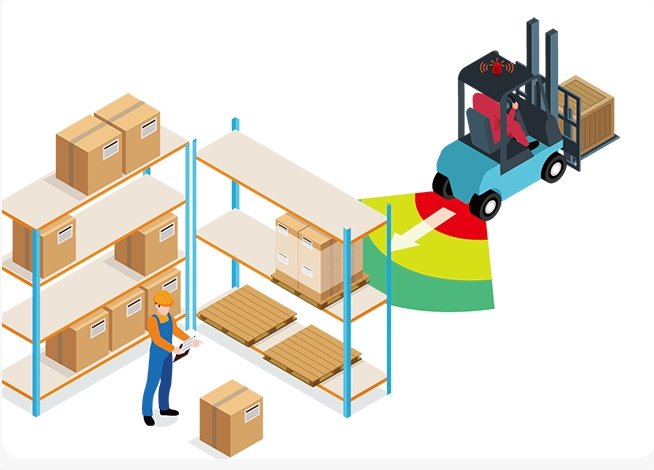
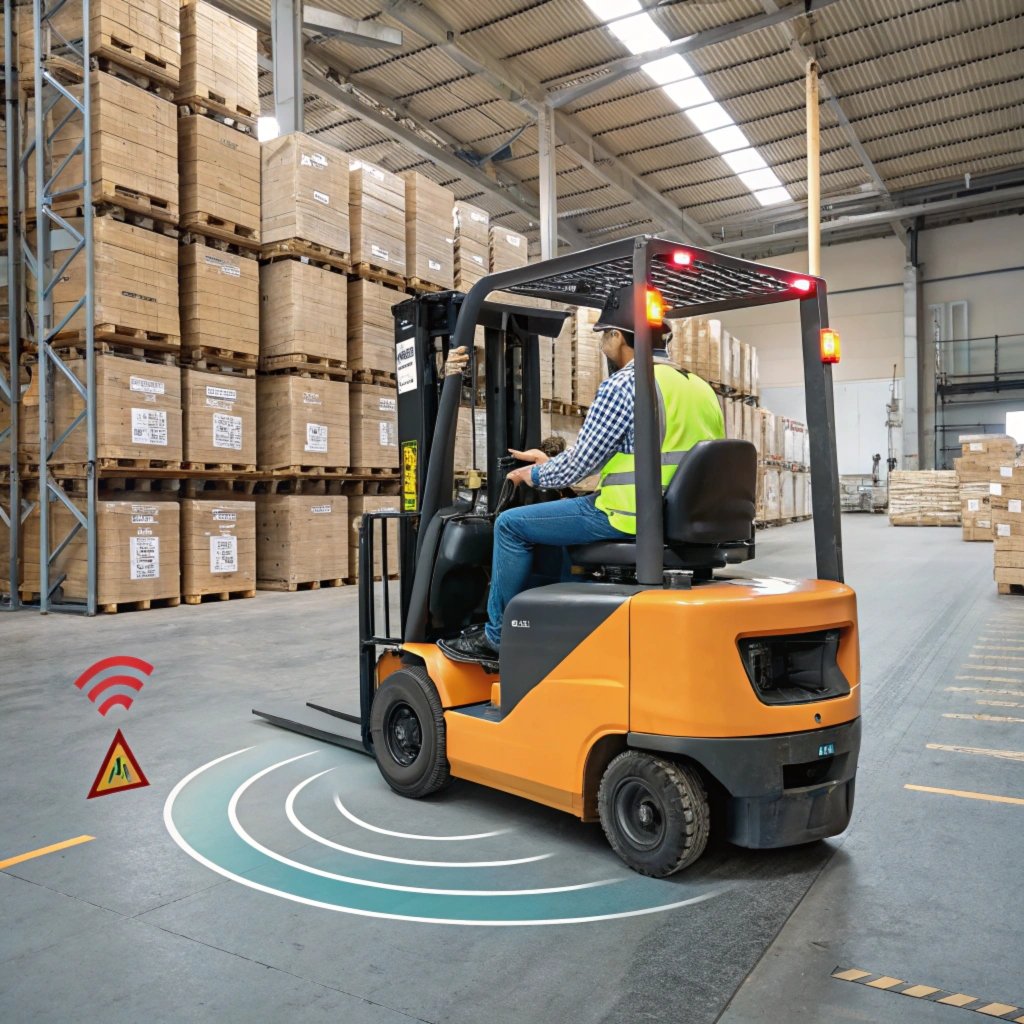
We don't sell forklifts or tires — we build the AI camera, pedestrian detection, and anti-collision systems that keep indoor and outdoor forklift fleets operating safely, on any surface.
Get a Free Safety System Consultation9. How to Choose the Right Tire Type
Work through these questions in order — the answer usually becomes obvious after the first two or three.
- Where does the truck spend most of its shift — indoors on concrete, outdoors on loose ground, or a genuine mix?
- How tight are your aisles? If turning radius is already a constraint, cushion tires give you more room to work with.
- Is the outdoor surface paved or unpaved? A truck crossing smooth pavement occasionally can often stay on cushion tires; loose gravel or dirt calls for pneumatic.
- Does the job involve wet conditions? Washdown areas, rain exposure, or spill-prone zones favor pneumatic tread for grip.
- What's your tolerance for downtime? If a puncture stopping the truck mid-shift is unacceptable, solid pneumatic or cushion tires remove that risk entirely.
If your fleet genuinely splits time between two environments, it's often more cost-effective to run separate trucks suited to each surface than to compromise with one tire type doing both jobs poorly. For a broader look at how tire type interacts with brand-level build differences, see our Toyota vs Hyster comparison and Jungheinrich vs Linde comparison.
10. Common Mistakes When Choosing Forklift Tires
- Choosing cushion tires purely on lower upfront price without checking the actual work surface.
- Running a cushion-tire truck on a gravel or dirt yard "temporarily" and accepting the accelerated wear as normal.
- Ignoring tread depth during pre-shift inspections — a worn tire on either type quietly extends stopping distance.
- Assuming the capacity rating is identical between cushion and pneumatic versions of the same model.
- Skipping tire-pressure checks on air-filled pneumatic tires, letting under-inflation go unnoticed until it affects stability.
- Not accounting for the wider turning radius of pneumatic tires when planning aisle widths.
11. Tire Type Changes the Ride — Not the Need for Awareness
Grip and stance protect against the ground. They don't protect against blind spots.
No matter which tire a forklift runs on, the operator still can't see a pedestrian stepping out from behind a rack or another truck approaching a blind corner. Pairing the right tire choice with pedestrian detection, camera-based blind-spot systems, or a speed limiter for yard-to-dock transitions closes the gap that better tires alone can't.
Talk to a Safety Specialist12. Frequently Asked Questions
Tap a question to expand the answer — tap again to collapse it.