Skip to content

If I Can Drive a Car, Can I Drive a Forklift? What Actually Transfers (and What Doesn't)
A car license doesn't make you forklift-certified — here's exactly what OSHA requires, which driving instincts help, and which ones can get someone hurt if they go unchecked.
📋 Table of Contents
- 1. The Quick Answer
- 2. What the Law Actually Requires
- 3. Car Skills That Do (and Don't) Transfer
- 4. Car vs. Forklift: A Side-by-Side Comparison
- 5. 5 Handling Differences That Catch New Operators Off Guard
- 6. How to Get Certified
- 7. Common Mistakes New Operators Make
- 8. Why Experience Alone Isn't Enough
- 9. FAQs
1. The Quick Answer
Ask most people whether a driver's license is enough to hop on a forklift, and the honest answer is no — and it's not close. In the United States, OSHA requires every forklift operator to complete formal training and be evaluated by their employer before operating a powered industrial truck unsupervised, regardless of how many years someone has spent behind the wheel of a car, truck, or motorcycle.
That doesn't mean car experience is wasted. Some habits — checking mirrors, judging speed, staying alert to what's moving around you — genuinely carry over. The risk is that those same habits can create false confidence, since a forklift handles so differently from a car that comfort on the road doesn't automatically translate to comfort on a warehouse floor.
A car license proves you can legally drive on public roads. It says nothing about whether you can safely operate a rear-steering, counterbalanced industrial vehicle — that's what certification is for.
2. What the Law Actually Requires
Under OSHA standard 29 CFR 1910.178(l), every forklift operator must be trained and evaluated before operating a powered industrial truck unsupervised. This applies no matter their driving history. Training has to cover three things:
- Truck-specific instruction — the exact make, model, and type of forklift the person will actually operate.
- Workplace-specific hazards — aisle widths, ramps, pedestrian traffic patterns, dock conditions, and anything else unique to that site.
- A hands-on driving evaluation — performed and signed off by a qualified trainer, not just a written test.
There's no national "forklift license" the way there's a driver's license. Certification is issued by the employer, or by a third-party trainer acting on the employer's behalf, and it's only valid for that specific workplace and equipment type. Change jobs or move to a different forklift class, and the person has to be re-evaluated — even if they were already certified somewhere else.
Letting an uncertified employee run a forklift — even briefly, even if they're a great car driver — is an OSHA violation that carries real fines, and a far more serious injury risk if something goes wrong.
3. Car Skills That Do (and Don't) Transfer
It's worth separating what genuinely carries over from what doesn't, because the overlap is smaller than most first-time operators expect.
What transfers
- Spatial awareness — general comfort judging distances and clearances.
- Mirror and surroundings checks — the habit of scanning before moving.
- Basic pedal coordination — accelerator and brake control.
- Following posted rules — respecting signage, limits, and markings.
What doesn't transfer
- Steering geometry — forklifts steer from the rear wheels, which reverses a car driver's instincts.
- Load-based balance — a raised or heavy load changes the center of gravity constantly, something a car never does.
- Tip-over risk — cars don't tip over in normal driving; forklifts can, especially mid-turn with a raised load.
- Visibility management — loads frequently block the forward view, which is why reverse travel is often standard practice.
- Confined-space maneuvering — warehouse aisles leave far less margin for error than public roads.
4. Car vs. Forklift: A Side-by-Side Comparison
| Factor | Car | Forklift |
|---|---|---|
| Steering wheels | Front wheels | Rear wheels |
| Center of gravity | Fixed, low, stable | Shifts constantly with load height and weight |
| Turning behavior | Predictable, front-led | Tight radius, rear end swings wide — easy to misjudge |
| Braking mid-turn | Generally stable | Can contribute to tip-over with a raised load |
| Forward visibility | Consistent | Often blocked by the load itself |
| Operating surface | Paved roads | Warehouse floors, ramps, docks, uneven yards |
| Legal requirement | State driver's license | Employer-issued certification, specific to truck type and site |
| Pedestrian interaction | Separated by sidewalks and crosswalks | Shared floor space, often with no physical barrier |
5. 5 Handling Differences That Catch New Operators Off Guard
Rear-wheel steering
Because the back wheels turn, the rear of the forklift swings outward in the opposite direction of a car mid-turn. Operators used to front-wheel steering routinely misjudge how much clearance they actually have behind them.
Load-dependent stability
A forklift's stability triangle changes with every load. Raise the forks, add weight, or tilt the mast, and the tipping point shifts — something a car driver has simply never had to account for.
Reverse-travel norms
When a load blocks forward visibility, operators are often trained to travel in reverse instead of driving blind. This is standard forklift practice with no real equivalent in everyday car driving.
Sharing space with pedestrians
Warehouse floors mix foot traffic and forklift traffic far more closely than roads mix cars and pedestrians. Blind corners, narrow aisles, and loud ambient noise all raise collision risk, especially near intersections and dock doors.
Surface and grade sensitivity
Ramps, uneven pavement, and wet floors affect forklifts — particularly loaded ones — far more dramatically than they affect a car.
The better someone's instincts are in a car, the more automatic those instincts feel — which is exactly why they're hard to override in the first weeks on a forklift. Confidence built on the road doesn't warn you that it's the wrong confidence for the floor.
6. How to Get Certified
- Classroom or online instruction covering forklift types, stability principles, and general safety rules.
- Truck-specific training on the exact model(s) the operator will run at that site.
- Hands-on evaluation, where a qualified trainer watches the operator run the truck and confirms competency.
- Formal certification, issued by the employer, valid for three years or until the operator is observed operating unsafely — whichever comes first.
Trainers often note that operators with strong, careful road habits move through the hands-on portion faster once they understand what's actually different — it's usually a matter of unlearning a few specific instincts, not starting from zero.
7. Common Mistakes New Operators Make
- Assuming car confidence equals forklift competence — and skipping the mental adjustment for rear-wheel steering.
- Taking corners at car-driving speed — without accounting for a much smaller, load-dependent stability margin.
- Driving forward with a blocked view — instead of switching to reverse travel as trained.
- Underestimating the rear swing — clipping racking, doorframes, or nearby pedestrians on turns.
- Treating certification as a one-time event — rather than something that needs renewal per site and per truck type.
8. Why Experience Alone Isn't Enough
Year after year, forklift incidents in warehouses and yards trace back to the same handful of causes: blind corners, pedestrian proximity, and operators who were confident but under-trained for the specific conditions of their site. Certification closes the training gap — but even certified, experienced operators benefit from added visibility and warning systems, especially in facilities with tight aisles, blind intersections, or heavy foot traffic.
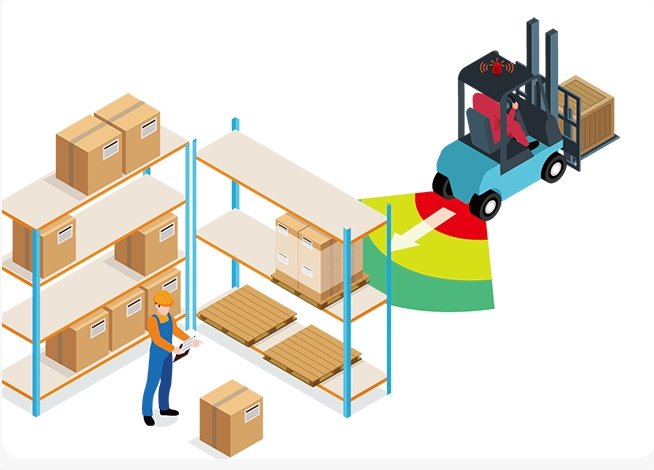
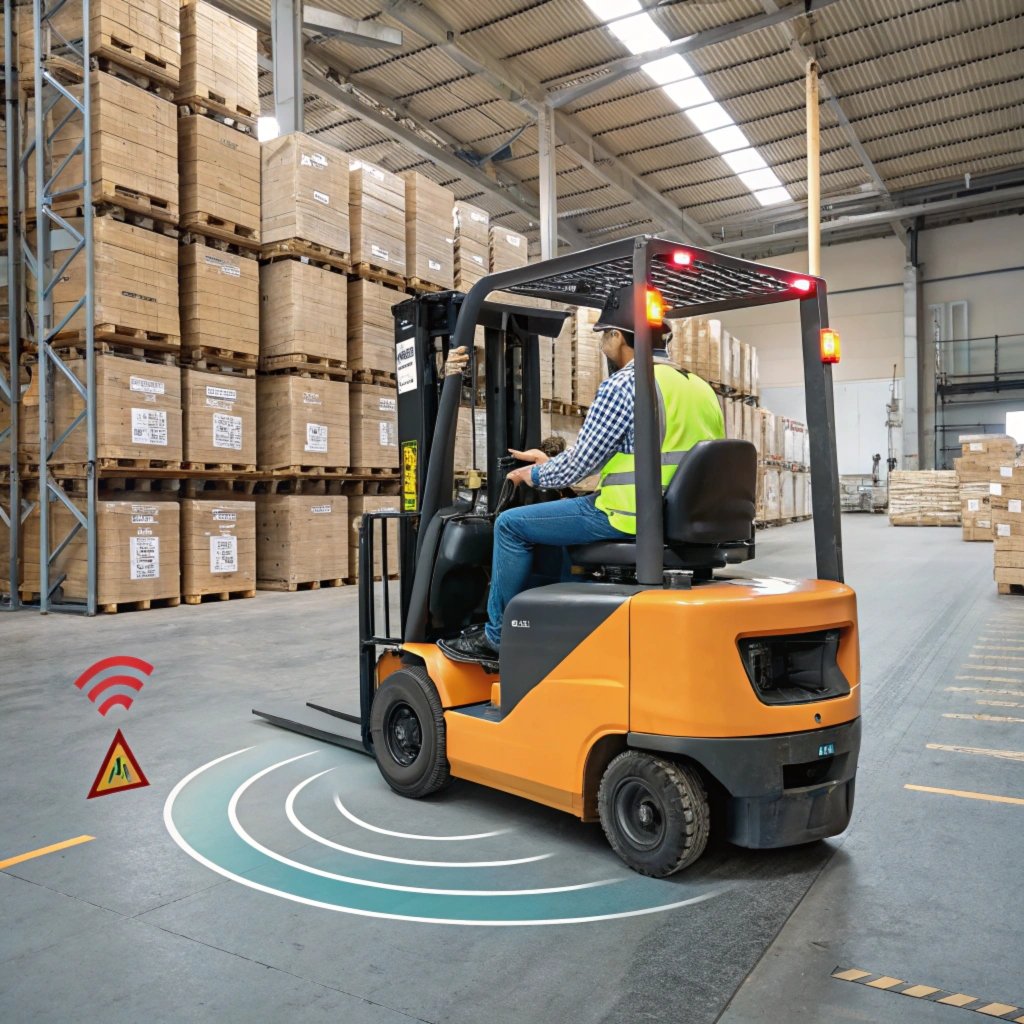
This is where AI-powered anti-collision systems and pedestrian detection systems come in. They don't replace training — they back it up, alerting operators and nearby workers before a blind-corner or reversing situation turns into a collision.
New operators aren't the only ones who benefit. If your fleet mixes recently certified drivers with veterans, it's also worth reviewing how forklift speed limiters and automatic braking systems reduce the margin for error across the board, regardless of how long someone has been on the truck.
Reduce Forklift Collision Risk in Your Facility
Even well-trained operators benefit from real-time pedestrian detection and anti-collision alerts in blind spots, aisles, and dock areas. See how AI-powered safety systems fit your fleet.
Get a Free Safety System Consultation9. Frequently Asked Questions
Tap a question to expand the answer — tap again to collapse it.
No. A car license has no legal bearing on forklift operation. OSHA requires separate, employer-issued training and certification for every operator, regardless of their driving record.
Not fully. Certification is specific to the employer, the site, and the equipment type. A new employer has to evaluate the operator on their own forklifts and facility, even if they're already certified elsewhere.
Most programs take one to three days, combining classroom instruction with hands-on evaluation. Experienced car drivers often move through the practical portion faster once they understand rear-wheel steering and load stability.
It's different rather than strictly harder. Forklifts are typically slower and mechanically simpler, but rear-wheel steering, shifting stability, and close-quarters maneuvering demand a distinct skill set that takes deliberate practice to build.
OSHA requires re-evaluation at least every three years, and sooner if the operator is involved in an incident, is seen operating unsafely, or is assigned to a different type of forklift.