Skip to content

Australia SafeWork Forklift Safety Rules: The Complete Pedestrian & Compliance Guide (2026)
"SafeWork" isn't one rulebook — it's a national framework enforced by eight different state and territory regulators, and the pedestrian-safety requirements are scattered across the model WHS Regulations, licensing rules, and state-specific guidance. This guide pulls it all into one place, in plain English, and shows exactly where AI collision-avoidance technology fits into meeting it.

Every state regulator — SafeWork NSW, WorkSafe Queensland, WorkSafe Victoria, SafeWork SA, WorkSafe WA, WorkSafe Tasmania, WorkSafe ACT and NT WorkSafe — enforces its own version of the same underlying model Work Health and Safety (WHS) laws that Safe Work Australia (SWA) develops. SWA itself doesn't inspect workplaces or issue fines; it writes the model Act, Regulations, and Codes of Practice that the states then adopt and enforce. That distinction matters, because it explains why "what does SafeWork require" doesn't have one single answer — it depends on which regulator's version of the rules applies to your site.
This guide breaks the requirements down by topic — legal duties, licensing, pedestrian traffic management, pre-start checks, and state-by-state differences — so safety coordinators, fleet managers, and anyone shopping for a pedestrian detection or anti-collision system know exactly what they're being measured against.
1. What "SafeWork" Actually Means in Australia
Safe Work Australia is a national policy body, not a workplace regulator. It develops the model Work Health and Safety (WHS) Act, the model WHS Regulations, and Codes of Practice — including forklift-specific guidance — but it has no power to inspect a site or issue a notice. Every state and territory then adopts its own version of that model framework through its own regulator: SafeWork NSW, WorkSafe Queensland, WorkSafe Victoria (which runs a separate but broadly harmonised OHS Act), SafeWork SA, WorkSafe WA, WorkSafe Tasmania, WorkSafe ACT, and NT WorkSafe.
In practice, this means the core forklift duties are close to identical across most of the country, but the licensing process, rebate schemes, penalty amounts, and published guidance documents are issued separately by each state regulator — which is why searching "SafeWork forklift rules" often turns up state-specific pages instead of one national source.
SWA writes the rulebook; your state or territory regulator enforces it — so always confirm the specific guidance published by the regulator covering your workplace, not just the national model.
2. Where Forklift Duties Come From: The WHS Act & Regulations
Forklift-specific obligations sit inside the broader WHS Act and Regulations, not a standalone "forklift law." The duties that matter most for pedestrian safety and equipment control are:
- Section 19 — Primary duty of care. A "person conducting a business or undertaking" (PCBU) must ensure, so far as is reasonably practicable, the health and safety of workers and anyone else affected by the work — including pedestrians who aren't employees, such as visitors or contractors.
- Section 21 — Duties of a PCBU with management or control of plant. Covers the obligation to ensure forklifts, as "plant," don't create risks to people at the workplace.
- Regulation 208 — Control of risk from powered mobile plant. The core forklift regulation: a PCBU must manage risks associated with powered mobile plant, including risks to pedestrians and other workers who share the same space as the forklift.
- Officer due diligence. Company directors and officers have a personal duty to exercise due diligence — meaning they need to actively verify that forklift safety systems, training, and traffic controls actually exist, not just assume a policy document covers it.
- Worker duties. Workers must take reasonable care for their own safety and the safety of others, including following operating instructions, staying within designated walkways, and not misusing equipment.
The model Code of Practice: Managing Risks of Plant in the Workplace sits underneath these duties and provides the practical detail regulators expect a business to have followed — things like risk assessments for forklift traffic, maintenance schedules, and operator competency checks.
3. High Risk Work Licensing: LF vs LO
Operating a forklift in Australia is classified as High Risk Work (HRW), which means an operator needs the correct licence class — not just "a forklift ticket." Two classes cover almost every forklift on the market:
- LF — Forklift truck licence. Covers any forklift with a mast and elevating load carriage where the operator's position stays fixed and doesn't rise with the load — counterbalance, reach, and multidirectional trucks fall under this class. It does not cover order-picking forklifts.
- LO — Order-picking forklift truck licence. A separate licence for machines where the operator's control platform (often called a "stock picker") rises and falls with the load carriage.
A worker with a current LF licence is not automatically licensed to run an order picker, and vice versa — the licence class has to match the specific machine, not the general category of "forklift." Training must run through a Registered Training Organisation (RTO), and a trainee may only operate a forklift under direct supervision from someone who already holds the relevant licence and has workplace experience with that equipment.
High risk work licences in Australia are generally valid for five years before renewal is required. A lapsed licence makes the operator — and the PCBU that let them keep working — non-compliant, even if the person is genuinely competent on the equipment.
4. Traffic Management & Pedestrian Separation Rules
This is the section most relevant if you're researching pedestrian safety specifically — and it's the area regulators return to most often, because most forklift incidents involve pedestrians. Safe Work Australia's guidance sets out clear expectations for how pedestrian and forklift traffic should be managed on site:
- Physically separate pathways. Pedestrians and forklifts should have clear, separate travel routes wherever the site layout allows it — not just painted lines, but genuine separation using barriers, bollards, or fencing where volumes and speeds justify it.
- High-visibility workwear should be worn by anyone walking outside a designated pedestrian walkway, including visitors and contractors passing through active forklift zones.
- Minimise blind spots at racking corners, doorways, and loading dock exits — either through layout changes, convex mirrors, or technology that gives the operator advance warning.
- Right-of-way rules need to be clear and communicated to everyone on site — and where a formal right-of-way isn't practical, operators are expected to make eye contact with pedestrians before proceeding.
- Highlight intersections and restricted areas where forklift and pedestrian paths cross, since these points carry disproportionately higher incident risk than open aisles.
The General Guide for Workplace Traffic Management, published alongside the forklift information sheet, goes further into layout design — but the underlying expectation is consistent: a PCBU has to be able to show that pedestrian-forklift interaction points were identified and actively controlled, not left to driver awareness alone.
Painted walkway lines and warning signs satisfy part of the traffic management expectation, but regulators increasingly expect layout controls to be backed by active measures — sensors, cameras, or speed control — at points where a sightline genuinely can't be fixed structurally, such as blind racking corners or dock doorways.
5. Pre-Start Checks & Seatbelt Requirements
A documented pre-start safety check is expected every time an operator uses a different forklift and at the start of every shift — because the truck may not have been left in a safe condition by the previous operator. A typical check covers tyres, forks, chains, mast condition, hydraulic leaks, horn, lights, backup alarm, and the seatbelt or restraint system.
Seatbelts (or another fitted restraint system) should be used unless a documented risk assessment specifically justifies not using one, with other controls put in place instead. This matters because a seatbelt is what keeps an operator inside the cab during a tip-over — one of the most common ways a forklift incident becomes fatal rather than a near-miss.
6. Attachments, Load Charts & De-Rated Capacity
Fitting an attachment — a fork positioner, clamp, or rotator — changes a forklift's effective capacity, because it shifts weight and load centre forward of the mast. Operators and safety coordinators are expected to calculate the de-rated load capacity using both the forklift's original load chart and the attachment's own load rating plate, rather than relying on the truck's base nameplate figure once an attachment is fitted.
If you're weighing up how load centre and lift height affect real-world capacity beyond the nameplate number, our forklift capacity guide walks through the calculation in detail.
7. Working Near Electric Lines
No part of a forklift, its load, or a person should come within an unsafe distance of an overhead or underground electric line. Contact isn't the only risk — a "flashover" or arc can cause electrocution even without direct contact, particularly with taller masts and container-handling equipment operating near power infrastructure. Specific minimum approach distances are set out in Safe Work Australia's guide for working near overhead and underground electric lines and should be confirmed for your site before mast-heavy work begins near powerlines.
8. How the Rules Differ by State
The core WHS duties are consistent nationally, but licensing administration, published guidance, and safety rebate programs vary by regulator. Here's a general comparison — always confirm current detail with the regulator covering your specific site.
| Regulator | Jurisdiction | Notable Forklift-Specific Resource |
|---|---|---|
| SafeWork NSW | New South Wales | Small business rebate scheme covering pedestrian sensors, speed limiters, and reversing cameras |
| WorkSafe Queensland | Queensland | Dedicated forklift hazard and licensing guidance, including order-picker distinctions |
| WorkSafe Victoria | Victoria | OHS Act framework broadly harmonised with the model WHS approach |
| SafeWork SA | South Australia | Forklift-specific safe work practice guidance and stability warnings |
| WorkSafe WA | Western Australia | Mining and logistics-focused powered mobile plant guidance |
| WorkSafe Tasmania | Tasmania | Pre-start checklist resources and hazard A–Z guidance |
| WorkSafe ACT / NT WorkSafe | ACT / Northern Territory | Adopt the model WHS framework with locally administered licensing |
9. What Actually Causes Forklift Tip-Overs & Pedestrian Incidents
Safe Work Australia's own forklift guidance identifies a consistent set of contributing factors behind tip-overs and pedestrian incidents — useful to know because most of them are preventable through a combination of training, layout, and technology rather than any single fix:
- Excessive speed, especially while turning
- Heavy or sudden braking
- Overloading, or misjudging an off-centre load
- Travelling with an elevated mast and load
- Sloping surfaces and travelling down ramps with the load facing forward
- Turning sideways on ramps
- Smooth or slippery floor surfaces
- Tight turns and forks striking an obstruction
For pedestrian-specific incidents, blind corners, uncontrolled intersections between pedestrian and forklift traffic, and a lack of clear right-of-way rules are the recurring themes across state regulator incident reporting.
10. Where Anti-Collision Technology Fits Into Compliance
Neither Safe Work Australia nor any state regulator mandates a specific brand or type of collision-avoidance technology — the rules are written around outcomes, duties, and risk management, not named products. But several of the highest-scrutiny areas above are demonstrably easier to control, document, and defend with the right hardware in place:
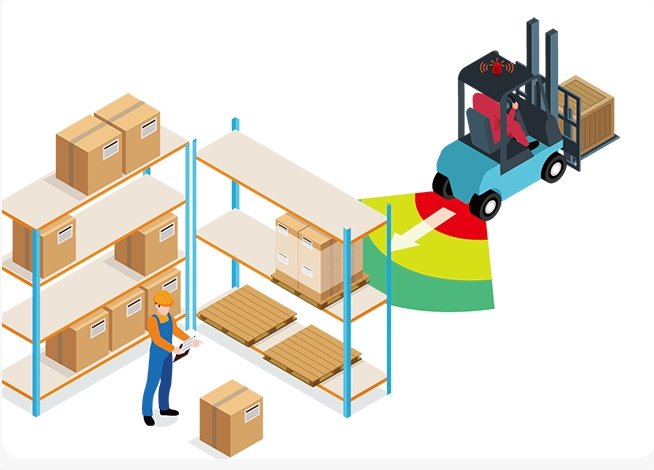
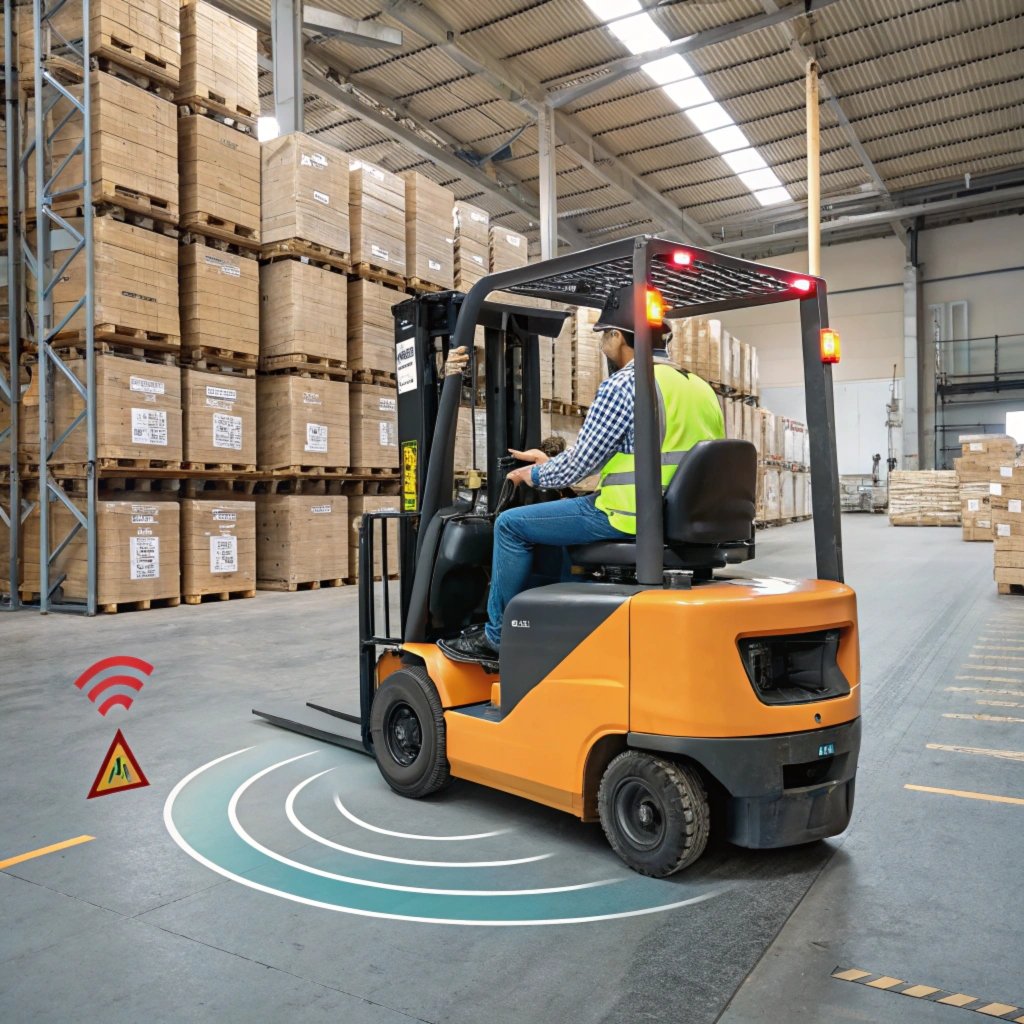
- Pedestrian detection systems give operators an active alert before a person enters a blind corner or restricted zone — directly supporting the traffic management expectations under Regulation 208, rather than relying on signage and driver awareness alone.
- Speed limiting keeps a truck inside a safe travel speed automatically, addressing "excessive speed" as one of the most frequently cited tip-over and collision factors. See our guide to forklift speed limiters.
- Camera and recorded-event systems create documented evidence of near-misses and operating conditions — exactly the kind of record a due-diligence review expects to see, and useful for identifying which operators need refresher training. Explore our forklift camera systems.
- Proximity and anti-collision alerts between forklifts and pedestrians reduce reliance on eye contact and right-of-way alone at genuinely blind intersections. See our forklift anti-collision system.
None of this replaces training, licensing, or a documented risk assessment — those remain the foundation. But a written traffic management plan backed by technology that actively prevents the failure modes SafeWork's own guidance describes is a materially stronger compliance position than paperwork alone.
Building a Pedestrian-Safe Forklift Fleet?
We don't set the standard — we build the AI pedestrian detection, camera, and speed-control systems that help you meet it on the floor, every shift.
11. Common Compliance Mistakes
- Treating "SafeWork" as one national rulebook instead of checking the specific version enforced by the regulator covering the site.
- Assuming an LF licence covers order pickers — it doesn't; the licence class has to match the specific machine.
- Relying on painted lines alone at blind corners where a physical or technology-based control is genuinely needed.
- Skipping the de-rated capacity calculation after fitting an attachment, and continuing to work off the base nameplate figure.
- No documented pre-start check — an informal "looked fine" walk-around doesn't satisfy the expectation.
- Letting licences lapse without a renewal tracking system in place across the operator roster.
12. Frequently Asked Questions
Tap a question to expand the answer — tap again to collapse it.
No. Safe Work Australia develops the model WHS Act, Regulations, and Codes of Practice, but it has no inspection or enforcement power. Workplace inspections, notices, and penalties are issued by the relevant state or territory regulator — SafeWork NSW, WorkSafe Queensland, WorkSafe Victoria, SafeWork SA, WorkSafe WA, WorkSafe Tasmania, WorkSafe ACT, or NT WorkSafe.
Most counterbalance, reach, and multidirectional forklifts require an LF (forklift truck) high risk work licence. Order-picking forklifts, where the operator's platform rises with the load, require a separate LO licence. Both must be obtained through a Registered Training Organisation and are typically valid for five years before renewal.
Employers are expected to provide clear, separate pathways for pedestrians and forklifts wherever practical, require high-visibility workwear outside designated walkways, minimise blind spots, clearly mark intersections and restricted areas, and ensure right-of-way rules are understood by everyone on site — including visitors and contractors.
No single regulation names a specific product, but pedestrian detection technology directly supports the risk-management expectations under Regulation 208 (control of risk from powered mobile plant) and the traffic management guidance SafeWork publishes. It strengthens a documented safety program rather than replacing training and layout controls.
A pre-start check should be carried out every time an operator uses a different forklift and at the start of every shift, since the truck may not have been left in a safe condition by the previous operator. Any defect that affects safe operation should be reported immediately and the forklift taken out of service until it's resolved.
Where a seatbelt or restraint system is fitted, it should be used unless a documented risk assessment specifically justifies not doing so, with other controls in place instead. Seatbelts are what keep an operator inside the cab during a tip-over, which is one of the leading causes of forklift-related fatalities.
The core duties are consistent because most states adopt the model WHS Act and Regulations, but licensing administration, published guidance, and safety incentive programs — such as SafeWork NSW's small business rebate for pedestrian sensors and speed limiters — vary by regulator. Always confirm current detail with the regulator covering your specific site.