Skip to content
Can You Smoke on a Forklift? What Every Warehouse Needs to Know
Smoking behind the wheel of a forklift isn't just a bad habit — it's a fire, compliance, and accident risk that most operations underestimate. Here's exactly why it's restricted, what the rules actually say, and how to enforce a policy that sticks.
No — smoking on a forklift is prohibited in virtually every warehouse and industrial facility. Forklifts run on or near propane, diesel, and battery systems that release flammable vapors or gases, and most sites carry combustible materials like pallets, packaging, and dust. An open flame in that environment is a fire hazard employers are required to control, which is why smoking-while-operating is banned by policy, fire code, or both.
- Why This Question Comes Up So Often
- The Fire Triangle a Forklift Cab Creates
- What OSHA and Fire Codes Actually Require
- Fuel Type Comparison: Propane vs. Diesel vs. Electric
- High-Risk Zones Where This Rule Matters Even More
- Building a No-Smoking Policy Operators Actually Follow
- Beyond the No-Smoking Sign: Catching Unsafe Behavior in Real Time
- FAQs
Why This Question Comes Up So Often
Forklift operators can spend eight, ten, or twelve hours a shift in a seat that's technically "their" workspace, and for a lot of operators who smoke, that seat starts to feel like a car. Nobody thinks twice about lighting a cigarette at a red light, so it's an easy habit to carry onto a forklift during a quiet aisle or a break in the dock schedule.
The problem is that a forklift is nothing like a personal vehicle. It operates inside a facility packed with combustible packaging, sits directly on top of a fuel tank or battery pack, and moves constantly through areas with limited ventilation. What feels like a harmless five-minute smoke break is, from a fire-safety standpoint, an open flame parked next to fuel and cardboard.

The Fire Triangle a Forklift Cab Creates
Fire needs three things to start: fuel, oxygen, and an ignition source. Take away any one of the three and a fire can't happen. A forklift cab quietly stacks all three in one place, which is exactly why smoking there is treated so seriously.
- Fuel: Propane cylinders, diesel tanks, hydraulic fluid, upholstery, and any accumulated dust or packaging debris around the operator's seat.
- Oxygen: Freely available in every warehouse, dock, or yard — no facility can remove this leg of the triangle.
- Ignition source: A lit cigarette, a dropped match, or even a hot ash falling into a seat crack or onto spilled fuel residue.
Most fire-prevention programs focus on removing ignition sources because it's the one variable a policy can actually control on demand. That's the entire logic behind a no-smoking rule for powered industrial trucks — it eliminates the one leg of the triangle that's optional.
Propane forklift tanks are pressurized. A slow leak at a valve or connector can release flammable vapor that's invisible and often odorless in trace amounts. An operator wouldn't necessarily smell a small leak before lighting a cigarette — which is exactly the scenario fire codes are written to prevent.
What OSHA and Fire Codes Actually Require
There's no single OSHA line that reads "no smoking on forklifts." Instead, the restriction is built from several overlapping requirements that, together, leave employers with one practical conclusion: keep ignition sources off powered industrial trucks.
- 29 CFR 1910.178 (Powered Industrial Trucks): Governs safe operation, fueling, and maintenance, including keeping open flames away from fueling and battery-charging areas.
- Flammable and combustible liquids standards: Restrict open flames near fuel storage, dispensing, and handling points — which includes propane cylinder exchange stations.
- The General Duty Clause: Requires employers to keep the workplace free of recognized hazards, and an open flame near a fuel-powered vehicle is a well-documented one.
- Local and state fire codes: Many jurisdictions add explicit smoking restrictions around loading docks, flammable storage, and fuel-handling equipment, which extend in practice to any vehicle operating in those zones.
Because the federal language is spread across multiple standards rather than one clean rule, it falls to individual employers to translate it into a specific, written no-smoking policy for forklift operation — which is exactly what OSHA inspectors and insurance auditors expect to see during a site review.
Don't rely on "OSHA doesn't specifically say forklifts" as a loophole. Auditors and insurers evaluate the underlying hazard, not the wording. A documented no-smoking policy for powered industrial trucks is standard practice precisely because the combined standards point that direction.
Fuel Type Comparison: Propane vs. Diesel vs. Electric
The fire hazard isn't identical across every forklift on your floor. Knowing where the risk is highest helps you prioritize enforcement, signage, and training in the areas that need it most.
| Fuel Type | Main Ignition Risk | Highest-Risk Moment |
|---|---|---|
| Propane (LPG) | Pressurized flammable gas; leaks can ignite instantly if a spark or flame is present | During cylinder swaps and while operating in enclosed spaces |
| Diesel | Fuel vapor and oily buildup around the engine bay and undercarriage | During refueling and after extended idling near combustible debris |
| Electric / Battery | Hydrogen gas released during charging can accumulate in poorly ventilated rooms | While charging or immediately after, before the area has ventilated |
Notice that even electric forklifts — which carry no combustible fuel tank at all — still belong in a no-smoking zone near their charging stations. The hazard simply moves from the tank to the battery room.

High-Risk Zones Where This Rule Matters Even More
Standard warehouses already have enough combustible material to justify a strict policy, but some facilities raise the stakes considerably. Sites that store flammable liquids, aerosols, chemicals, or explosive materials need a no-smoking rule that extends well beyond the forklift itself, covering the entire storage zone and every vehicle that enters it.
If your operation handles anything classified as hazardous or explosive material, forklift smoking restrictions are just one piece of a much larger compliance picture. Our guide to explosive storage warehouse management walks through the broader safety and compliance framework — including ignition control, storage separation, and inspection requirements — that these higher-hazard environments require.
Building a No-Smoking Policy Operators Actually Follow
A rule that only exists on a laminated sign near the breakroom door doesn't change behavior. The policies that actually hold up combine clear boundaries with a realistic outlet for operators who smoke.
- Put it in writing and in onboarding. New-hire training and forklift certification refreshers should state the no-smoking rule explicitly, not assume it's understood.
- Mark designated smoking areas clearly. Locate them well away from fuel storage, propane cylinder cages, charging rooms, and dock doors — and make sure they're easy to find.
- Build smoke breaks into the schedule. Operators are far less likely to smoke on equipment if they know a real break is coming soon.
- Post signage at every entry point to fuel and charging areas — not just at the main facility entrance.
- Apply the rule consistently. Selective enforcement is the fastest way to make any safety policy lose credibility on the floor.
- Document every violation so patterns are visible before they turn into an incident, not after.
Written rules matter, but supervisors can't watch every aisle at once. Facilities that see the fastest drop in violations pair the written policy with a way to actually verify what's happening on the floor during a shift — not just react after an incident report.
Beyond the No-Smoking Sign: Catching Unsafe Behavior in Real Time
Smoking on a forklift rarely happens in isolation — it's usually one symptom of a broader gap: an operator who's fatigued, distracted, or simply out of sight of a supervisor for long stretches of a shift. Signage tells people the rule; it doesn't tell you when the rule is being broken.
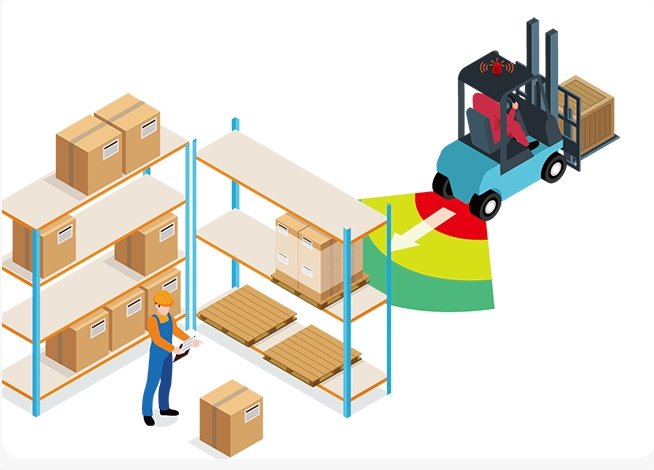
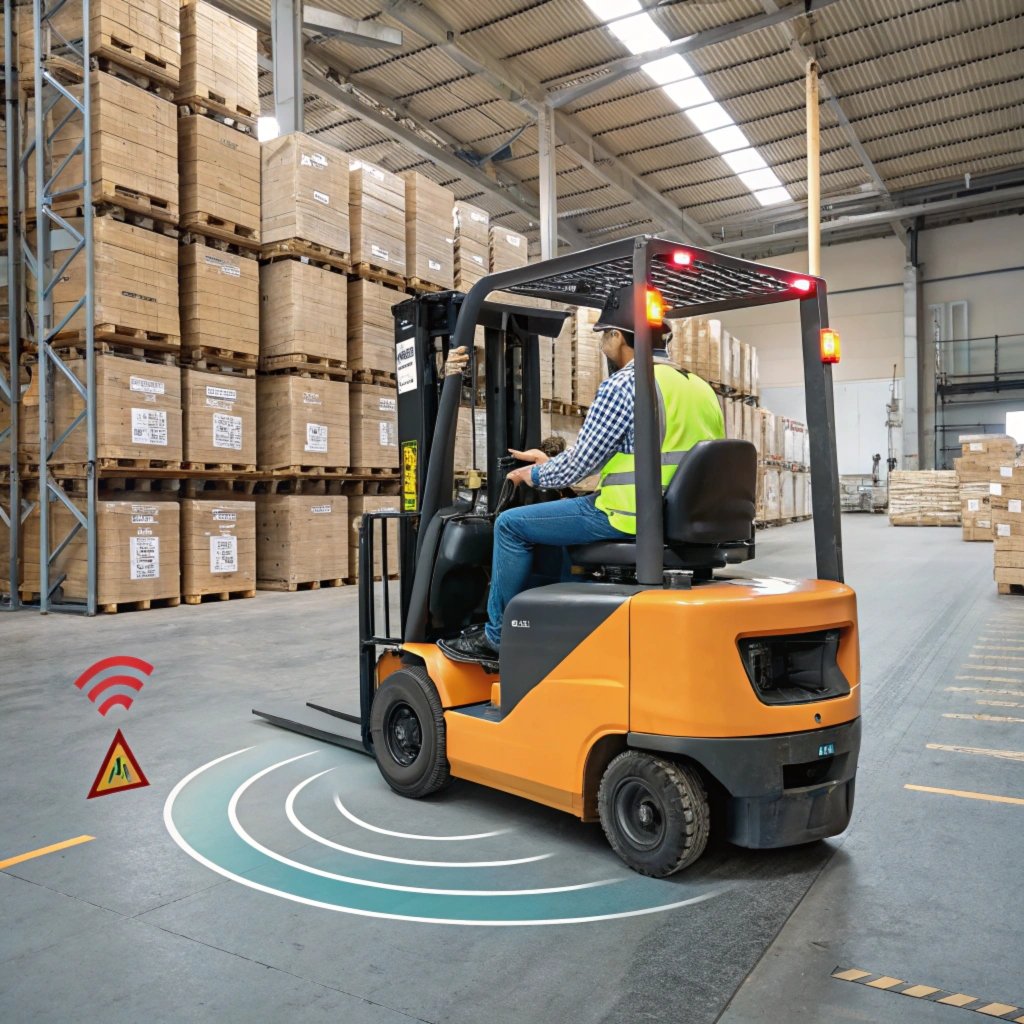
This is where AI-based safety systems fill the gap that a poster on the wall can't. A Forklift Driver Monitoring System can flag distracted or unsafe in-cab behavior as it happens, not after an incident report is filed. Pairing that with forklift access control also means every operator is logged and accountable for the equipment they're running, which makes enforcing any safety policy — smoking included — far more consistent across shifts.
We Don't Sell Forklifts — We Help You Run Them Safely
As a forklift safety technology provider, we build the AI camera, driver monitoring, and anti-collision systems that help warehouses catch unsafe behavior, reduce fire and collision risk, and stay audit-ready — every shift, not just during inspections.
Talk to a Safety SpecialistFrequently Asked Questions
Is it illegal to smoke on a forklift?
There isn't always a single federal law naming forklifts by name, but smoking while operating one typically violates OSHA-related fire safety standards, local fire codes, and virtually every employer's written safety policy — all of which carry real disciplinary and legal consequences.
Can you smoke near a propane cylinder or exchange cage?
No. Propane is stored under pressure and is highly flammable. Smoking near a cylinder, especially during an exchange, creates a serious risk of ignition from even a small leak.
Does the no-smoking rule apply to electric forklifts too?
Generally, yes. Electric forklifts don't carry combustible fuel, but their charging stations can release flammable hydrogen gas, so smoking near charging areas is typically restricted just as strictly.
What should a supervisor do if they catch an operator smoking on a forklift?
Address it immediately, document the incident, and follow the disciplinary steps in your written safety policy. It's also worth reviewing whether signage, break scheduling, or supervision gaps contributed, so the same violation doesn't repeat.
Are there any facilities where smoking on a forklift is allowed?
It's extremely rare. Even in open-air, low-hazard environments, most companies apply a blanket no-smoking rule to powered industrial trucks simply because enforcing exceptions consistently is harder than enforcing one clear standard.
How can warehouses enforce smoking and distraction policies when supervisors can't watch every aisle?
Many facilities pair written policy with technology — in-cab driver monitoring, access control tied to operator ID, and camera systems — so unsafe behavior is flagged in real time instead of discovered after an incident.