Skip to content

Toyota vs Hyster Forklift: Which One Is Right for Your Warehouse?
Two of the most trusted names in material handling, engineered around very different philosophies. Here's how they actually compare on durability, cost, technology, and day-to-day operation — so you can choose with confidence, not guesswork.
Toyota and Hyster sit at the top of almost every "most reliable forklift brand" list — but they get there in different ways. Toyota leans on precision engineering, a dominant dealer network, and one of the industry's most refined stability systems. Hyster leans on heavy-gauge construction and a reputation for shrugging off punishment in the toughest yards and mills. Picking between them isn't about which badge is "better" — it's about which engineering philosophy matches the floor you actually run.
📋 Table of Contents
- Quick Verdict: Toyota vs Hyster at a Glance
- Company Background: Two Engineering Philosophies
- Product Line & Model Range
- Engines, Power Sources & Drivetrain
- Operator Comfort & Cabin Design
- Build Quality & Long-Term Durability
- Stability & Factory Safety Systems
- Telematics & Fleet Management
- Parts, Dealer Network & Service
- Purchase Price & Total Cost of Ownership
- Resale Value
- Which Brand Fits Your Application
- Buyer's Checklist Before You Decide
- Common Mistakes When Comparing the Two
- FAQs
1. Quick Verdict: Toyota vs Hyster at a Glance
If you only have two minutes, here's the short version. The full comparison below explains the reasoning behind each point.
🟢 Choose Toyota if…
- You run a general warehouse, distribution center, or multi-shift indoor operation
- Fast parts turnaround and dealer coverage matter more than rock-bottom price
- You want the strongest resale value when you eventually trade the truck in
- Operator-assist stability tech is a priority for your safety program
🟩 Choose Hyster if…
- You're running outdoor yards, lumber, steel, or heavy manufacturing
- Your loads and terrain are rough on equipment and you want extra structural margin
- You want a lower entry price without sacrificing long-term durability
- You need a wide range of heavy-capacity and container-handling trucks
Toyota is generally the safer default for indoor, high-utilization warehouse fleets where uptime and dealer support decide your bottom line; Hyster is generally the stronger pick when the operating environment itself — heat, debris, uneven ground, constant overload margin — is the harder problem to solve.
2. Company Background: Two Engineering Philosophies
Toyota Industries entered forklift manufacturing in 1956, applying the same production discipline it used in automotive manufacturing — tight tolerances, in-house engine design, and a relentless focus on repeatable quality control. That heritage is why Toyota has held the position of the world's top-selling forklift brand for more than two decades, and why its trucks are frequently cited for engines that run well past 20,000 hours with normal maintenance.
Hyster's story starts earlier and in rougher terrain. Founded in 1929 with roots in the logging industry, Hyster built its early reputation hauling timber over uneven ground where a fragile machine simply couldn't survive the week. That origin still shows up in the brand today: heavier frame construction, robust drivetrains, and a lineup that skews toward the industrial and outdoor end of the market. Hyster is part of Hyster-Yale Group, which also owns the Yale brand, giving it a large combined dealer and parts footprint in North America.
Neither philosophy is objectively superior — they're optimized for different problems. Toyota optimizes for consistency and low cost-per-hour in controlled environments. Hyster optimizes for survivability in environments that would wear a lighter-built truck down faster.
3. Product Line & Model Range
Both brands cover the full spectrum from electric warehouse trucks to heavy-duty container handlers, but the emphasis differs.
| Category | Toyota | Hyster |
|---|---|---|
| Electric Warehouse (pallet jacks, stackers, reach trucks) | Broad, well-refined lineup; strong presence in narrow-aisle and high-bay racking trucks | Solid lineup with a growing lithium-ion range, slightly less depth in narrow-aisle specialists |
| Electric Counterbalance (3- & 4-wheel) | Extensive range from roughly 3,000 lb up; widely regarded as class-leading for indoor efficiency | Competitive range, often priced more aggressively at comparable capacities |
| IC (LPG / Diesel) Counterbalance | Deep range up to roughly 15,500 lb pneumatic-tire trucks | Deep range with a reputation for extra ruggedness at the upper end |
| Rough Terrain | Available, smaller footprint in this niche | Strong presence; long history serving construction and outdoor yards |
| Heavy-Duty / Container Handlers | Available in select high-capacity models | One of the deepest lineups in the industry, with models rated well above 40,000 lb for port and steel-handling work |
If your operation is a straightforward indoor warehouse, both brands can realistically cover it. Where Hyster tends to pull ahead is at the heavy-capacity, outdoor, and container-handling end of the spectrum, where its engineering pedigree is deepest.

4. Engines, Power Sources & Drivetrain
Toyota designs and builds its own forklift-specific engines rather than adapting automotive units, and its AC electric drive systems are widely regarded as smooth and energy-efficient. Toyota offers both lead-acid and lithium-ion battery options across much of its electric line, along with regenerative braking that recovers energy during deceleration and lowering — a meaningful factor in multi-shift electric fleets where charging downtime is expensive.
Hyster's IC engines are known for strong low-end torque, which matters when a truck is regularly lifting near its rated capacity on uneven or graded surfaces. Hyster has expanded its lithium-ion offering in recent years and provides variable performance modes that let operators tune output for the task, which can help manage fuel or energy consumption on mixed-duty fleets.
Before comparing brands, decide on power source first: electric for clean indoor operation and lower per-hour running cost, LPG for flexible indoor/outdoor use, diesel for outdoor torque and rough terrain. Both Toyota and Hyster build strong trucks in each category — the bigger cost mistake is picking the wrong power source for your environment, not the wrong badge.
5. Operator Comfort & Cabin Design
Operator fatigue is a real productivity and safety variable on multi-hour shifts, and both brands have invested heavily here. Toyota's cabins are frequently praised for low noise levels, intuitive control layout, and a low step-in height that reduces strain on operators getting on and off dozens of times per shift. Hyster has moved toward more spacious cabs with improved sightlines and has added driver-assist features like automatic speed reduction on turns and auto-engaging parking brakes on many newer models.
If your operators run 8+ hour shifts, it's worth requesting a demo unit from both brands and having your actual drivers — not just management — spend real time in each seat before deciding. Comfort feedback from the people running the truck daily is a better signal than a spec sheet.
6. Build Quality & Long-Term Durability
This is where the two philosophies show up most clearly. Toyota's reputation for durability comes from consistency — tight manufacturing tolerances and quality control that reduce the odds of an early failure, with many fleet operators reporting engines running past 20,000–25,000 hours under normal maintenance. Hyster's reputation for durability comes from structural margin — heavier frames, masts, and drivetrain components built with extra tolerance for abuse, overload spikes, and harsh conditions like dust, debris, and temperature extremes.
In practice, this means a well-maintained Toyota in a clean indoor warehouse and a well-maintained Hyster in a rough outdoor yard will both likely outlast their environment's expectations — but swap the environments and the gap can show up faster. A lightly-loaded Toyota in a gentle indoor setting rarely stress-tests its structural limits either way, which is part of why both brands post strong average lifespan numbers in operator surveys.
Anecdotal feedback from independent service technicians who work on multiple brands often favors Hyster specifically for its tolerance of overload and rough handling, while Toyota is more often praised for having fewer unexpected issues over a normal duty cycle. Neither pattern is universal — maintenance discipline affects lifespan more than brand in most real-world cases.
7. Stability & Factory Safety Systems
Toyota's System of Active Stability (SAS) is one of the most recognized stability technologies in the industry. It uses sensors to monitor mast tilt, steering angle, and load conditions in real time, automatically adjusting to reduce tip-over risk during sharp turns or when a load shifts unexpectedly. It's a meaningful factory-level safety layer, particularly for newer or less-experienced operators.
Hyster has invested in its own operator-assist features across newer models, including automatic speed reduction on turns, load-sensing hydraulics, and auto parking brake engagement, alongside a general reputation for building spacious, well-sighted cabs that reduce blind spots at the source.
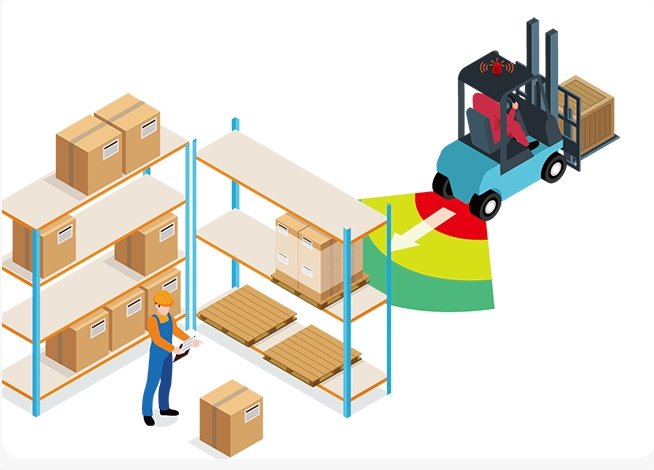
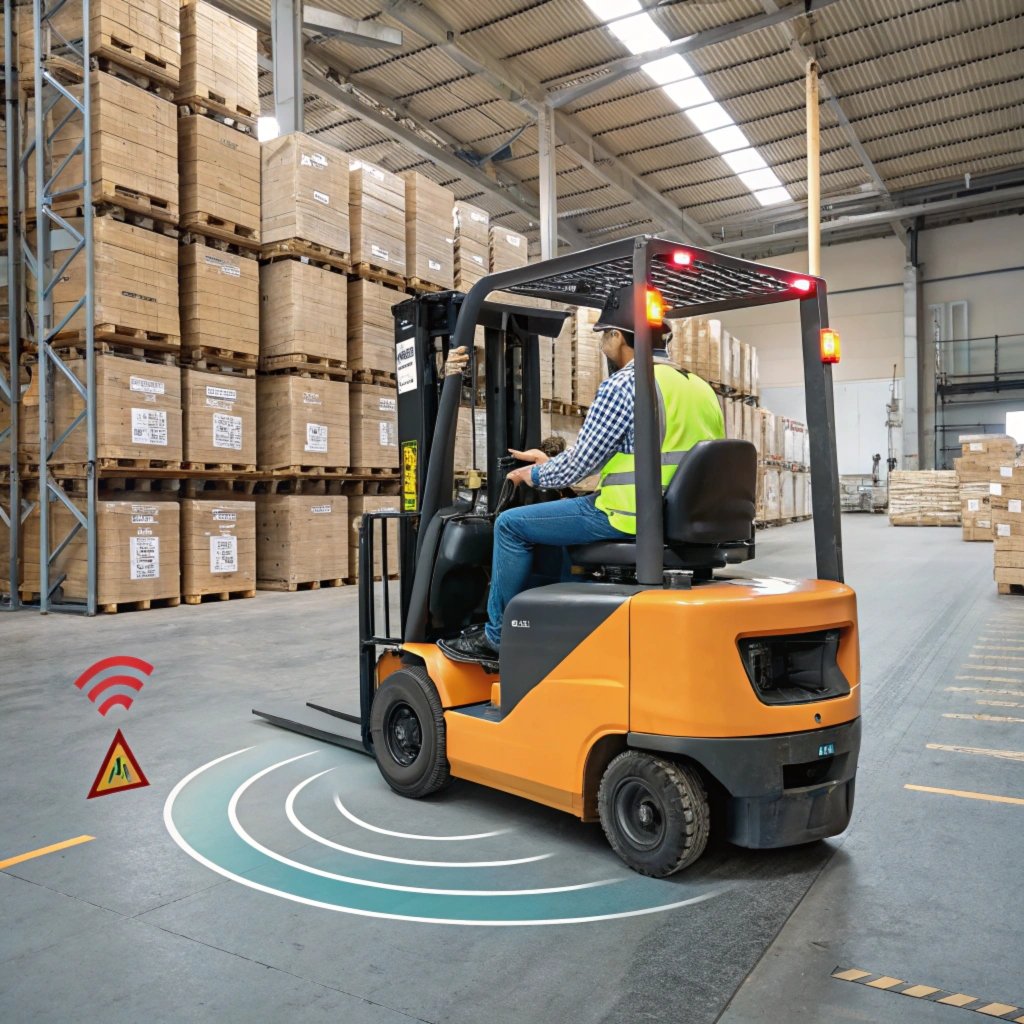
Both are genuinely useful — but it's worth being clear-eyed about what factory stability systems do and don't cover: they manage the truck's own stability and speed. Neither system detects a pedestrian stepping around a rack end, and neither prevents a collision with another forklift approaching from a blind aisle. That's a separate layer of protection, and it's the same gap regardless of which brand nameplate is on the mast — which is why pedestrian detection systems and forklift anti-collision systems are typically sold as an addition to any forklift, not a replacement for factory stability tech.

8. Telematics & Fleet Management
Toyota's fleet management platform tracks utilization, impact events, operator access, and maintenance scheduling across a mixed fleet, and integrates well with its dealer network for proactive service alerts. Hyster offers a comparable telematics suite through its Tracker platform, covering similar ground — utilization reporting, geofencing, impact logging, and preventive maintenance scheduling.
For fleets running five or more trucks, either platform can meaningfully reduce unplanned downtime by flagging maintenance needs before they become breakdowns. The practical difference usually comes down to how well the platform integrates with whatever fleet management or ERP software you're already running — worth confirming with your dealer before purchase rather than assuming compatibility.
9. Parts, Dealer Network & Service
Toyota's dealer and parts network is one of the largest in North America, and same-day or next-day parts availability is common in most metro areas — a major factor in minimizing downtime. That coverage does come at a price: Toyota parts and authorized service labor are frequently reported as running higher than competing brands, a cost that compounds over a multi-year ownership period.
Hyster's combined network with sibling brand Yale gives it broad geographic coverage as well, and service/parts pricing is more often reported as competitive or lower than Toyota's at comparable capacities. The trade-off can be slightly less parts-network density in some regions compared to Toyota's dominant market share.
Call your local dealer for both brands and ask two questions directly: average parts lead time for common wear items, and current labor rate for scheduled service. Regional dealer quality varies more than brand reputation does — a mediocre dealer for a great brand will cost you more uptime than a great dealer for a "second choice" brand.
10. Purchase Price & Total Cost of Ownership
At comparable capacities, new Hyster trucks are frequently priced somewhat below equivalent Toyota models, and that gap tends to persist on the used market as well — Toyota commands a price premium partly because buyers are paying for the brand's resale strength and dealer coverage, not just the hardware itself.
Total cost of ownership is a longer conversation than sticker price. It includes purchase price, fuel or energy cost, scheduled maintenance, parts pricing, unplanned downtime, insurance, and eventual resale value. A cheaper truck with expensive downtime can cost more over five years than a pricier truck that rarely breaks down — and vice versa.
Ask each dealer for: (1) the out-the-door price, (2) estimated annual maintenance cost based on your expected hours, (3) typical parts lead time, and (4) a 3-year resale estimate for that exact configuration. Multiply the gaps out over your expected ownership period — the "cheaper" truck on day one isn't always cheaper by year five.
11. Resale Value
Toyota forklifts generally hold their value better on the used market than most competing brands, including Hyster — a direct result of strong brand demand, proven longevity, and buyer confidence in parts support down the line. If you plan to trade in or resell within 3–5 years, that resale premium can partially offset Toyota's higher upfront and service costs.
Hyster retains solid resale value as well, particularly for heavy-duty and rough-terrain models where its durability reputation carries real weight with used-equipment buyers in industrial sectors. If your exit strategy is running the truck to end-of-life rather than reselling, resale value matters less than raw durability and operating cost — which shifts the calculus back toward whichever brand better survives your specific environment.
12. Which Brand Fits Your Application
| Your Operation | Better-Suited Brand | Why |
|---|---|---|
| Indoor warehouse / distribution center | Toyota | Refined electric drivetrains, dense parts network, strong resale |
| Multi-shift, high-utilization fleet | Toyota | Proven long-hour engine life, mature telematics for uptime management |
| Outdoor yard, lumber, steel, mills | Hyster | Heavier structural margin for rough surfaces and harsh conditions |
| Port, container, heavy industrial handling | Hyster | Deeper heavy-capacity and container-handler product range |
| Budget-conscious purchase with long duty life expected | Hyster | Typically lower purchase and service cost at comparable durability |
| Fleet you plan to resell within 3-5 years | Toyota | Stronger and more consistent used-market resale value |
Mixed operations don't have to pick one badge for the entire fleet. Many warehouses run Toyota electric trucks indoors and a Hyster IC or rough-terrain unit for yard work — matching each truck to the environment it will actually work in, rather than standardizing on a single brand for simplicity alone.
13. Buyer's Checklist Before You Decide
- Confirm your primary operating environment (indoor / outdoor / mixed) before comparing model specs
- Get your heaviest, bulkiest real load's weight and load center — not the "average" pallet
- Request the height-specific load chart for your actual racking height, not the ground-level number
- Call local dealers for both brands and compare parts lead time and labor rates directly
- Have your actual operators test-drive demo units from both brands, not just management
- Ask for a 3-year resale estimate on the exact configuration you're quoted
- Factor in your telematics and fleet software compatibility before committing to a platform
- Plan your pedestrian and collision safety layer separately — no factory stability system replaces it
If you haven't finalized capacity requirements yet, our forklift capacity guide walks through how to size a truck to your actual heaviest load rather than the headline number on a brochure.
14. Common Mistakes When Comparing the Two
A lower purchase price can be erased quickly by higher maintenance frequency or slower parts turnaround. Compare total cost of ownership, not the invoice.
A weak regional dealer can undercut even the best brand's reliability reputation through slow parts and inconsistent service. Check the dealer, not just the badge.
"We've always run Toyota" or "Hyster never let us down" is useful data — but only if your prior fleet ran in a similar environment to your current one.
SAS, speed-limiting, and auto parking brakes reduce specific risks, but none of them detect a pedestrian in a blind corner or another truck approaching cross-aisle. That requires a dedicated collision avoidance layer regardless of which brand you choose.
Whichever Brand You Choose, the Pedestrian and Blind-Spot Gap Stays the Same
We don't sell forklifts — we build the AI camera, proximity, and anti-collision systems that close the safety gap factory stability tech leaves open, on any brand, any model, any age of truck.
Get a Free Safety System Consultation15. Frequently Asked Questions
Tap a question to expand the answer — tap again to collapse it.
Is Toyota or Hyster more reliable?
Both are consistently ranked among the most reliable forklift brands industry-wide. Toyota is more often cited for consistent long-hour engine life in normal duty cycles, while Hyster is more often cited for tolerating overload and rough handling in harsh environments. "More reliable" depends heavily on which environment the truck is actually running in.
Which brand is cheaper — Toyota or Hyster?
At comparable capacities, new and used Hyster trucks are typically priced somewhat below equivalent Toyota models, and Toyota parts and labor are frequently reported as running higher. Toyota tends to offset some of that gap with stronger resale value over a 3-5 year ownership period.
Does Toyota's System of Active Stability (SAS) make it safer than Hyster?
SAS is a well-regarded stability technology that helps prevent tip-overs from sharp turns or shifted loads, and Hyster doesn't offer a direct equivalent under that name — though Hyster does include its own operator-assist features like automatic speed reduction on turns. Neither system replaces the need for separate pedestrian and collision detection technology.
Which brand is better for outdoor or rough-terrain use?
Hyster's heavier structural engineering and long history in demanding environments generally give it an edge for outdoor yards, lumber, steel, and rough-terrain applications, though Toyota also offers capable trucks in this category.
Do I need to run the same brand across my whole fleet?
No. Many operations mix brands deliberately — for example, Toyota electric trucks indoors and Hyster IC or rough-terrain units in the yard — matching each truck's engineering strengths to the environment it actually works in.
Does either brand include pedestrian detection as standard?
No. Factory stability and operator-assist features on both brands focus on the truck's own balance, speed, and handling — not on detecting nearby pedestrians or other forklifts. That's a separate, dedicated safety layer typically added after purchase on any brand of truck.