Skip to content

Lithium vs Lead Acid Forklift Battery: Which One Should You Buy?
Battery type quietly decides your forklift's uptime, running cost, and safety exposure for the next 5–10 years. Here's a straight comparison to help you choose with confidence — not guesswork.
If you're buying or upgrading a forklift fleet in 2026, the battery decision matters as much as the truck itself. Lead acid has powered material handling for over a century — it's familiar, inexpensive up front, and easy to service almost anywhere. Lithium-ion (specifically LiFePO4 chemistry) has moved from "nice-to-have" to the default recommendation for many multi-shift warehouses, thanks to faster charging, longer service life, and lower labor overhead.
Neither one is universally "better." The right choice depends on your shift pattern, charging infrastructure, budget structure, and how long you plan to keep the trucks. This guide walks through both technologies in plain language, then gives you a clear framework for deciding — not just a spec sheet.
How Lead Acid Forklift Batteries Work
A lead acid forklift battery stores energy through a chemical reaction between lead plates and a sulfuric acid electrolyte. It's the same basic flooded-cell technology that's been used in industrial trucks since electric forklifts first appeared — proven, well understood, and supported by a technician and parts network in nearly every region.

Lead acid batteries need a full 8-hour charge cycle, followed by an 8-hour cooling period before they can be used again — which is why most single-shift operations pair a battery with a fixed charging routine rather than topping it up mid-shift. Multi-shift operations typically need spare battery sets and a battery-swap station to avoid downtime, since interrupting a charge cycle early or "opportunity charging" a lead acid battery accelerates plate degradation and shortens its usable life.
Routine watering is non-negotiable. Distilled water must be added to each cell on a set schedule to keep the plates submerged; skip it and sulfation sets in, permanently reducing capacity. Combined with acid spills, hydrogen gas venting during charging, and the sheer weight of the units (often 1,500–3,000 lbs), lead acid batteries require a dedicated, ventilated charging area and staff trained in safe handling.
How Lithium Forklift Batteries Work
Lithium forklift batteries used in material handling are almost always Lithium Iron Phosphate (LiFePO4/LFP) — chosen specifically for its thermal stability over the higher-energy-density but more heat-sensitive chemistries used in consumer electronics. Inside the case, a Battery Management System (BMS) continuously monitors every cell for voltage, temperature, and balance, which is a big part of why lithium batteries tolerate rougher treatment than lead acid without losing lifespan.

Because there's no acid to spill and no water to add, lithium batteries are sealed, maintenance-free, and safe to charge in the general work area rather than a specialized room. Opportunity charging — plugging in for 15–30 minutes during a break or shift change — is not just tolerated but recommended, since it's how most lithium-powered fleets avoid ever needing a battery swap.
The BMS also handles balancing between cells automatically, which is why lithium batteries hold consistent voltage output across the full discharge curve — operators don't get the gradual power sag toward the end of a shift that's common with lead acid.
Lithium vs Lead Acid Forklift Battery: Side-by-Side Comparison
| Factor | Lead Acid | Lithium (LiFePO4) |
|---|---|---|
| Upfront Cost | Lower — roughly 30–50% less | Higher initial investment |
| Typical Cycle Life | ~1,200–1,500 full cycles | 3,000–5,000+ full cycles |
| Charge Time | ~8 hours, plus 8-hour cooldown | 1–2 hours, or opportunity charge in minutes |
| Mid-Shift Top-Up | Not recommended — shortens life | Designed for it — no damage |
| Watering / Maintenance | Weekly watering, terminal cleaning, equalizing | Sealed — no watering, minimal upkeep |
| Ventilated Charging Room | Required (hydrogen gas venting) | Not required |
| Energy Efficiency | ~70–80% | ~95%+ |
| Weight | Heavier (adds counterbalance stability) | Lighter (can require ballast adjustment) |
| Performance Consistency | Power fades as charge drops | Stable voltage across full discharge |
| Cold Storage Performance | Degrades faster in freezer environments | Better cold-chain performance model dependent |
| Estimated Lifespan | 3–5 years | 8–10+ years |
Figures are typical industry ranges for standard-duty forklift use; actual performance varies by manufacturer, battery capacity, and duty cycle. Always confirm specs with your battery and forklift supplier.
Total Cost of Ownership: The Real Math
The sticker price comparison is where most buyers stop — and it's exactly why so many end up with the wrong battery for their operation. Lead acid wins on day one. Lithium tends to win over the life of the truck. Here's what actually goes into that calculation.
Lead acid's true cost shows up in three places most quote sheets don't mention. First, spare batteries — multi-shift operations running lead acid typically need one to two extra battery sets per truck plus a swap station, which is a real capital cost that lithium's fast charging often eliminates entirely. Second, labor — someone has to water, equalize, and physically swap heavy batteries on a schedule, and that's paid time that lithium's plug-and-go charging removes from the workflow. Third, facility overhead — a code-compliant, ventilated battery room with eyewash stations and acid-neutralizing kits isn't free to build or maintain.
Lithium's higher purchase price is real, and for a fleet you plan to replace in 3–4 years, that premium may never fully pay back. But for operations planning to run trucks 6–10 years, or expanding to multiple shifts, the combination of longer lifespan, no spare batteries, and lower labor time usually closes the gap — and often comes out ahead — well before the battery needs replacing.
Charging, Runtime & Multi-Shift Operations
This is where the two technologies diverge the most in daily operation. A lead acid battery follows a rigid 8-8-8 rhythm: 8 hours of work, 8 hours to charge, 8 hours to cool before reuse. Break that cycle and you shorten the battery's life — which forces multi-shift operations into a battery-swap model with dedicated staff time and storage space for spares.
Lithium removes that rigidity. A forklift can plug in for 15–30 minutes during a driver break, lunch, or shift changeover and pick up meaningful charge with no damage to the cells — because there's no equalization requirement and no cooldown period. Many multi-shift warehouses running lithium never swap a battery at all; the truck simply tops up throughout the day and runs a full shift on a single pack.
For single-shift, lower-utilization operations, this advantage matters less — if the truck sits idle overnight anyway, lead acid's 16-hour charge-and-cool window fits naturally into the existing schedule without disruption.
Safety, Maintenance & Facility Requirements
Lead acid batteries introduce three site-level risk factors that facilities managers plan around: sulfuric acid exposure during watering and maintenance, hydrogen gas released during charging (which is why a ventilated, spark-free charging room is a code requirement, not a suggestion), and the physical hazard of moving batteries that can weigh over a ton with a forklift-mounted battery extractor.
Lithium batteries are sealed units — no acid handling, no gas venting, no watering schedule. That's part of why they can be charged in general work areas rather than a dedicated room. The trade-off is that lithium packs are lighter, and because battery weight also serves as counterbalance on many forklift models, some trucks need ballast adjustments to maintain proper stability and lift capacity when converting from lead acid to lithium.
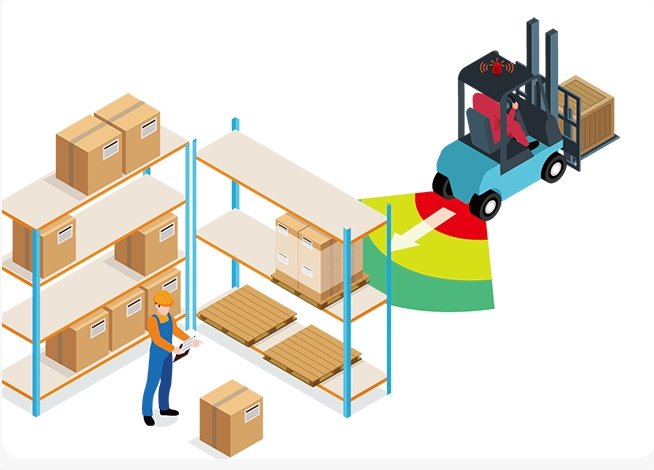
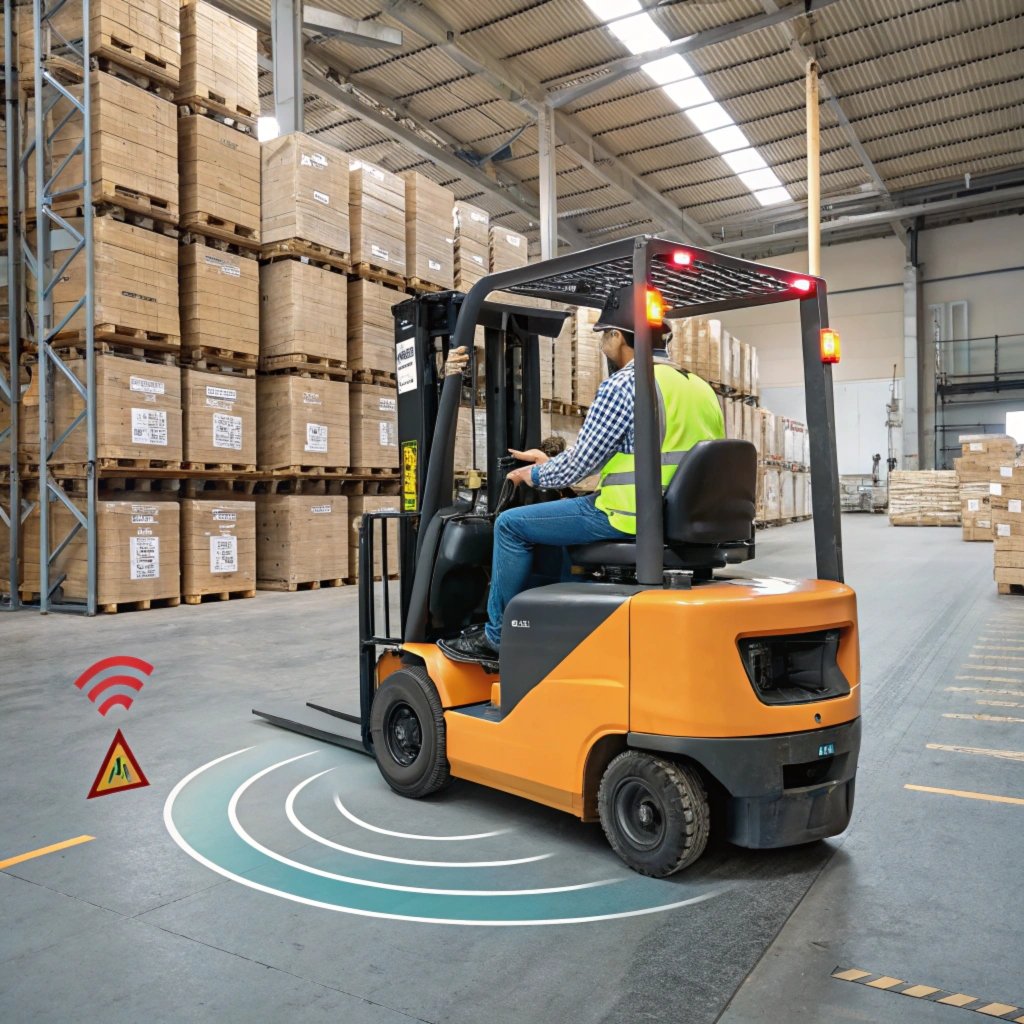
Whichever battery you choose, charging areas and battery-handling zones are also pedestrian traffic points — chargers, swap stations, and storage racks tend to sit near walkways where forklifts, staff, and visitors cross paths. If you're evaluating overall warehouse safety alongside your battery upgrade, it's worth reviewing blind spots around charging and staging areas as part of the same plan — see our guide to forklift pedestrian safety systems for what a layered detection setup looks like in practice.
Which Battery Fits Your Operation?
There's no universal winner — only the better fit for your shift pattern, budget structure, and facility. Use these two profiles to see which one matches your operation more closely.
Lead Acid Fits If You...
- Run a single shift with predictable downtime overnight
- Need the lowest possible upfront equipment cost
- Already have a compliant charging room and trained staff
- Plan to replace or lease trucks again within 3–4 years
- Have light-to-moderate daily duty cycles
Lithium Fits If You...
- Run two or three shifts, or approach 24/7 operation
- Want to eliminate spare batteries and swap stations
- Have limited space for a dedicated charging room
- Plan to keep trucks 6–10 years or more
- Want to cut labor hours spent on battery upkeep
Many fleets don't switch all at once — a common approach is piloting lithium on the highest-utilization trucks first (where fast charging and no swap-downtime deliver the fastest payback), while keeping lead acid on lower-use equipment until it's due for replacement.
Planning a Fleet Upgrade or New Forklift Purchase?
Whichever battery you choose, pairing it with the right safety systems protects your investment and your team. Talk to our team about matching the right setup to your operation.
Get Expert GuidanceFrequently Asked Questions
Can I retrofit an existing lead acid forklift with a lithium battery?
In many cases, yes — most lithium replacement batteries are built to match standard lead acid battery box dimensions (BCI group sizes), making them a drop-in fit. However, because lithium packs weigh less, some trucks need a ballast or counterweight adjustment to maintain rated lift capacity and stability. Always confirm compatibility with your forklift manufacturer or a qualified battery supplier before converting.
Is lithium always cheaper in the long run?
Usually, but not always. Lithium's advantage grows with utilization and fleet age — high-usage, multi-shift, long-term fleets see the fastest payback. For light-duty, single-shift operations planning to replace trucks within a few years, lead acid's lower upfront cost can still be the more economical choice.
Do lithium forklift batteries need a special charger?
Yes. Lithium batteries require chargers designed for their voltage profile and BMS communication — a standard lead acid charger isn't compatible. Most suppliers sell the battery and matched charger as a package.
How long do lithium forklift batteries actually last?
Most LiFePO4 forklift batteries are rated for 3,000–5,000+ full charge cycles, which typically translates to 8–10 years or more under normal industrial duty — roughly double to triple a comparable lead acid battery's usable life.
Is opportunity charging bad for the battery?
It's bad for lead acid, which needs a complete charge-and-cooldown cycle to avoid accelerated plate wear. It's not a problem for lithium — the BMS is built specifically to handle partial, frequent charges without capacity loss.
Do I need a dedicated battery room for lithium forklifts?
No. Because lithium batteries are sealed and don't vent hydrogen gas or require watering, they can typically be charged in the general work area rather than a specialized, ventilated battery room — though it's still good practice to charge in a clean, temperature-controlled space and follow the manufacturer's charging guidelines.
Choosing between lithium and lead acid ultimately comes down to how hard and how long you're going to run your fleet. Match the battery to your shift pattern and ownership timeline first — the cost comparison will follow from there, not the other way around.