Skip to content

Counterbalance Forklift vs Reach Truck: Which One Fits Your Warehouse?
Picking the wrong forklift type doesn't just waste budget — it can force you into narrower racking, slower throughput, or equipment that can't actually clear your dock doors. Here's a practical, no-fluff comparison to help you choose between a counterbalance forklift and a reach truck based on your actual floor plan and load profile.
Quick Comparison Table
| Factor | Counterbalance Forklift | Reach Truck |
|---|---|---|
| Best environment | Indoor and outdoor, mixed-use yards | Indoor, narrow-aisle warehouses |
| Typical aisle width needed | 10-13 ft | 8.5-10.5 ft, some as low as 8 ft |
| Max lift height | Usually up to 20 ft | Up to 30-36 ft with double-deep mast |
| Load capacity | 3,000-15,000+ lbs | 2,500-5,500 lbs typical |
| Operating style | Drive up to the load, no outriggers | Outrigger legs straddle the pallet |
| Outdoor / rough terrain use | Yes, common on yards and docks | Not designed for outdoor or uneven ground |
| Purchase cost | Generally lower | Generally higher for comparable capacity |
What Is a Counterbalance Forklift?
A counterbalance forklift is the shape most people picture when they hear the word "forklift." It carries a heavy weight at the rear of the chassis that offsets the load on the forks, which means the forks can extend straight out from the front of the truck without needing outrigger legs. This design lets the operator drive directly up to a pallet, load it, and back away — no straddling or positioning maneuver required.

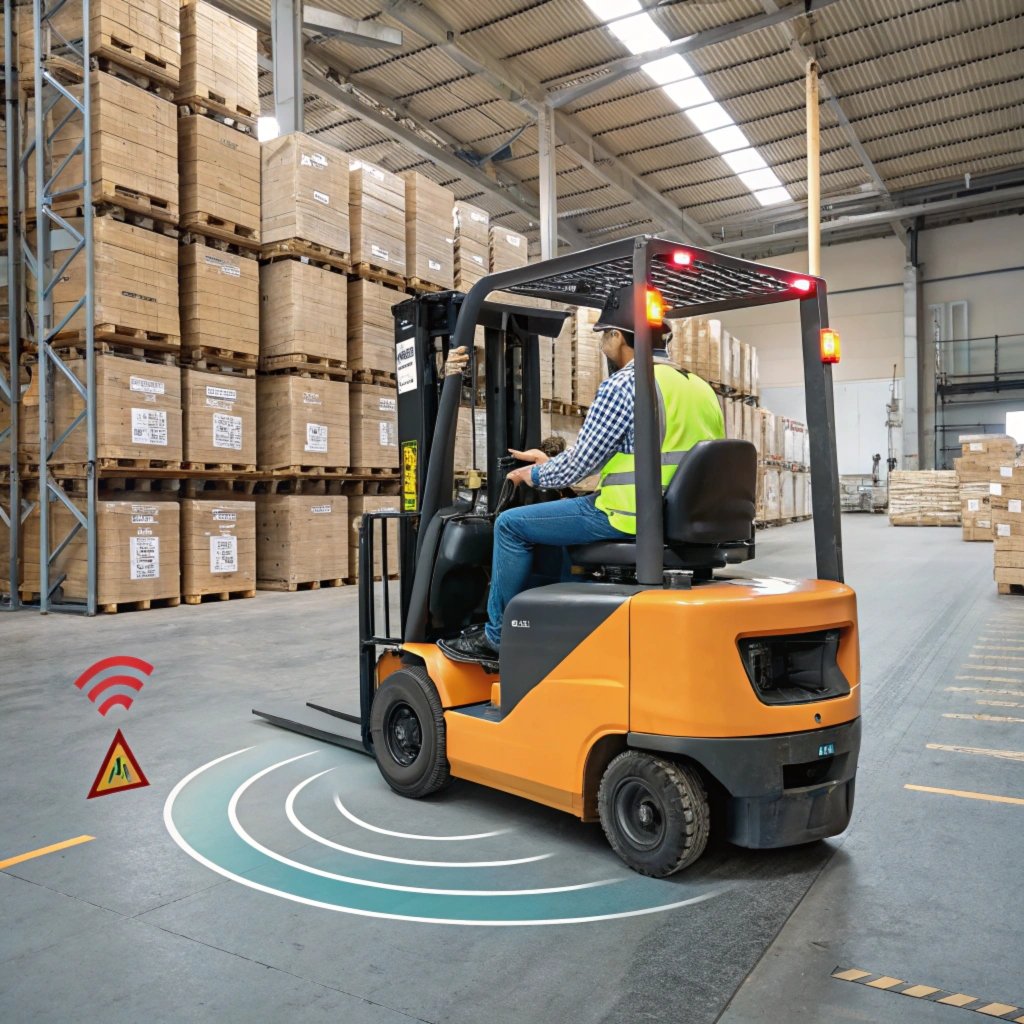
Counterbalance forklifts handle both indoor floor work and outdoor yard duty.
Strengths
- Works indoors and outdoors
- No outriggers, simple load approach
- Wide range of capacities available
- Lower purchase cost for comparable capacity
Limitations
- Needs wider aisles than a reach truck
- Lower maximum lift height
- Less efficient use of high-bay racking space
What Is a Reach Truck?
A reach truck is purpose-built for narrow-aisle, high-bay warehouse work. Instead of a rear counterweight, it uses two outrigger legs that straddle the pallet, letting the mast extend, or "reach," forward to place a load deep into racking. The mast can also retract close to the chassis for travel, which keeps the truck's footprint tight enough to work in aisles a counterbalance forklift simply can't fit into.

Reach trucks are built for narrow-aisle, high-bay racking systems.
Strengths
- Works in much narrower aisles
- Reaches significantly greater heights
- Maximizes storage density in high-bay racking
- Excellent visibility for precise placement
Limitations
- Indoor use only, needs smooth flooring
- Lower load capacity than most counterbalance models
- Higher purchase price
Aisle Width: The Factor That Decides Everything
Aisle width is usually the single biggest deciding factor between these two forklift types, because it's often a fixed constraint you can't design around after your racking is installed.
Measure your narrowest working aisle before comparing quotes. A truck that's a perfect fit on paper is useless if it can't physically turn in your building.
Lift Height and Racking Compatibility
Reach trucks are built to serve tall racking systems — many models comfortably reach 30 to 36 feet, with double-deep reach trucks placing pallets two positions deep into racking without a second aisle. Counterbalance forklifts typically top out around 20 feet, which is enough for standard single or double-deep pallet racking in many distribution centers, but not for the high-bay systems common in modern automated or semi-automated warehouses.
Indoor vs Outdoor Use
This is a hard boundary, not a preference. Reach trucks are built with tight tolerances and outrigger legs that are not designed for uneven ground, gravel, potholes, or weather exposure — using one outdoors will damage the mast and undercarriage over time and void most warranties. Counterbalance forklifts, especially pneumatic-tire models, are built to handle dock aprons, yards, and light outdoor terrain in addition to indoor floor work.
If your operation moves loads between an outdoor yard and an indoor warehouse, a counterbalance forklift is usually the only realistic single-truck solution, unless you're prepared to run two separate fleets.
Cost Comparison
For a similar capacity class, reach trucks typically carry a higher purchase price than counterbalance forklifts, largely due to the more complex mast and reach mechanism. However, reach trucks can reduce your total racking footprint by allowing narrower aisles and taller storage, which sometimes offsets the equipment cost with real estate and warehouse expansion savings over time.
Safety Considerations for Both Types
Each forklift type carries its own set of risk factors that are worth planning for regardless of which one you choose:
- Counterbalance stability: because the load isn't straddled, sudden stops or turns with a raised, extended load can affect stability — operators need to maintain proper load positioning and speed.
- Reach truck mast visibility: a fully extended mast at height can obstruct the operator's forward view, and the outrigger legs create low-lying protrusions that are a trip and collision hazard for nearby pedestrians.
- Narrow-aisle pedestrian risk: reach trucks often operate in tight aisles where pedestrians and other equipment have very little room to react, making blind-spot awareness especially important.
- Yard visibility: counterbalance forklifts working outdoors deal with variable lighting, other vehicle traffic, and larger blind zones around loaded forks.
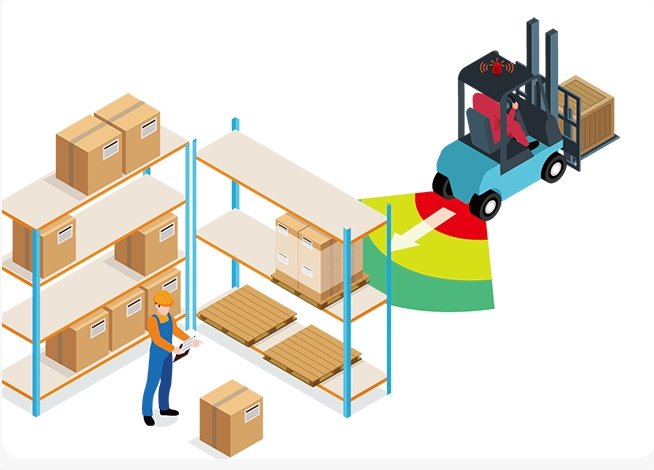
Regardless of which forklift type your operation runs, blind spots around the mast, load, and rear of the truck remain one of the leading causes of forklift-related incidents in both narrow-aisle warehouses and open yards.
How to Decide: Step by Step
Measure your narrowest aisle
This single number rules out one option before you look at anything else.
Check your tallest racking level
If you're storing above 20 feet, a reach truck is likely required.
Confirm indoor-only vs mixed indoor/outdoor use
Any outdoor requirement rules out a reach truck immediately.
Match capacity to your heaviest regular load
Don't buy for your average pallet — buy for your heaviest recurring one.
Weigh equipment cost against space savings
A reach truck's higher price can pay off if it lets you avoid a warehouse expansion.
Frequently Asked Questions
Can a reach truck be used outdoors?
No, not for regular operation. Reach trucks are built for smooth indoor flooring, and their mast and outrigger design are not rated for uneven ground or weather exposure.
What aisle width do I need for a counterbalance forklift?
Most standard counterbalance forklifts need roughly 10 to 13 feet of clear aisle width to turn and place a load, depending on the model and mast configuration.
Is a reach truck more expensive to maintain than a counterbalance forklift?
Reach trucks generally have a more complex mast and reach mechanism, which can mean higher-cost repairs on that specific component, though overall maintenance needs are comparable when both are used within their intended environment.
Which type is safer around pedestrians?
Neither type is inherently safer — reach trucks operate in tighter aisles with less pedestrian reaction room, while counterbalance forklifts often work in busier, mixed-traffic yards. Both benefit from collision-avoidance and pedestrian-detection systems suited to their operating environment.
Whichever Forklift You Choose, Blind Spots Are Still a Risk
Counterbalance or reach truck, every forklift has zones the operator can't see. Talk to our team about anti-collision and pedestrian-detection systems built for your fleet.