Skip to content

Table of Contents
Pallet Racking System
Overview
Pallet racking is the most widely used warehouse storage solution, offering direct aisle access for forklifts, making it versatile and cost-effective.
Potential Hazards
- Forklift impacts can damage uprights and beams, risking structural collapse.
- Narrow aisles heighten collision risks.
- Improper loading may cause uneven weight distribution, compromising stability.
Safety Tips
- Install rack protectors at upright bases to absorb impacts.
- Train operators on correct pallet placement and adherence to weight limits.
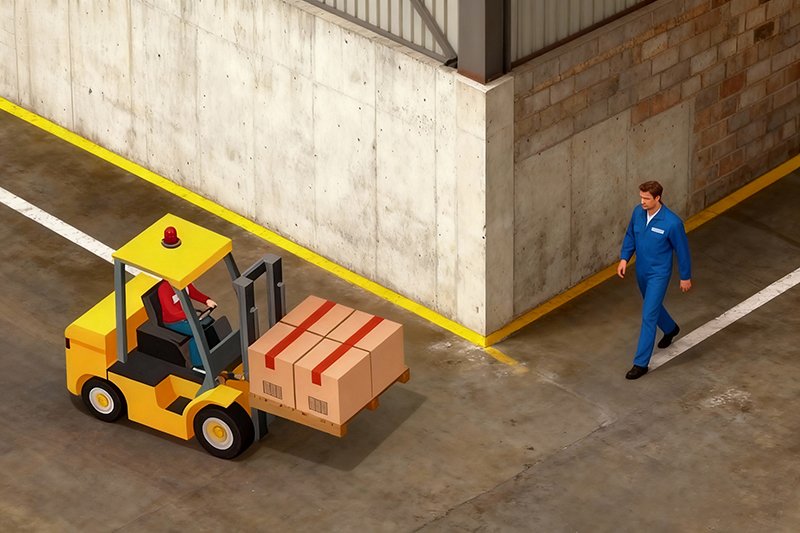
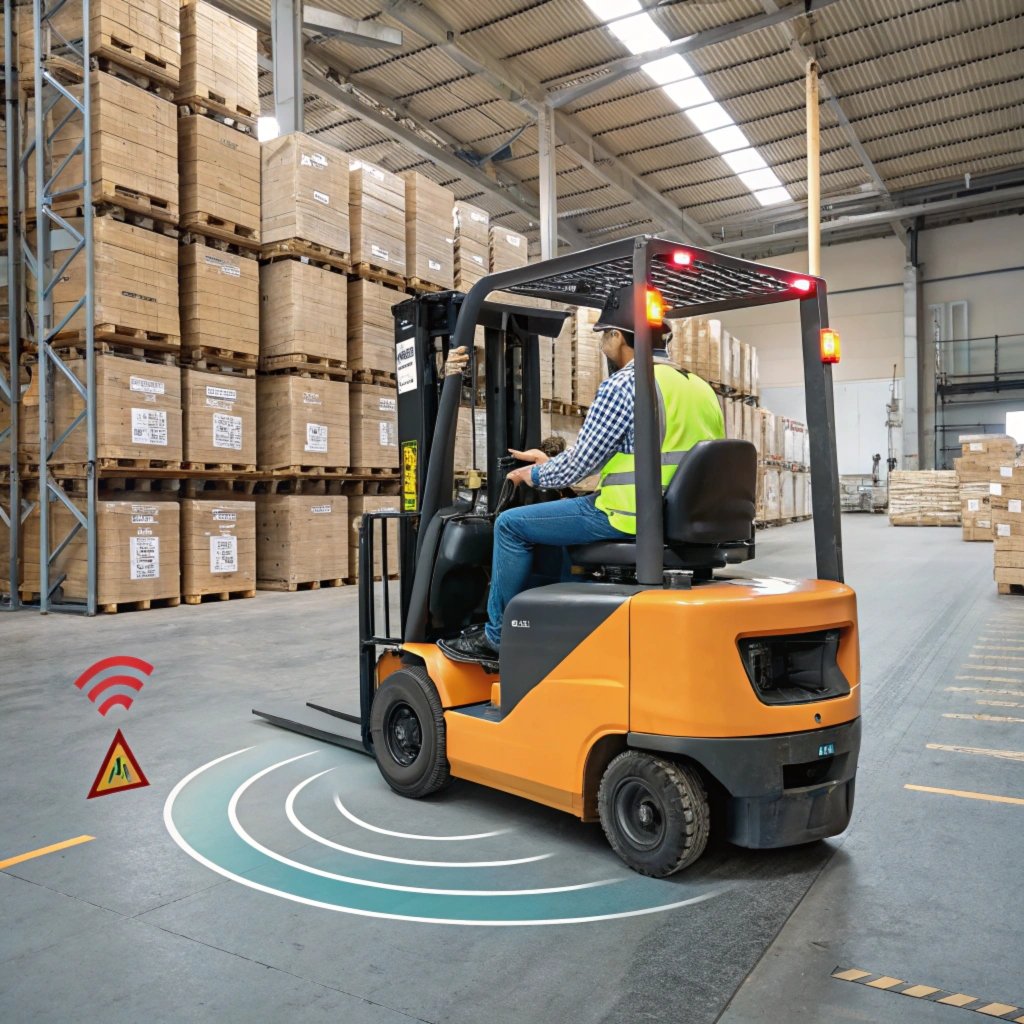
- In high-traffic areas, deploy forklift anti-collision systems to prevent aisle accidents.
Mezzanine Racking System
Overview
Mezzanine systems create additional storage levels within existing warehouse space, ideal for smaller items or vertical expansion.
Potential Hazards
- Forklifts near mezzanine supports risk collision damage.
- Falling objects from upper levels endanger workers and equipment.
- Low ceiling heights can impair visibility.
- Install safety barriers and netting to secure goods and prevent falls.
- Use clearly marked forklift zones and height warning signs.
- Equip forklifts with anti-collision sensors in tight navigation areas to avoid mezzanine columns.
Shelving Racking System
Overview
Shelving systems support hand-picking of smaller parts, tools, or cartons, with forklifts typically used for replenishment or bulk stocking.
Potential Hazards
- Forklift contact with lightweight shelving can destabilize structures.
- Overloading shelves increases collapse risks.
- Poorly planned aisles create bottlenecks, elevating accident risks.
Safety Tips
- Designate forklift-free zones in areas dominated by manual picking.
- Reinforce shelves used for forklift stocking.
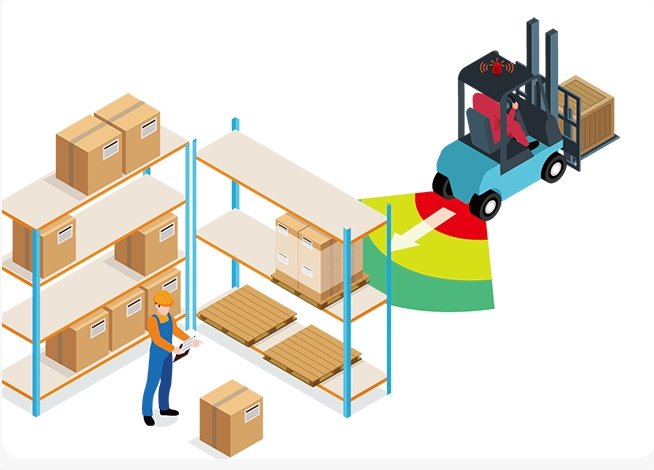
- Implement alert systems to warn drivers of pedestrians in nearby aisles.
ASRS (Automated Storage & Retrieval System)
Overview
ASRS employs robotic cranes, shuttles, or lifts to automate storage and retrieval, maximizing space and efficiency while integrating with forklifts at transfer points.
Potential Hazards
- Forklifts operating near ASRS tracks or robotics risk costly damage.
- Maintenance zones pose crush hazards if not properly isolated.
- Miscommunication between automation and forklift operators can lead to accidents.
Safety Tips
- Clearly segregate forklift lanes from ASRS operating zones.
- Use light curtains, sensors, or anti-collision systems at transfer points.
- Train drivers to synchronize with ASRS software schedules.
Shuttle Racking System
Overview
Shuttle racking systems use automated shuttles to move pallets within deep lanes, with forklifts handling loading and unloading at lane entries.
Potential Hazards
- Forklifts entering shuttle zones may collide with rails or shuttles.
- Deep-lane designs reduce driver visibility, increasing error risks.
- Poor shuttle maintenance can cause pallet jams, requiring unsafe forklift intervention.
Safety Tips
- Restrict forklifts to the entry face of the system, prohibiting lane entry.
- Install rack-end barriers and guide rails for precise forklift alignment.
- Equip forklifts with wireless cameras for enhanced visibility in narrow, repetitive pathways near automation.
Final Thoughts
Warehouse managers must select racking systems that align with operational needs while prioritizing safety and forklift integration. Each system—pallet racking, mezzanine, shelving, ASRS, or shuttle—carries unique risks. By implementing smart design, comprehensive training, and advanced technologies like forklift anti-collision systems, managers can minimize accidents, protect investments, and ensure smooth warehouse operations.
More Articles
Please check the following for more articles.