Skip to content
Table of Contents
Forklifts are essential in warehouses, factories, and logistics centers — but they’re also one of the leading causes of industrial accidents. With the rise of smart safety technology, many companies are investing in forklift anti-collision systems to reduce risks. However, a common question remains:
Can forklift anti-collision systems completely prevent accidents?
The answer is — no, they cannot 100% eliminate the possibility of accidents.
Why Can’t Anti-Collision Systems Guarantee Total Safety?
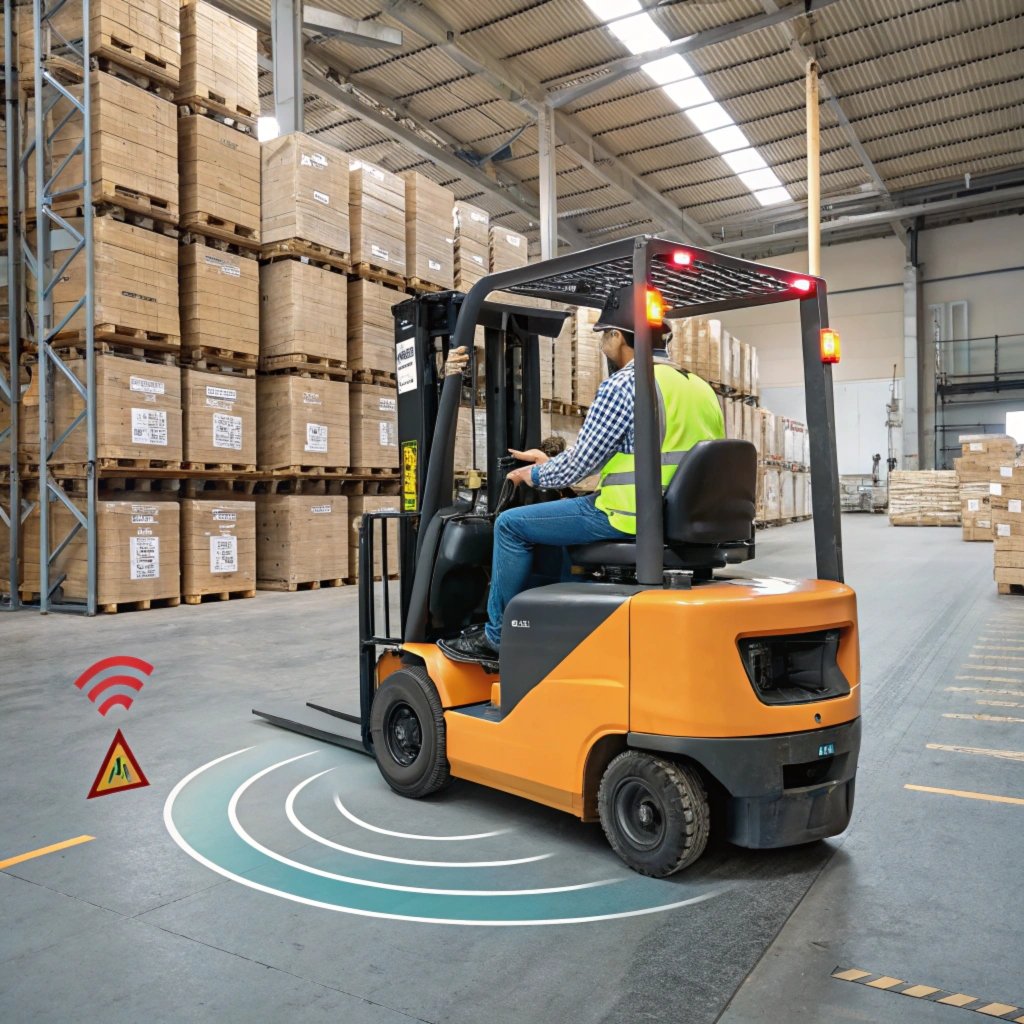
Even though modern forklift anti-collision systems use ultrasonic sensors, RFID tags, UWB positioning, radar, or AI camera vision to detect obstacles and warn operators, several factors limit their effectiveness:
Technology Limitations
- Sensor blind zones: Every detection technology has physical limits. For instance, ultrasonic sensors may struggle in noisy environments, and radar signals can reflect off metal surfaces, causing false readings.
- Environmental interference: Dust, vibration, lighting, and temperature can affect the accuracy of sensors and cameras.
- Latency in data processing: In fast-moving operations, even a half-second delay can make the difference between a near miss and an accident.
Human Factors
- Operator behavior: Some forklift drivers may ignore alarms or over-rely on the system, leading to complacency.
- Fatigue and distraction: Anti-collision systems can assist but not replace alert human judgment.
- Improper maintenance: Damaged sensors or outdated software can drastically reduce system performance.
Complex Work Environments
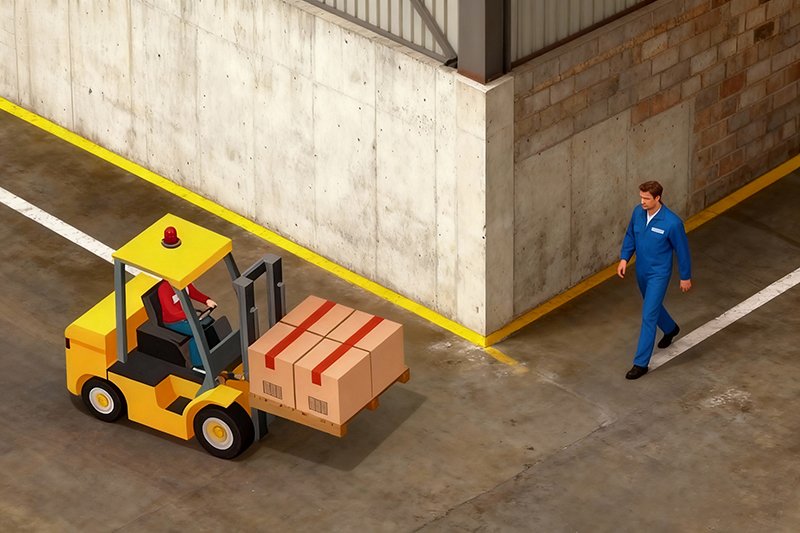
- Forklifts often operate in crowded areas with mixed traffic—pedestrians, AGVs, and other vehicles. Predicting every movement in real time remains a major challenge for current technology.
How to Maximize Accident Prevention
Although 100% accident prevention is impossible, companies can significantly increase safety levels by combining technology, management, and training:
✅ 1. Use Multi-Technology Systems
Integrate UWB + vision + RFID to cover blind spots and enhance positioning accuracy. Hybrid systems minimize false alarms and improve reliability.
✅ 2. Regular Calibration and Maintenance
Sensors and control units should be inspected, cleaned, and recalibrated regularly to ensure consistent performance.
✅ 3. Operator Training
Train drivers to understand system alerts, respect warning distances, and never over-rely on automation. Safety awareness remains the first defense.
✅ 4. Smart Zone Management
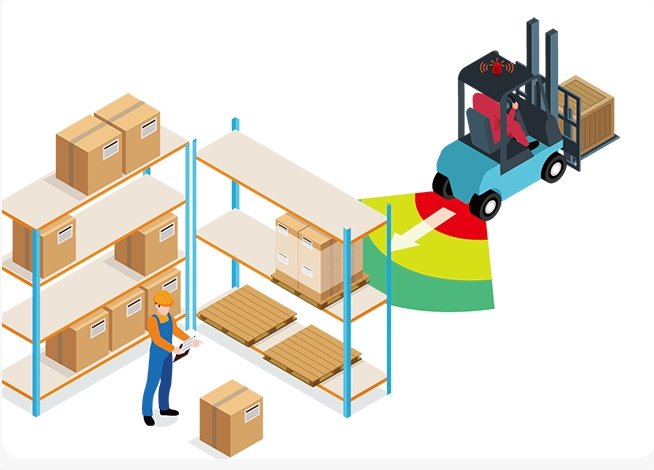
Set virtual warning zones in high-traffic areas using IoT or RFID beacons. The system can automatically adjust forklift speed or trigger alarms when pedestrians are nearby.
✅ 5. Data Monitoring and Continuous Improvement
Analyze near-miss data collected by the anti-collision system to identify patterns, optimize routes, and improve warehouse layout design.
Conclusion
A forklift anti-collision system is a powerful safety tool, but it’s not a magic shield. Technology can reduce risks, but it can’t replace human responsibility and safety culture.
By integrating advanced systems, strict maintenance, and comprehensive training, companies can minimize accidents and create a safer working environment — even if “zero accident” remains the ultimate, ongoing goal.
More Articles
Please check the following for more articles.