Skip to content
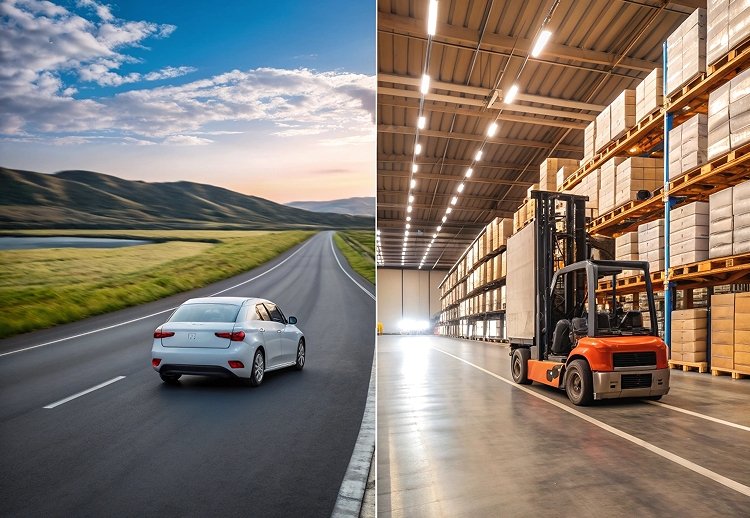
Many warehouse managers ask whether a car or truck speed governor can simply be fitted to a forklift to enforce site speed limits. The short answer is no — and understanding why can prevent costly mistakes and serious accidents.
📋 Table of Contents
- Why This Question Comes Up
- How Car & Truck Speed Governors Work
- Why Car Governors Fail on Forklifts
- What a Real Forklift Speed Limiter Does Differently
- How Speed Control Prevents Forklift Accidents
- What to Look for When Buying a Forklift Speed Limiter
- Installation & Compatibility Notes
- Frequently Asked Questions
1. Why This Question Comes Up
Site managers often face pressure to control forklift travel speed. Speeding is a frequent factor in tip-overs, pedestrian collisions, and rack impacts. When budgets are tight, the idea of using a readily available automotive speed governor feels practical — especially if the fleet already has cars or delivery vans fitted with similar devices.
Unfortunately, forklifts are not simply smaller trucks. Their power delivery, transmission types, and daily duty cycles are fundamentally different. Installing a device designed for highway vehicles can create new hazards instead of solving the original problem.
2. How Car & Truck Speed Governors Work
Traditional speed governors (also called engine governors or road-speed limiters) on cars and commercial trucks usually work by limiting engine RPM or by cutting fuel once a set road speed is reached. In modern vehicles the Engine Control Module (ECM) simply refuses to deliver more fuel once the programmed speed is hit.
These systems assume:
- The vehicle mostly travels at steady highway or open-road speeds.
- Maximum engine power is rarely needed at very low vehicle speeds.
- The transmission is designed for continuous high-speed operation.
That logic works well for long-haul trucks. It does not translate to a forklift that spends most of its day lifting heavy loads at walking pace or climbing short ramps while already under load.

A typical vehicle speed limiter designed for cars and commercial trucks — not suitable for forklift applications.
3. Why Car Governors Fail on Forklifts
Key technical mismatches include:
- Power vs. speed conflict — Forklifts require high engine (or motor) output at near-zero travel speed for lifting and tilting. An RPM governor that works for a truck will starve the hydraulic pump.
- Transmission type — Many forklifts use hydrostatic or torque-converter transmissions. Restricting RPM does not cleanly limit ground speed the way it does on a geared highway vehicle.
- Operator behavior — Older mechanical governors can be adjusted or bypassed with basic tools. Modern forklift operations need tamper-resistant, programmable limits.
- Variable speed zones — Warehouses often need different maximum speeds in aisles, near pedestrians, and in outdoor yards. A single fixed governor setting cannot adapt.
- Safety certification — Devices not designed for industrial trucks may void warranties or fail to meet EN 1175 or equivalent industrial-truck electrical safety standards.
In short, forcing a car-style governor onto a forklift frequently results in either reduced lifting performance or an ineffective speed limit that operators quickly learn to work around.
4. What a Real Forklift Speed Limiter Does Differently
Purpose-built forklift speed limiters measure actual ground speed (via wheel sensors, transmission sensors, or GPS/IMU) and then proportionally restrict throttle or motor torque only when the set limit is approached. Full engine or motor power remains available at low speeds for lifting and climbing.

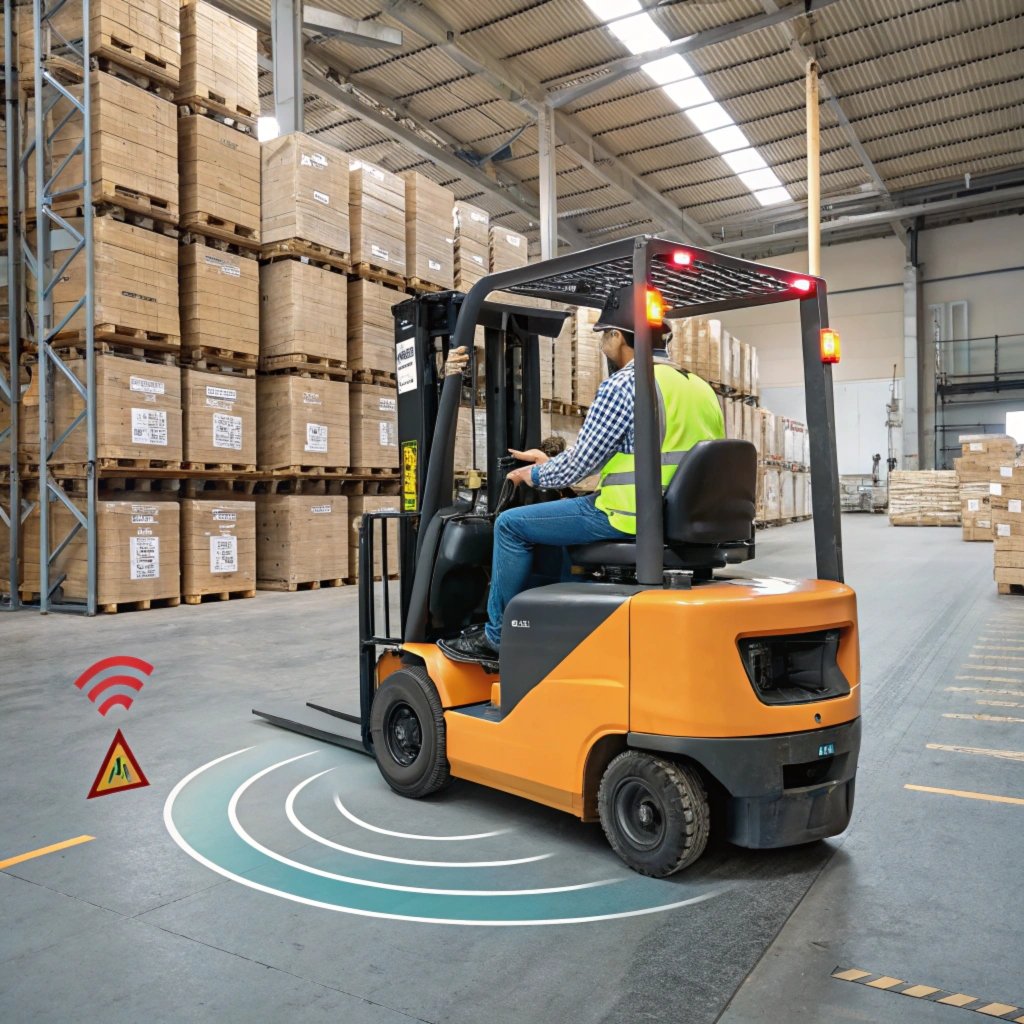
A dedicated forklift speed limiter — designed to maintain full lifting power while enforcing safe travel speeds.
Modern systems typically offer:
- Multiple programmable speed zones (e.g., 8 km/h in open areas, 4 km/h near pedestrians).
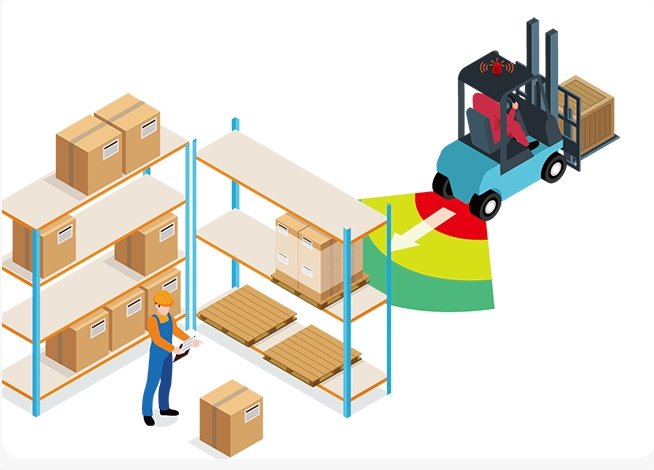
- Integration with proximity sensors or pedestrian detection so the limit automatically drops when people are nearby.
- Compatibility with both mechanical-cable and electronic (drive-by-wire) throttles, plus electric forklifts.
- Data logging of overspeed events for safety audits.
- Compliance with industrial-truck standards rather than automotive ones.
5. How Speed Control Prevents Forklift Accidents
Excessive speed is a contributing factor in a large share of forklift incidents — tip-overs, collisions with pedestrians, impacts with racking, and loss of load. Because OSHA and most national regulations require only that the truck “be operated at a speed that will permit it to be brought to a stop in a safe manner,” the employer must set and enforce realistic limits.
A properly installed forklift speed limiter supports that duty by:
- Removing reliance on operator judgment alone.
- Making the limit consistent across shifts and temporary drivers.
- Allowing lower speeds in high-risk zones without slowing the entire site.
- Providing objective records if an incident occurs.
Combined with other measures such as pedestrian detection, blue-spot lights, and clear traffic management, speed limitation becomes one of the highest-ROI safety investments a warehouse can make.
Protect Your Team with Proven Forklift Safety Systems
We design and supply dedicated forklift speed limiters and complete anti-collision solutions. Talk to a specialist about the right configuration for your fleet.
Request a Free Consultation6. What to Look for When Buying a Forklift Speed Limiter
If you are evaluating systems, focus on these practical points:
| Feature | Why It Matters |
|---|---|
| Actual ground-speed sensing | RPM-only systems fail on hydrostatic and electric trucks |
| Multiple speed settings | Different limits for aisles, docks, outdoor yards |
| Throttle type compatibility | Must match mechanical, electronic, or electric drive |
| Power retention at low speed | Lifting and ramp performance must stay intact |
| Tamper resistance & logging | Prevents operator overrides and supports audits |
| Integration options | Can link to pedestrian detection or zone control |
| Industrial certification | EN 1175 or equivalent preferred for liability protection |
Avoid any device marketed purely as a “car speed governor” or “truck speed limiter” unless the supplier can demonstrate successful, documented installations on the exact forklift models in your fleet.
7. Installation & Compatibility Notes
Most modern forklift speed limiters are retrofit kits. Installation time typically ranges from two to six hours per truck depending on throttle type and whether an existing speed sensor can be reused. Professional installation is strongly recommended — incorrect wiring can affect other safety systems or create new fault codes.
Before ordering, collect:
- Forklift make, model, and year
- Power source (diesel, LPG, electric)
- Throttle type (mechanical cable or electronic)
- Whether the truck already has a factory speed sensor
Reputable suppliers will confirm compatibility and, if needed, provide model-specific harnesses.
Ready to Control Forklift Speed the Right Way?
As a specialist forklift safety system provider, we help warehouses and distribution centers implement reliable speed limiting and collision-prevention solutions.
Get Expert Advice Now11. FAQs
Can I just adjust the governor on my existing forklift?
Many older forklifts have mechanical RPM governors that can be adjusted, but this still only limits engine speed, not true ground speed, and often reduces lifting power. Modern electronic systems should only be reprogrammed by authorized technicians. For reliable site-wide control, a dedicated ground-speed limiter is the better solution.
Will a forklift speed limiter reduce productivity?
When correctly set, it usually has little negative effect. Operators retain full power for lifting and slow-speed maneuvering. The only restriction is top travel speed, which most sites already want limited for safety. Many facilities actually see fewer stoppages from accidents and less equipment damage.
Are speed limiters required by OSHA or other regulations?
OSHA does not mandate a specific numerical speed or the installation of limiters. It does require that forklifts be operated at a speed that allows safe stopping and that employers enforce site traffic rules. Installing a limiter is one of the most effective ways to meet that duty of care and demonstrate due diligence.
Can one system work on both diesel and electric forklifts?
Yes. Leading forklift speed limiters are available in versions for mechanical-cable throttles, electronic drive-by-wire pedals, and fully electric trucks. Always confirm compatibility with your exact models before purchasing.
How long does installation take?
Typical retrofit time is 2–6 hours per truck, depending on complexity. Most systems require no permanent modification to the original engine or motor control unit, so they can often be removed or transferred if the truck is sold.
Can the speed limit be changed later?
Yes. Quality systems allow authorized personnel to adjust maximum speeds and create multiple zones. Changes are usually password-protected or require special software so operators cannot alter them.