Skip to content

Table of Contents
How to Design a High-Performance Forklift Operation Route in the Warehouse: A Practical Guide for Warehouse Managers
Efficient forklift movement is the backbone of a high-performing warehouse. Poorly planned routes lead to congestion, delays, safety risks, and higher operating costs. As a warehouse management and design expert, I’ve seen firsthand how proper layout planning and operational zoning can dramatically boost productivity and safety.
In this guide, I’ll walk you through the essential steps and considerations for designing a high-performance forklift operation route that integrates seamlessly with your racking systems, storage logic, and daily workflows.
Understand Your Warehouse Workflow First
Before you touch a tape measure or layout software, map out your core warehouse workflows:
- Inbound: Where do goods arrive? Are they cross-docked, stored, or directly picked?
- Storage: What are the storage durations and turnover rates?
- Picking and Packing: Where are pickers operating? Are they on foot or using equipment?
- Outbound: Where is the staging area for shipping?
Understanding your process flow helps align forklift traffic with minimal interference and unnecessary travel.
Segment the Warehouse into Functional Zones
Different types of goods require different handling frequencies and equipment. Segment your warehouse zones based on:
– Fast-Moving Goods (High Turnover)
- Place these close to picking and shipping zones.
- Forklifts should have direct, unobstructed access.
- Use lower racks or floor-level storage for easy reach.
– Slow-Moving or Reserve Inventory
- Store these in higher racks or less accessible areas.
- Allocate them to rear or upper zones of the warehouse.
– Heavy vs Light Items
- Heavy pallets should be located on lower levels to reduce lifting strain and enhance safety.
- Light goods can be stored in upper rack positions.
– Hazardous or Special-Handling Items
- Design isolated routes with wider aisles and clear signage.
- Avoid crossover with general forklift traffic.
Design the Racking System with Forklift Travel in Mind
– Choose Racking Systems That Match Forklift Types
- Narrow aisle racking? Use turret trucks or reach trucks.
- Wide aisle racking? Suitable for counterbalance forklifts.
- Drive-in/Drive-through racking? Ensure there’s room for straight entry/exit without reversing.
– Maintain Optimal Aisle Widths
- Typical counterbalance forklifts require 3.5–4 meters aisle width.
- Narrow aisle trucks can operate in 1.6–2 meters, improving storage density.
Always align aisle width with forklift turning radius and pallet size.
Plan Clear and Efficient Forklift Routes
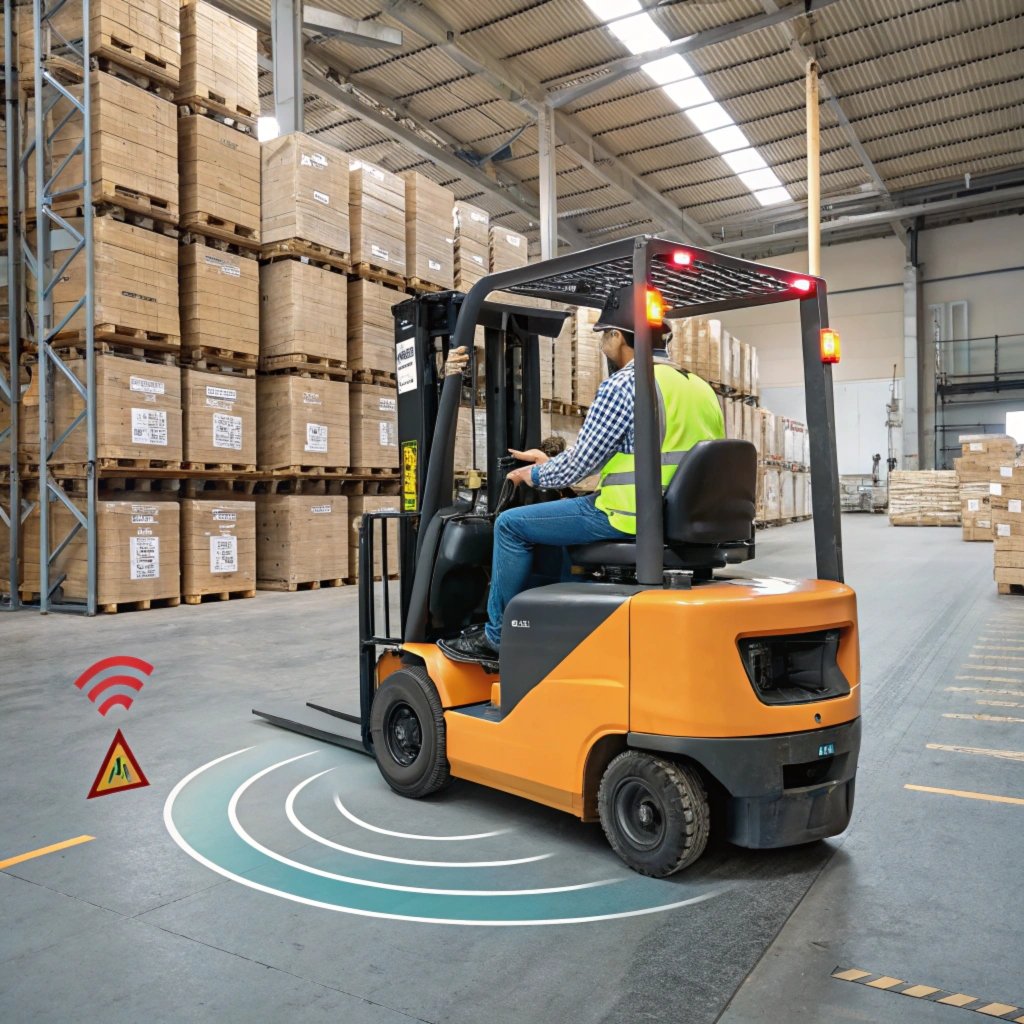
A well-designed forklift route resembles a city’s road network — logical, fast, and collision-free.
Key Route Design Tips:
- One-way travel loops minimize head-to-head traffic and reduce congestion.
- Use main arteries for high-traffic lanes and side aisles for local access.
- Design U-shaped or circular routes for efficient loading/unloading cycles.
- Color-code floors or use reflective tape for lane marking and direction guidance.
- Ensure no sharp turns near high-stacked racks.
Use route planning software or CAD tools for accurate modeling and simulation.
Integrate Safety and Visibility into Route Design
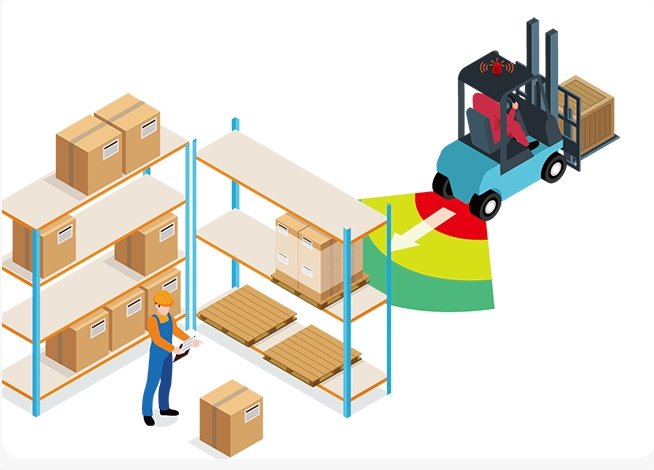
- Install mirrors at blind intersections.
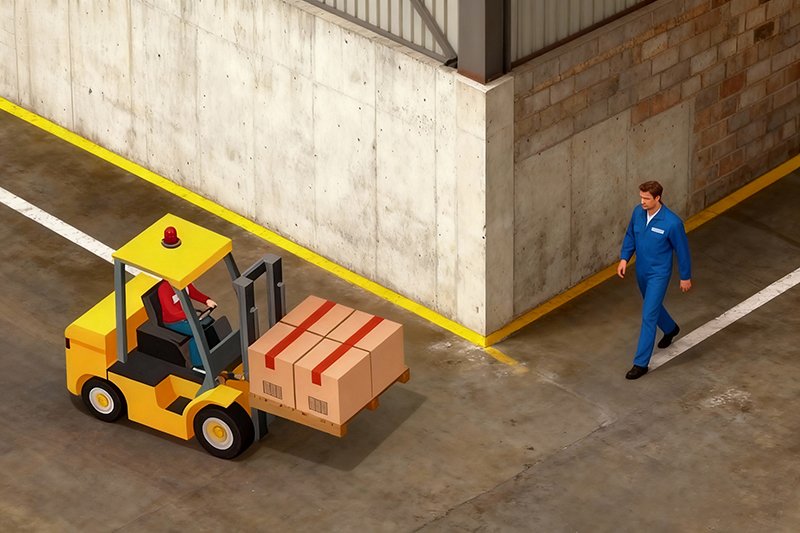
- Use barriers to separate forklift routes from pedestrian walkways.
- Add stop signs and speed limits in busy crossing zones.
- Include buffer zones near dock doors and racking endpoints.
- Ensure lighting is sufficient along all forklift routes.
Optimize Loading and Unloading Zones
- Designate dedicated staging zones near docks.
- Use FIFO lanes (first in, first out) for perishable or fast-moving goods.
- Position staging areas parallel to main forklift routes to avoid backtracking.
Utilize Warehouse Management System (WMS) Data
Leverage your WMS to:
- Identify pick frequency by SKU and rearrange items accordingly.
- Monitor forklift travel times and adjust zones/routes for efficiency.
- Set up dynamic slotting for seasonal changes or promotions.
WMS data is crucial for continuous optimization of your layout.
Train Your Forklift Operators to Follow Route Discipline
Design is only as good as its execution. Ensure operators:
- Follow designated travel paths and directional flow.
- Avoid shortcutting through pedestrian zones.
- Report route obstructions or bottlenecks immediately.
Regular route audits and operator feedback sessions help fine-tune your layout over time.
Conclusion: Route Design Is a Competitive Advantage
A thoughtfully designed forklift route isn’t just about saving minutes—it’s about unlocking warehouse efficiency, reducing accidents, extending equipment life, and improving your bottom line.
If you’re planning a warehouse redesign or setting up a new facility, make forklift routing an early and central part of the design process. Combine operational data, ergonomic principles, and safety best practices for a layout that supports your team and grows with your business.
More Articles
Please check the following for more articles.