Skip to content
Table of Contents
In the fast-paced world of warehouse management, efficiency isn’t just a buzzword—it’s the difference between a thriving operation and one that’s constantly playing catch-up. As someone who’s spent years optimizing storage layouts and material handling equipment, I’ve seen firsthand how the wrong forklift can turn a well-designed racking system into a bottleneck. Whether you’re expanding your facility or just fine-tuning your current setup, matching the right forklift to your racking is crucial for safety, productivity, and cost savings.
This guide breaks it down step by step, focusing on popular racking systems and the forklifts that pair best with them. We’ll cover key factors like aisle width, lift height, and load capacity, plus some insider tips to help you make a smart choice. By the end, you’ll have the tools to select equipment that keeps your warehouse humming.
Understanding the Basics: Why Racking Dictates Forklift Choice
Before diving into specifics, let’s talk fundamentals. Your racking system determines how goods are stored—whether it’s for quick access, high density, or specialized items. Forklifts must navigate these setups without damaging inventory, racks, or themselves. Key considerations include:
- Aisle Width: Narrower aisles demand slimmer, more maneuverable lifts.
- Lift Height: High racks need trucks with extended reach and stability.
- Load Capacity and Type: Heavy or oddly shaped loads require robust machines with appropriate attachments.
- Power Source: Electric for indoor, clean operations; internal combustion for outdoor or heavy-duty use.
- Operational Flow: FIFO (First In, First Out) vs. LIFO (Last In, First Out) impacts how forklifts interact with racks.
Pro tip: Always measure your aisles twice and consult with a certified engineer to ensure compliance with OSHA standards. Now, let’s explore the matchups.
Selective Pallet Racking: Versatile and Accessible

Selective pallet racking is the workhorse of warehouses, offering direct access to every pallet without moving others. It’s ideal for operations with a wide variety of SKUs and moderate throughput. Aisles are typically 10-12 feet wide, allowing for standard equipment.
Recommended Forklifts:
- Counterbalance Forklifts: These are your go-to for selective setups. With a weight at the back to balance loads, they handle up to 5,000 lbs easily and lift to 20 feet or more. Opt for electric models in climate-controlled environments to reduce emissions and noise.
- Reach Trucks: If you’re pushing heights above 25 feet, switch to a reach truck. Their extendable forks allow for tighter turns in aisles as narrow as 8 feet, boosting storage density without sacrificing access.
Considerations: Look for models with side-shift attachments for precise pallet placement. If your loads vary, a three-wheel counterbalance offers better maneuverability in confined spaces.
Drive-In/Drive-Through Racking: High-Density Storage
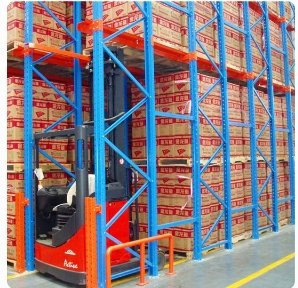
For bulk storage of similar items, drive-in (LIFO) or drive-through (FIFO) racking maximizes space by allowing forklifts to enter the structure. Aisles are minimal—often just wide enough for the truck—making this system perfect for cold storage or seasonal inventory.
Recommended Forklifts:
- Reach Trucks: Essential here due to their compact design and ability to maneuver in tight lanes (around 9-10 feet). They can stack deep, up to 6-8 pallets per bay, with lift heights reaching 30 feet.
- Counterbalance with Extended Forks: For heavier loads, a standard counterbalance with longer forks works, but ensure the truck’s turning radius fits the entry points.
Considerations: Safety is paramount—opt for trucks with rail guidance systems to prevent rack collisions. Electric reach trucks are preferable for enclosed spaces to avoid exhaust buildup.
Push-Back Racking: Dynamic and Efficient
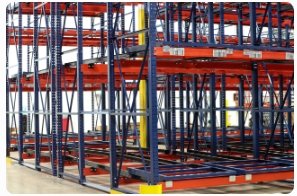
Push-back systems use nested carts on inclined rails, allowing LIFO access with up to 6 pallets deep per lane. It’s great for medium-turnover items, combining density with selectivity. Aisles stay around 10-12 feet.
Recommended Forklifts:
- Counterbalance Forklifts: Reliable for pushing pallets onto carts. Choose models with good torque for inclines and attachments like push-pull for smooth operation.
- Reach Trucks: For higher bays (up to 35 feet), these provide the reach and stability needed without entering the rack fully.
Considerations: Test the forklift’s compatibility with the cart system—some require specific fork thicknesses. Prioritize models with automatic braking for safety on slopes.
Pallet Flow Racking: Gravity-Assisted Speed
Also known as gravity flow, this FIFO system uses rollers to move pallets forward automatically. It’s a powerhouse for date-sensitive goods like food or pharmaceuticals, with aisles similar to selective racking.

Recommended Forklifts:
- Counterbalance Forklifts: Ideal for loading from the rear and picking from the front. Their stability handles the dynamic movement well.
- Order Pickers: For lower-level access, but pair with a standard lift for full-height operations up to 25 feet.
Considerations: Ensure the forklift has speed controls to match the flow rate. Electric options shine here for precise, quiet handling in busy pick zones.
Cantilever Racking: For Long or Bulky Items
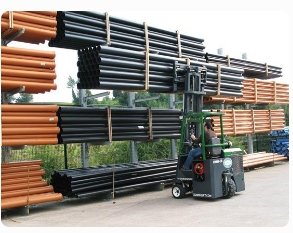
Designed for long, awkward items like lumber or pipes, cantilever racks have arms extending from columns, no front uprights. Aisles are wider (12-15 feet) to accommodate oversized loads.
Recommended Forklifts:
- Sideloader Forklifts: Perfect for long items, as they lift from the side, reducing the need for wide turns.
- Multi-Directional Forklifts: These can move in any direction, ideal for navigating around bulky stock with lifts up to 20 feet.
Considerations: Attachments like carpet poles or clamps are often necessary. Go for rugged, pneumatic-tire models if operating outdoors.
Mobile Racking: Maximizing Floor Space
Mobile racks move on tracks to create temporary aisles, doubling storage capacity in limited spaces. Very narrow aisles (as little as 5-6 feet when open) demand specialized equipment.

Recommended Forklifts:
- Very Narrow Aisle (VNA) Trucks: Turret or articulated forklifts that rotate forks 180 degrees, lifting to 40+ feet without wide turns.
- Automated Guided Vehicles (AGVs): For high-tech setups, these integrate seamlessly with mobile systems.
Considerations: Wire guidance or laser navigation is a must for precision. Invest in operator training to handle the compact environment safely.
Additional Factors to Weigh Before Buying
Beyond the racking match, factor in your budget, maintenance needs, and future scalability. Electric forklifts are gaining traction in 2025 with better battery tech, offering lower long-term costs. Use a simple table to compare options:
| Factor | Counterbalance | Reach Truck | VNA Truck |
|---|---|---|---|
| Aisle Width | 10-12 ft | 8-10 ft | 5-7 ft |
| Max Lift Height | 20-25 ft | 30-40 ft | 40+ ft |
| Best For | General use | High density | Ultra-dense |
Always demo equipment in your warehouse and consult experts for custom fits.
Wrapping It Up: Make the Smart Move
Choosing the right forklift for your racking system isn’t rocket science, but it does require thoughtful planning. By aligning your equipment with your storage needs, you’ll boost efficiency, cut costs, and keep your team safe. If you’re unsure, reach out to a warehouse consultant—they can run simulations to predict performance. Remember, the best setup evolves with your business, so stay agile and informed. Happy lifting!
More Articles
Please check the following for more articles.