Skip to content

Electric vs Diesel Forklift: Which One Should You Buy?
Choosing between an electric and a diesel forklift affects your operating costs, safety profile, and uptime for the next 5-10 years. This guide breaks down the real trade-offs so you can decide based on your operation, not a sales pitch.
Quick Comparison Table
| Factor | Electric | Diesel |
|---|---|---|
| Best environment | Indoor, cold storage, food/pharma | Outdoor, rough terrain, yards, ports |
| Upfront cost | Higher (battery adds $8k-$25k) | Lower purchase price |
| Cost per hour | ~$1-$3 (electricity) | ~$4-$8 (diesel fuel) |
| Maintenance | Low - no engine servicing | Higher - oil, filters, exhaust |
| Runtime | 6-8 hrs, or full shift (lithium-ion) | 8-10 hrs, refuels in minutes |
| Noise level | 60-70 dB | 80-95 dB |
| Lifting capacity | Up to 5-7 tons | 5-15+ tons |
How Electric Forklifts Work
Electric forklifts run on rechargeable batteries - commonly 36V, 48V, or 80V lead-acid packs, though lithium-ion is quickly becoming standard for multi-shift operations because it charges faster and skips the battery-swap room. Power goes straight to an electric motor: instant torque, no idling losses, no combustion byproducts.

Electric forklifts are the default choice for indoor warehouse and cold storage operations.
Strengths
- Near-silent operation
- Zero on-site emissions
- Lower maintenance
- Tight turning radius for narrow aisles
Limitations
- Charging downtime without a spare battery
- Weaker on inclines or wet outdoor ground
- Higher upfront investment
How Diesel Forklifts Work
Diesel forklifts use an internal combustion engine, giving them the torque and durability for heavy loads, rough or unpaved ground, and continuous outdoor use. Refueling takes minutes rather than hours - critical for yards and ports running around the clock.

Diesel forklifts hold up better on uneven terrain and heavy-duty outdoor jobs.
Strengths
- Higher lifting capacity
- Fast refueling, no downtime
- Handles rough terrain and weather
- Lower purchase price
Limitations
- Exhaust emissions unsuitable indoors
- Louder - can mask warning signals
- More scheduled maintenance
Total Cost of Ownership
The purchase price is the smallest part of the story. Over five years, energy and maintenance costs usually outweigh the initial price gap between electric and diesel units.
Which Forklift Fits Your Environment?
Choose electric if:
You operate mainly indoors - warehouses, distribution centers, food or pharma - where air quality and noise matter, floors are smooth, and you can charge between or during shifts.
Choose diesel if:
You operate mainly outdoors - construction sites, lumber yards, ports, agriculture - where ground is uneven, loads are heavy, and refueling speed beats quiet operation.
Consider a mixed fleet if:
Many mid-size operations run electric indoors and diesel in the yard, splitting the workload to each machine's strength.
Safety Differences You Shouldn't Overlook
The power source changes your safety profile on the floor, not just your costs:
- Noise and awareness: loud diesel units can mask an approaching truck; near-silent electric units can surprise pedestrians who don't hear them coming.
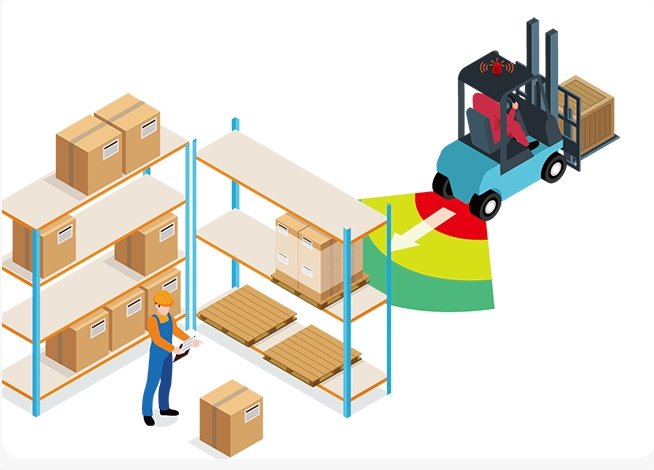
- Blind spots: mast height, load size, and reverse visibility create blind zones on both types - this risk doesn't change with power source.
- Enclosed spaces: diesel exhaust buildup indoors is a real hazard without strong ventilation.
- Charging areas: lead-acid charging stations bring their own risks - hydrogen gas buildup and acid handling.
Whichever type you choose, pedestrian and blind-spot risk is the same category of hazard - and the leading cause of forklift-related injuries in most facilities.
How to Decide: Step by Step
Map your environment
Indoor and smooth, or outdoor and rough? This alone rules out one type for most operations.
Check your load and shift pattern
Heavy loads and round-the-clock shifts push toward diesel; lighter loads and one to two shifts push toward electric.
Run the 5-year cost, not just the sticker price
Add fuel or electricity, maintenance, and battery or engine replacement before comparing quotes.
Check local emissions and noise rules
Some facilities and regions restrict diesel equipment indoors or offer incentives for electric fleets.
Frequently Asked Questions
Is an electric forklift cheaper than diesel in the long run?
Usually yes for indoor, moderate-duty operations - lower energy and maintenance costs typically offset the higher upfront price within 2-4 years, especially with lithium-ion batteries.
Can electric forklifts be used outdoors?
Some models can, on paved surfaces in dry conditions, but they generally struggle more than diesel on mud, gravel, or inclines, and range drops in cold weather.
How long do forklift batteries last?
Lead-acid batteries typically last 4-6 years with proper care. Lithium-ion batteries often last 8-10 years with less maintenance.
Which type is safer for warehouse workers?
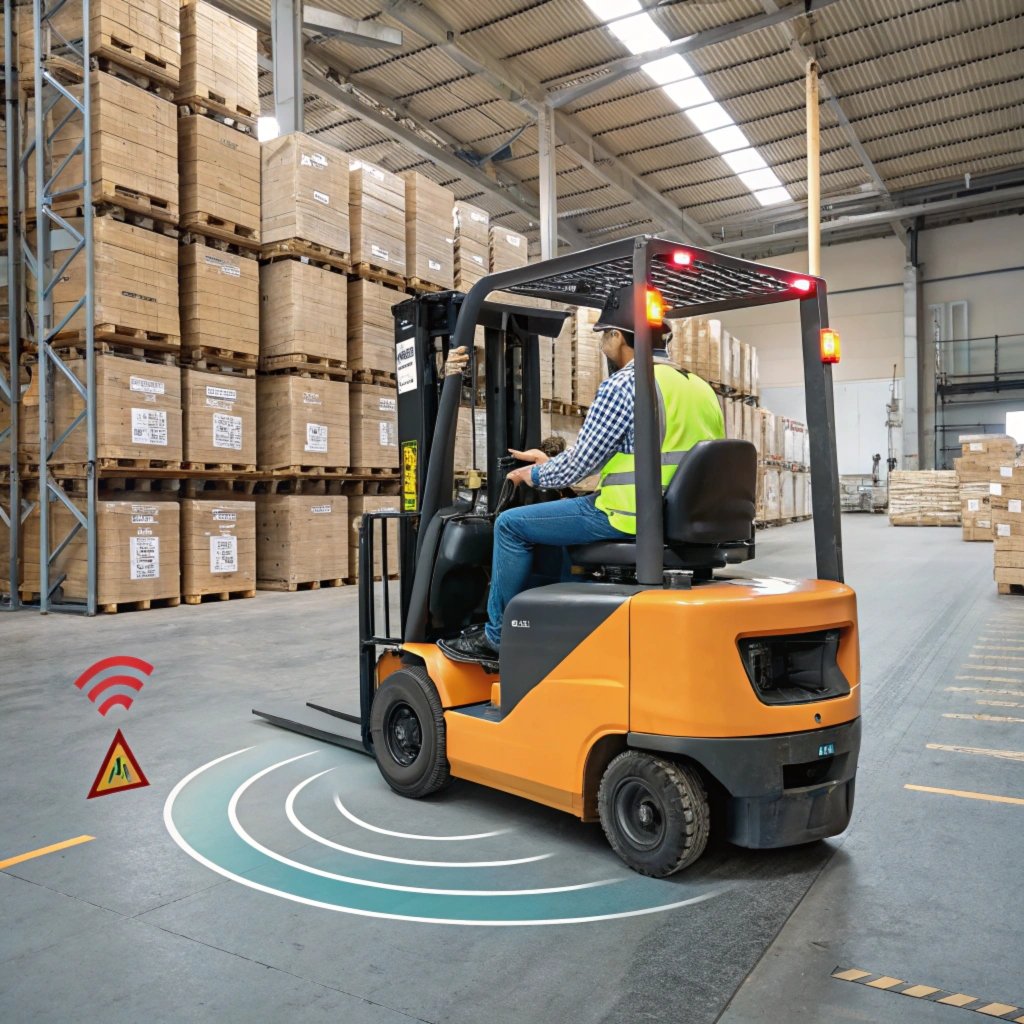
Neither is inherently safer - the real risk factors are blind spots and pedestrian visibility, which apply to both types. Adding collision-avoidance and pedestrian-detection systems closes that gap regardless of power source.
Whichever Forklift You Choose, Blind Spots Are Still a Risk
Electric or diesel, every forklift has zones the operator can't see. Talk to our team about anti-collision and pedestrian-detection systems built for your fleet.
Request a Free Safety Consultation