Skip to content
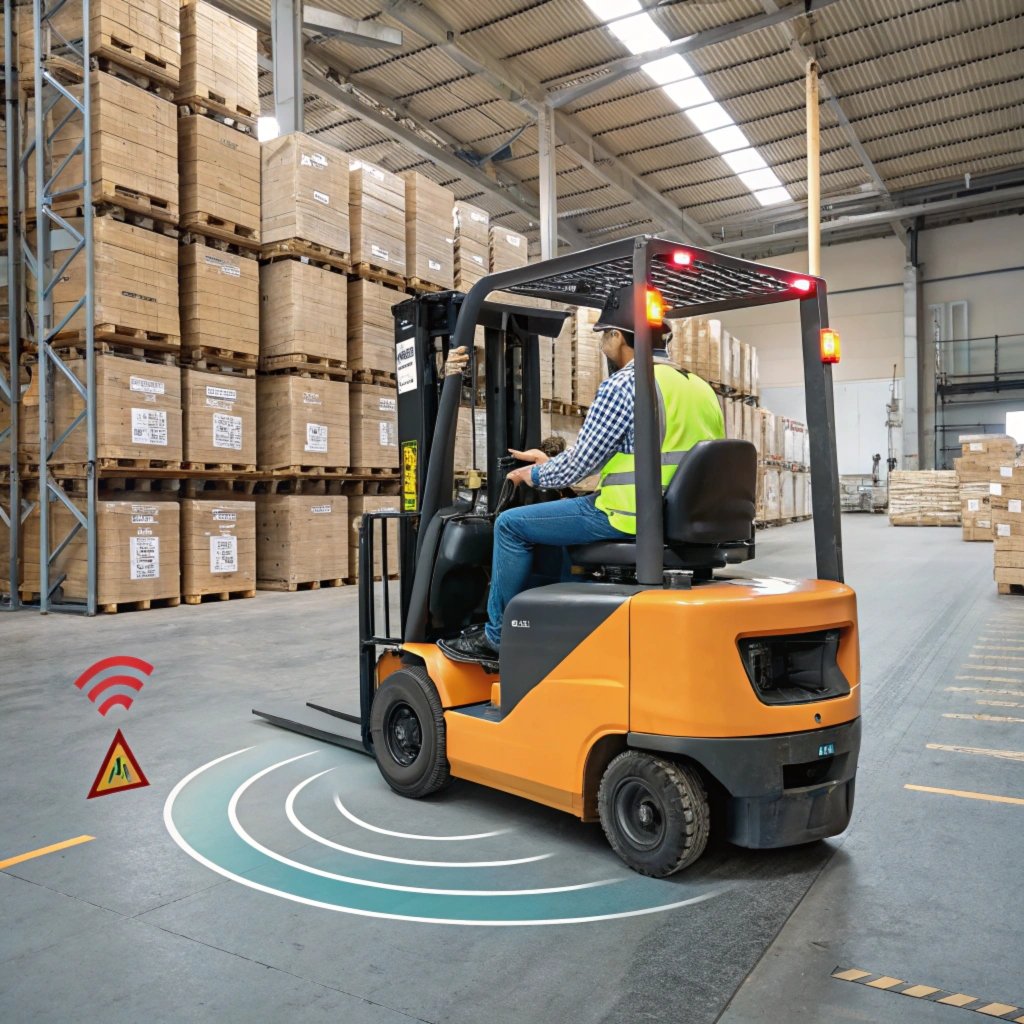
Camera Based Forklift Anti-Collision System
Eliminates blind spots with wide-angle 180 degree live camera view
Video footage supports safety audits and liability protection
Provides real-time visual alerts for nearby pedestrians

Definition of Camera Based Forklift Anti-Collision System
A camera-based forklift anti-collision system uses visual sensors and artificial intelligence (AI) to detect nearby obstacles, pedestrians, or vehicles. It provides real-time video monitoring and alerts to the forklift operator, helping to prevent accidents in busy or blind-spot-prone work environments.
Features of Camera Based Forklift Anti-Collision System
This system combines high-resolution cameras with intelligent software that analyzes the surrounding environment. It can detect people, moving equipment, signs, and barriers with visual clarity. Some advanced versions use AI to distinguish between object types and issue different alert levels accordingly.
Operators receive immediate visual and audible warnings through dashboard displays or external alarm units. Night vision, wide-angle lenses, and recording capabilities are also available in select models. The system can be customized to monitor specific zones around the forklift—such as the rear, sides, or overhead—depending on the facility’s safety requirements.
Advantages of Camera Based Forklift Anti-Collision System
• Visual Confirmation – Operators can see the actual hazard, not just receive a beep or signal.
• AI Object Recognition – Advanced systems detect and classify pedestrians, machines, and barriers.
• Video Recording – Provides footage for training, accident investigation, or compliance documentation.
• Blind Spot Elimination – Helps operators navigate tight corners or crowded zones with increased visibility.
• Customizable Monitoring Zones – Adjust camera angles and coverage areas to match operational needs.
Limitations of Camera Based Forklift Anti-Collision System
• Lighting Dependency – Performance may be limited in poorly lit environments without infrared or night vision.
• Weather Sensitivity – Outdoor use may require weatherproof enclosures to protect camera lenses.
• Latency in Complex AI Models – Real-time analysis may have slight delays depending on processing speed.
• Higher Cost Than Basic Sensor Systems – Due to the camera, AI, and display components.
• Requires Operator Attention – Visual monitoring depends on the operator noticing alerts and footage.
Where to Use Camera Based Forklift Anti-Collision System
Camera-based systems are ideal for:
• Busy Warehouse Intersections, where pedestrians and forklifts frequently cross paths.
• Cold Storage or Dim Lighting Areas, with enhanced visibility options.
• High-Risk Industrial Facilities, where blind spots and heavy traffic are common.
• Loading Docks, to monitor both forklift movement and external vehicle activity.
• Training Zones, where recording helps improve safety protocols and operator performance.
These systems are especially valuable in operations demanding high situational awareness and real-time visibility.
Related Products

Forklift to Forklift
UWB Technology with wearable tags to identify the proximity accidents.

Forklift to Pedestrian
Forklift AI Camera precisely detect the pedestrians to ensure safety.
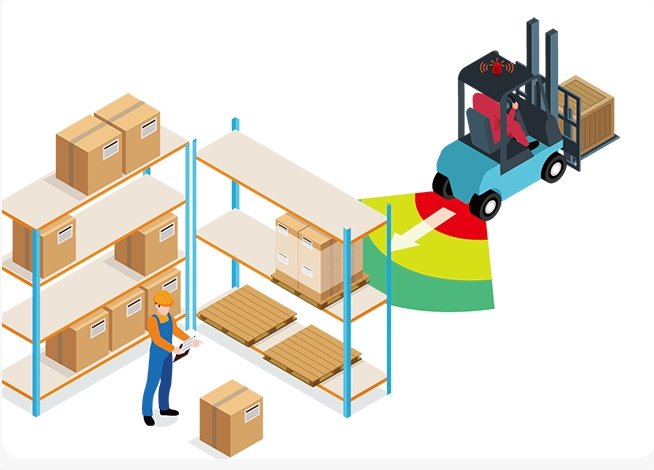
Forklift to Object
Millimeter Wave Radar and LiDAR technology is not only detect the object , it can also detect the pedestrians.