Skip to content
UWB Tag Based Forklift Anti-Collision System
360° detection for full-area forklift safety coverage.
Instant obstacle alerts reduce accident risk.
Plug-and-play system for quick, easy setup.
What is UWB Tag Based Forklift Anti-Collision System?
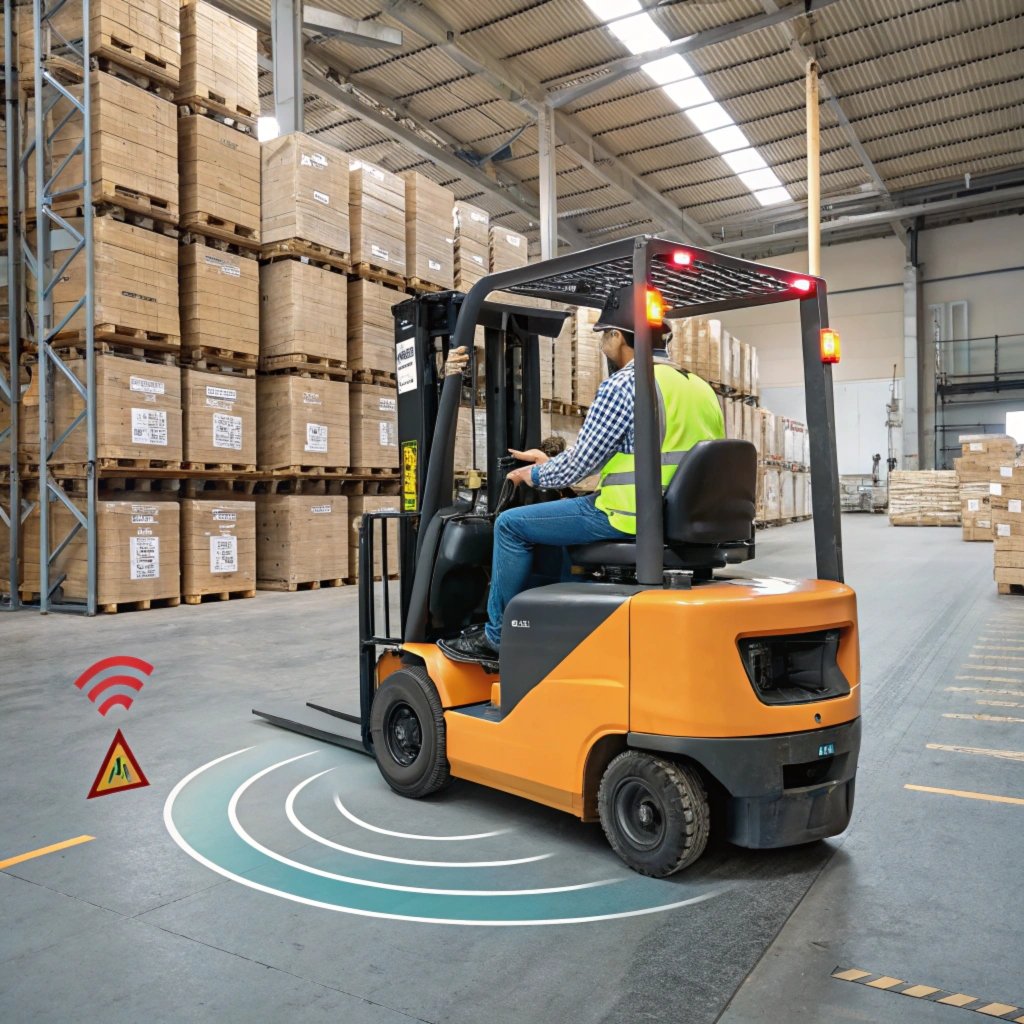
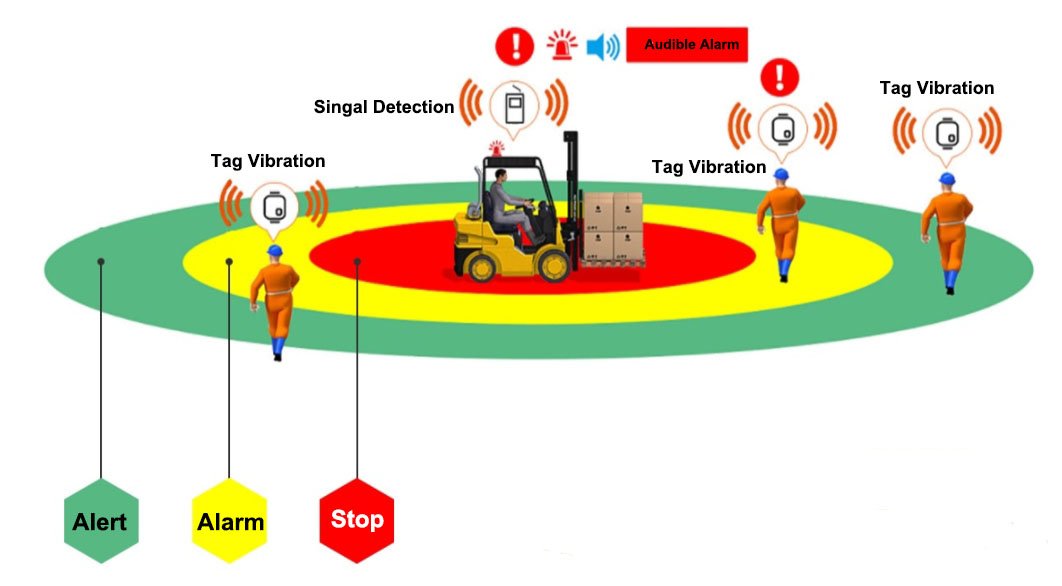
UWB (Ultra-Wideband) Tag Based Forklift Anti-Collision System uses high-precision UWB technology to detect the real-time location of pedestrians, forklifts, and other moving equipment. It provides early warnings to prevent collisions in complex warehouse, factory, and logistics environments.
Features of UWB Tag Based Forklift Anti-Collision System
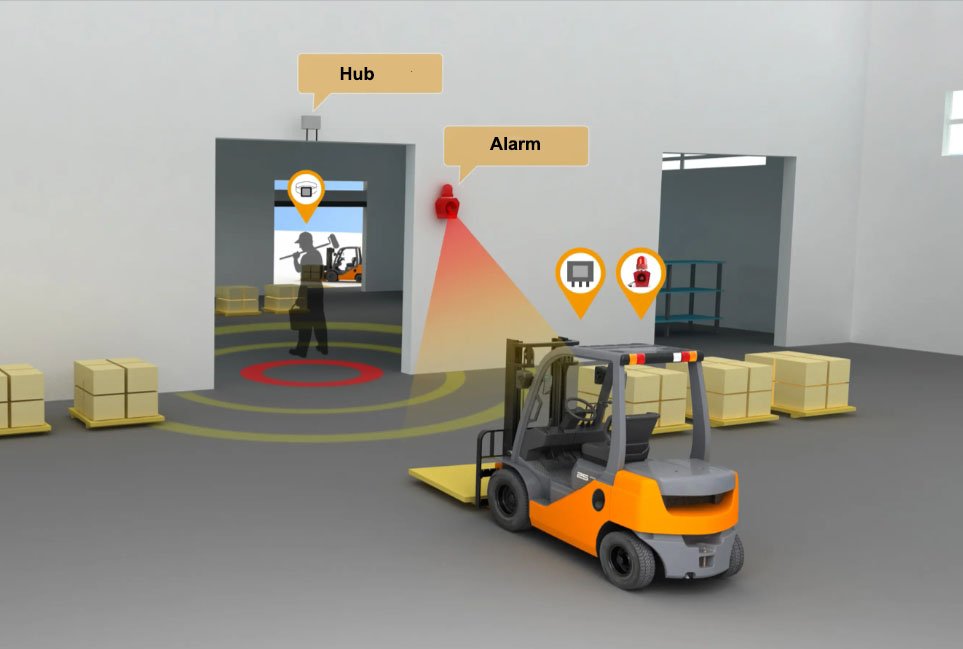
This system works by equipping pedestrians with UWB tags and forklifts with UWB anchors. When a pedestrian wearing a tag comes within a predefined safety distance, the system triggers alerts (light, sound, or vibration). With centimeter-level accuracy, UWB technology ensures reliable detection even in GPS-denied indoor spaces. The system supports multi-directional warning, adjustable alarm distance, and automatic data logging for safety analysis.
Advantages of UWB Tag Based Forklift Anti-Collision System
- High Accuracy: Provides real-time detection with ±10 cm precision.
- Reliable in Harsh Environments: Works well in metal-dense and signal-blocked zones.
- Low False Alarm Rate: Better performance compared to RFID or infrared solutions.
- Multi-Worker Protection: Supports simultaneous detection of multiple tags.
- Behavior Data Logging: Helps safety managers review incidents and optimize layout.
Limitations of UWB Tag Based Forklift Anti-Collision System
- Requires Tag Wear: Effectiveness depends on all personnel wearing UWB tags.
- Higher Cost: Initial setup cost is higher than basic systems.
- Battery Dependency: Tags require regular charging or battery replacement.
- Signal Interference Possible: Extremely dense environments may affect range.
Where to Use UWB Tag Based Forklift Anti-Collision System
- Indoor Warehouses: Especially where forklift-pedestrian interaction is high.
- Factories with Blind Corners: Complex layouts where visibility is limited.
- Cold Storage Facilities: Where camera or ultrasonic sensors may underperform.
- Busy Loading Docks: For managing high vehicle and foot traffic.
- Automotive, Chemical, and Electronics Plants: Where safety precision is critical.
Related Products

Forklift to Forklift
UWB Technology with wearable tags to identify the proximity accidents.

Forklift to Pedestrian
Forklift AI Camera precisely detect the pedestrians to ensure safety.
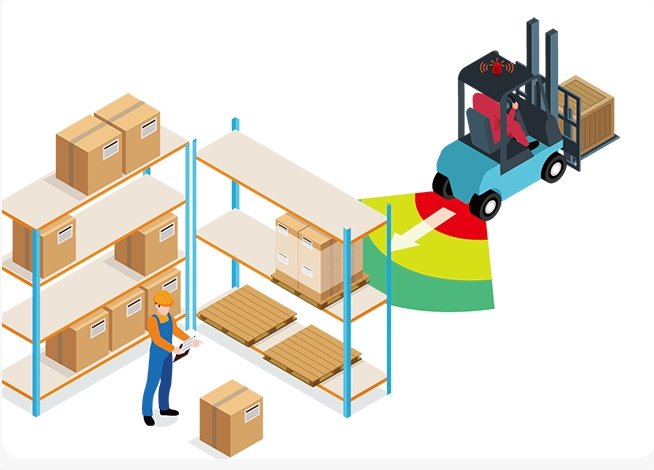
Forklift to Object
Millimeter Wave Radar and LiDAR technology is not only detect the object , it can also detect the pedestrians.