Skip to content
Radar Based Forklift Anti-Collision System
Works reliably in all weather conditions
Detects moving objects from long distance
Minimizes false alarms for smoother workflow

Definition of Radar Based Forklift Anti Collision System
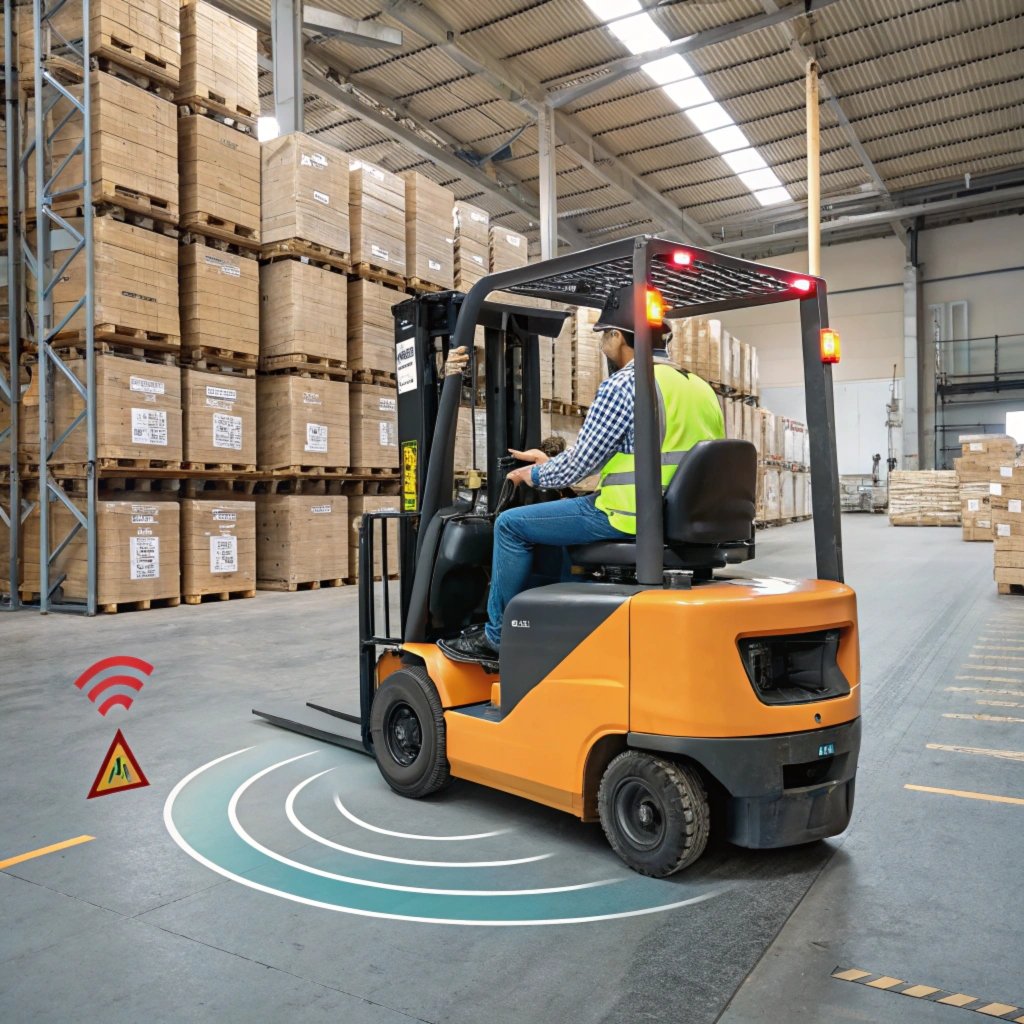
A radar-based forklift anti-collision system uses radio wave technology to detect the distance and speed of nearby objects or moving equipment.
By continuously scanning the surrounding area, the system identifies potential collision risks and sends real-time alerts to forklift operators, allowing preventive action before contact occurs.
Features of Radar Based Forklift Anti Collision System
Radar-based systems work by transmitting radio waves that bounce off surrounding objects, returning signals that help calculate exact distance and relative motion.
These systems typically include a rugged radar sensor unit mounted on the forklift’s front, rear, or sides—depending on the risk zones.
They are designed to perform consistently in a variety of environments, including low visibility conditions like dust, fog, or dim warehouse lighting.
Unlike optical sensors, radar technology is not affected by lighting or partial obstructions.
Most units come with adjustable sensitivity, allowing configuration of detection zones and warning thresholds.
Warning signals can be visual (flashing lights), audible (buzzers), or even integrated with braking systems for automated response.
Advantages of Radar Based Forklift Anti Collision System
• Reliable in Harsh Conditions – Radar systems operate effectively in dust, fog, rain, or low light—making them ideal for warehouses, yards, or tunnels.
• Longer Detection Range – Compared to ultrasonic or infrared systems, radar can detect objects at a greater distance, providing more reaction time.
• Minimal False Alarms – The technology is less likely to trigger unnecessary warnings caused by non-threatening small objects or shadows.
• Real-Time Speed and Distance Tracking – Radar measures how fast objects are approaching, not just their presence—enabling dynamic collision prevention.
• Durability and Low Maintenance – Radar sensors are built with sealed housings and robust components to withstand industrial wear and tear.
Limitations of Radar Based Forklift Anti Collision System
• Higher Cost Than Basic Sensors – Radar systems tend to be more expensive than ultrasonic or infrared options due to their advanced technology.
• Limited Object Identification – Radar can detect presence and motion but cannot identify the object type (e.g., human vs. machine) without additional sensors.
• Blind Zones in Complex Layouts – Depending on the positioning, some tight corners or overhead hazards might remain undetected without multi-angle coverage.
• Potential Interference – In rare cases, other industrial radio-frequency sources may interfere with radar signals, especially in congested environments.
• Not a Complete Safety Solution Alone – Radar works best as part of a layered system; it should be complemented with operator training and visual cues.
Where to Use Radar Based Forklift Anti Collision System
Common applications for radar-based systems include:
• Outdoor Yards and Loading Docks, where weather and lighting conditions fluctuate frequently.
• Cold Storage Warehouses, where fog or ice can compromise optical sensors.
• High-Speed Forklift Zones, where extended detection range and fast response are critical.
• Blind Intersections and Cross-Aisles, where forklifts often meet at risky angles.
• Heavy-Duty Industrial Environments, such as mining, steel plants, or ports, where rugged and interference-resistant technology is required.
Radar systems are especially valuable in operations where visibility challenges or high traffic volumes pose a constant collision risk.
Related Products

Forklift to Forklift
UWB Technology with wearable tags to identify the proximity accidents.

Forklift to Pedestrian
Forklift AI Camera precisely detect the pedestrians to ensure safety.
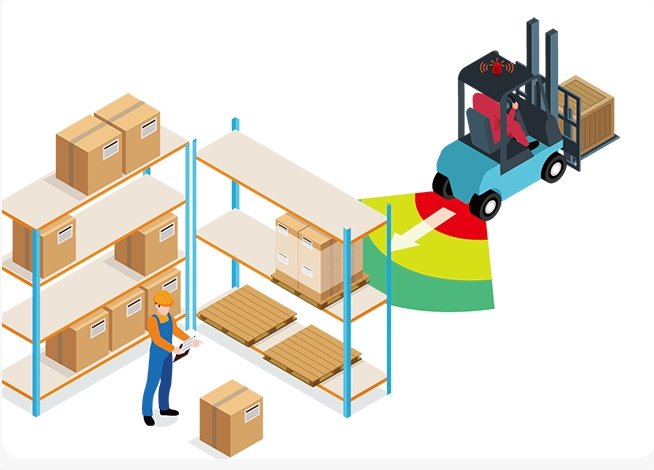
Forklift to Object
Millimeter Wave Radar and LiDAR technology is not only detect the object , it can also detect the pedestrians.